A Colorado House Made From 1500 Recycled Tires Just Hit the Market and People Cannot Stop Talking About It
Most people pay a heating bill every single month of their lives without questioning it. This home in Black Forest, Colorado quietly opted out of that arrangement years ago.
It was built using 1,500 recycled tires, mud, aluminum cans, and glass bottles. It sits on nearly 7 acres of private land. And right now, it is listed for $1,299,900.
What the listing price does not capture is that the people who live here essentially stopped paying for climate control the day they moved in.
Zillow Gone Wild, which has 2 million Instagram followers, called it “without a doubt the best earth home we’ve ever seen.” That is not a casual comment from an account that has seen everything.
What This Place Is Actually Made Of
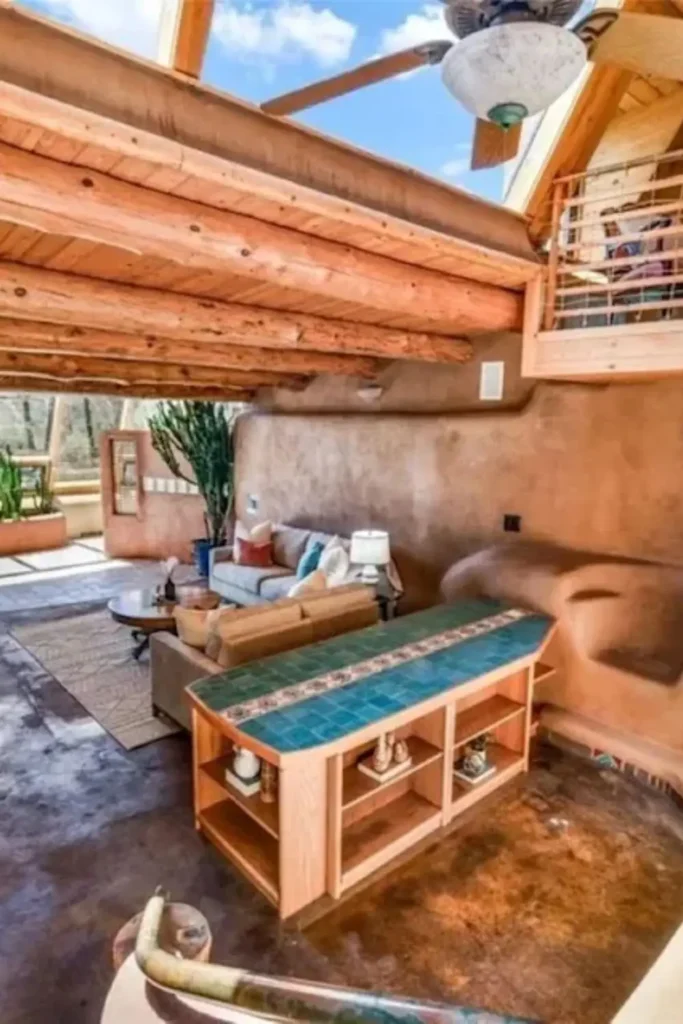
The walls of this home are built from old tires packed tightly with compacted earth. Not decorative. Not experimental. Load-bearing, temperature-regulating walls made from tires that would have otherwise ended up in a landfill.
Aluminum cans and glass bottles are set into the walls as structural fill and design elements. The exterior is finished with stucco. The roof uses an EPDM rubber membrane.
Five skylights run through the home, and the front-facing windows are slanted, not for aesthetics, but for a specific reason that explains everything about how this home works.
This is what is known as an Earthship-style build, a design concept pioneered by architect Michael Reynolds in the 1970s. The Colorado listing, detailed in this Realtor.com feature, is one of the most complete examples of the concept to hit the luxury market in years.
Why It Holds 65 Degrees Without Touching a Thermostat
The science here is not complicated, but most coverage of this property skips past it entirely.
Tires packed with earth are incredibly dense. Dense materials absorb heat slowly during the day and release it slowly at night. This is called thermal mass. The walls do not just hold the structure up. They act like a slow-release battery for temperature.
The slanted south-facing windows are designed to capture the low angle of winter sun and let it warm those walls directly. In summer, the roof overhang blocks the higher sun angle, keeping the interior cool without air conditioning.
The home is also partially earth-bermed, meaning the rear structure uses the stable underground temperature of the earth itself as a buffer.
The result is an interior that holds roughly 65 degrees year-round without a furnace or AC unit running.
What This Actually Costs (and Saves) in 2026
Here is where things get real for anyone who pays utility bills.
The average American household spent around $995 on home heating alone during the 2025-2026 winter season, according to the National Energy Assistance Directors Association.
That number has been climbing steadily. Electricity bills rose 29% between 2021 and 2025. And heating and cooling together account for roughly half of a standard home’s total energy use.
This Black Forest property runs on a fully owned solar system with a propane backup generator. Grid dependency is near zero.
If you follow luxury real estate and want to catch stories like this before they go mainstream, there is a WhatsApp channel that tracks these kinds of listings as they drop. Worth having on your radar.
Think about what that math looks like over a 10-year ownership window. The savings on heating and cooling alone start to become a significant number, separate from the listing price entirely.
That same value-over-time logic is part of what drove Ken Griffey Jr.’s $27 million lakefront mansion in Orlando to generate so much attention at a certain price point, buyers are not just buying a home, they are buying what comes with it for the long run.
Why This Matters
This is not a niche sustainability story. It is a real estate and financial story that happens to be wearing unusual clothes.
Home heating costs rose 7.6% in the 2025-2026 winter season, with the average seasonal bill climbing from $907 to $976, according to data analyzed by MoneyGeek using EIA and NEADA figures.
Electricity-heated homes saw the steepest increase at over 10%. These numbers are not going back down.
A home designed from the ground up to bypass that entire expense category is not a curiosity. It is a structural financial advantage built into the walls, literally.
The Earthship concept was considered fringe for decades. A build like this listing at $1.299 million in a competitive Colorado market, going viral with 2 million people watching, says something about where buyer sentiment is heading.
The same shift is visible across the luxury tier, when a Boca Raton mansion sold for a record $75 million with a full luxury wellness wing, it confirmed that buyers at the top end are increasingly paying for what a home does, not just what it looks like.
This Colorado property operates on the same logic at a very different price point.
The home’s full package matters here too. Barn with 2 to 3 horse stalls. Hay storage. Heated tack shed. Fenced dog area. A pond. A pergola. Multiple patios.
This is not a sacrifice build. It is a luxury property that also happens to have no heating bill. Much like the Connecticut market bracing for its first-ever $100 million home sale, what this Colorado listing signals is that the definition of luxury real estate is actively being rewritten.
Key Takeaways
- Built from 1,500 recycled tires, mud, aluminum cans, and glass bottles on nearly 7 acres in Black Forest, Colorado
- Maintains roughly 65 degrees year-round through thermal mass walls, passive solar design, and earth berming
- Listed at $1,299,900 by Jennifer Browne with eXp Realty and The Fletcher Team and Associates
- Runs on a fully owned solar system with a propane backup generator, near-zero grid dependency
- Average U.S. household spent around $995 on heating alone in the 2025-2026 winter season
- Zillow Gone Wild with 2 million Instagram followers called it the best earth home they have ever seen
- Property includes a barn, horse stalls, hay storage, heated tack shed, pond, and pergola
What do you think: would you actually live in a home built from old tires and mud if it meant never paying a heating or cooling bill again? Or does the unconventional build put you off? Drop your take in the comments below.
Wrapping Up
Someone made a deliberate decision with this home. Not just to build sustainably, but to build in a way that removes a recurring expense from the equation permanently. That is a different kind of thinking than most real estate operates on.
It is not for everyone. But the people it is for will probably never look at a standard home the same way again.
If this kind of story is your thing, Build Like New covers luxury real estate, unique properties, and the financial side of big transactions on the regular. Worth bookmarking if you want more than just the headline.
For more stories like this as they break, follow Build Like New on X (Twitter) and join the conversation on the Facebook community. That is where these discussions happen in real time.
Disclaimer: This article is for informational purposes only. All details are based on publicly available reports and listing information at the time of publication.