From Sleeping on LA Streets to Building a Dome Home in Tennessee This Story Will Change How You Think About Housing
Sean Hughes was making over $100,000 a year in Los Angeles. He and his wife Jessica were still barely getting by.
“We were working so much just to maintain a bare minimum that we were forgetting to live life,” Sean says. That realization, and what came after it, is one of the more honest housing stories you will read this year.
From LA Streets to 20 Acres in Tennessee
The Hugheses moved from Western Pennsylvania to Los Angeles with big dreams. What they found instead was a city that consumed everything they earned and gave very little back.
Sean was working close to 20 hours a day. Jessica was working alongside him. And despite a six-figure income, the couple lost everything, ending up homeless on the streets of California for just over a year before they could afford an RV.
That RV became their escape. They drove out to the desert, started watching YouTube channels about off-grid living, and decided that if other people could build a life outside the traditional system, so could they.
Why Tennessee and Why a Dome
In April 2021, Sean and Jessica bought 20 acres of dense forest land in Tennessee for approximately $1,000 through an owner-financed land company. They now pay around $560 a month for it.
The geodesic dome home was never supposed to be permanent. Their RV started leaking badly, mold took over, and they were forced into a 10-by-20 tool shed with two dogs and all their possessions. They needed something faster and cheaper than a traditional build.
“It seemed like a cheaper, quicker option to put up with a lot of space,” Sean explains. “A solid structure that would handle some of the winds and weather that we have around here.”
The dome materials and shipping cost around $10,000. They spent another $20,000 on systems including water hookup, wood stove, and electrical.
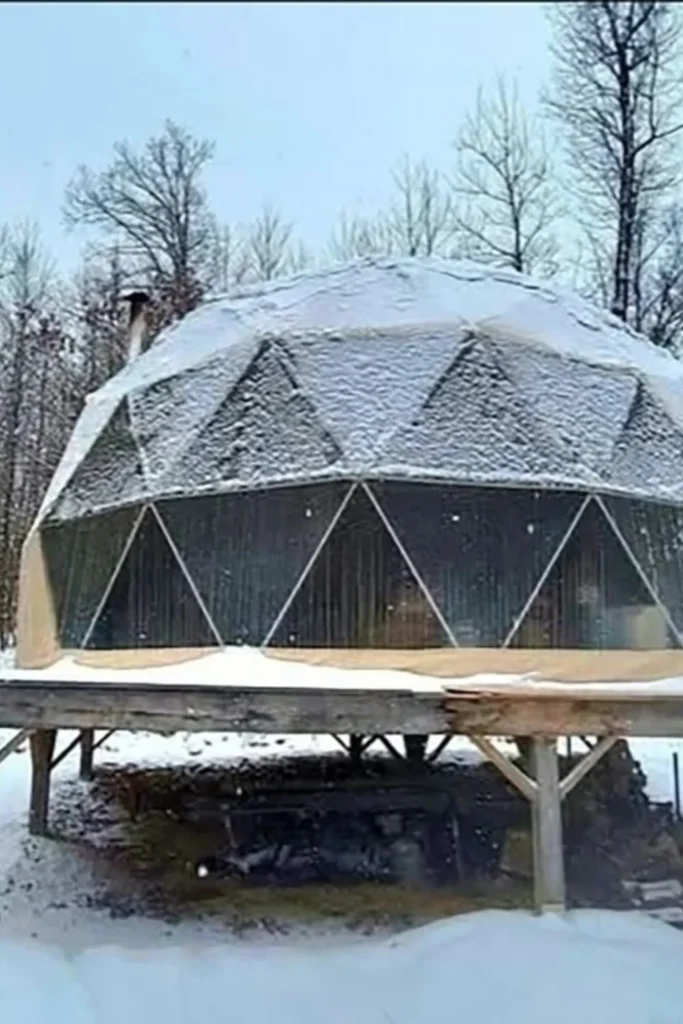
Total cost of the home: $30,000. For context, the current median U.S. home listing price sits at $429,500 according to Realtor.com, meaning the Hugheses built their home for less than a tenth of that.
If you follow stories about people building outside the traditional housing system, there is a WhatsApp community where this kind of content, real costs, real builds, real mistakes, gets shared regularly.
The Real Challenges Nobody Talks About
Six years in, Sean and Jessica are still figuring things out. And they will tell you that directly.
One of their biggest mistakes was dome placement. Putting it in direct sunlight means the interior hits 115 degrees in summer and drops to 20 degrees in winter. The wood stove helps, but many evenings are still cold.
Jessica’s first year was genuinely brutal. “Bug pressure was a very real thing to me that I wasn’t expecting,” she says.
Learning to share space with snakes, lizards, bees, and insects was a transition she almost didn’t survive, emotionally at least. Six years later, she says she’s learned to live harmoniously with it.
Water is another daily reality. They bought land with a creek specifically for this reason, and collect rainwater as a backup. But doing laundry still means a trip to the creek, regardless of weather.
“Everybody sees this life as freedom, which it is in so many ways. But you are trading conveniences for the same kind of conveniences that require work that goes into them instead of money,” Sean says.
Why This Matters
The Hugheses aren’t an outlier. They’re part of a pattern.
According to the 2024 Greater Los Angeles Homeless Count by LAHSA, there were 75,312 unhoused people in LA County, a number that barely shifted despite billions in government spending.
The city’s affordability crisis keeps pushing people out faster than any program can absorb them.
What Sean and Jessica did, find land in a flexible state, build unconventionally, and build cheaply, is exactly the kind of solution that doesn’t show up in policy reports but is happening quietly across the country.
The gap between what housing costs and what people can afford has never been wider. We’ve covered that gap from multiple angles on this site, from Quincy Jones’ Bel Air estate returning to market at $35 million to Al Horford listing his second Boston mansion for $1.5 million.
The extremes of that market are what make stories like the Hugheses’ feel both radical and completely logical at the same time.
What They Built Beyond the Dome
Sean and Jessica now run a TikTok account, @offgridsean, with over 333,000 followers. Their growth came specifically because they didn’t sugarcoat anything.
“I gained such a following because we’re very honest and open about our mistakes, the bug pressures, what you deal with in daily life,” Sean says. “It’s not all rainbows and unicorns in this lifestyle.”
They generate income through corporate sponsorships, promotional videos for their land company, and occasional event filming in their community. Sean is sometimes flown to other states to help companies with their social media.
The same spirit that drove them to build something real from almost nothing now drives their content. It’s the same reason people keep watching.
Their next project is a 1,000-square-foot cabin as a permanent home, still minimalist, still on their terms.
That instinct to build something personal and intentional, on land you actually own, is exactly what made Zac Efron’s Costa Rica property so fascinating to follow when it hit the market, different scale, same idea.
Sean Hughes summed up six years of off-grid life in one sentence: “We’ve learned how to be happy with what we have instead of what everybody wants.”
That’s not a lifestyle tip. That’s a hard-won perspective from someone who lost everything in one of America’s most expensive cities and rebuilt on his own terms.
Would you trade city convenience for this kind of freedom, even knowing what it actually costs day to day? Leave your answer in the comments, the honest ones are always the most interesting to read.
For more stories on real estate, alternative builds, and the people rewriting what homeownership looks like, follow Build Like New on X and Facebook.
Disclaimer: This article is for informational purposes only. Always verify local zoning laws, building codes, and permit requirements with your county or municipality before starting any construction project.