Lightning Blew Out Their Outlets and Destroyed the Dishwasher. This Family Had Already Survived a House Fire 12 Months Before
Before 4 a.m. on July 10, 2026, Emily Laurie’s husband heard a loud boom. She got out of bed, smelled smoke, and immediately knew this was not nothing.
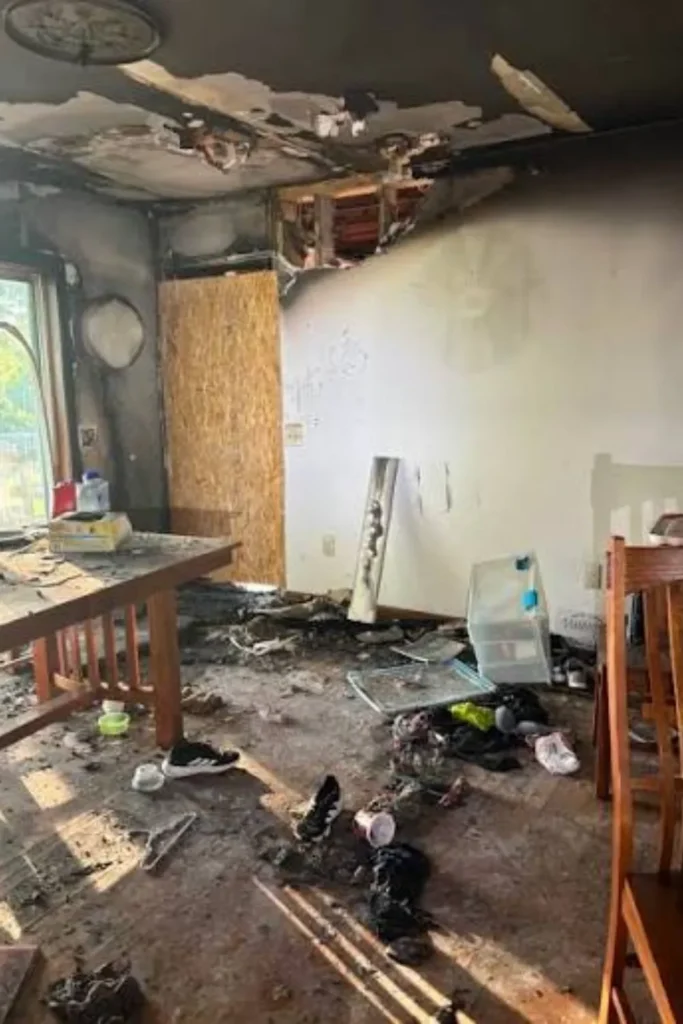
Just 11 days after marking one full year since a fire gutted their garage and kitchen, the same home in Ottawa, Kansas, had been hit by lightning. Same house. Same family. Two daughters still sleeping inside.
“I mentally can’t deal with another one,” Laurie said.
The House That Already Went Through Fire
On June 28, 2025, a fire started in the garage of the Laurie home. It tore through the kitchen and living area. The family spent an entire year rebuilding from that.
They got to the one-year mark. Then, 11 days later, lightning struck.
The bolt hit the front walkway. Chunks of concrete are now missing near the porch.
Inside, the strike traveled through the wiring and left behind a list of damage two blown GFI outlets, a fried Wi-Fi modem, a destroyed dishwasher, a ceiling fan knocked out, the furnace affected, and the AC completely down.
An HVAC tech came out and replaced a part for $700. The AC is back. The dishwasher is not coming back.
Why a Rebuilt Home Can Be More Exposed Than You Think
This is the part most news reports skipped over.
The Lauries’ electrician told them the strike likely found “a weak spot in metal or wiring.” That is not a random phrase. That is exactly how lightning works.
Lightning does not strike randomly. It follows the path of least resistance through metal, plumbing, and electrical systems.
A home that has recently been rewired or reconstructed, without a whole-house surge protector installed at the electrical panel, is a clean, unobstructed path for a surge to travel.
This is not isolated to Ottawa. Just days ago, lightning struck a home in Winona, Minnesota, and started an attic fire that the homeowner put out before firefighters arrived, a reminder that even a “handled” strike can leave hidden damage in walls and wiring that no one sees until it is too late.
According to KCTV5’s full report on the Laurie family, the electrician’s assessment makes it clear – lightning finds entry points, and a home mid-rebuild or recently finished is not automatically protected from what comes next.
If you follow home safety and property incidents as they happen, there is a WhatsApp channel that covers these kinds of stories as they break. Worth having on your radar.
Why This Matters
This story is not just about one family’s bad luck. It reflects something homeowners across the country are dealing with right now.
According to the Insurance Information Institute, U.S. insurers paid $1.65 billion in lightning-related homeowners claims in 2025, a 59% increase from $1.04 billion in 2024. The average cost per claim jumped nearly 43%, reaching $26,616.
The damage list from the Laurie home fits that profile almost exactly. And every item on it — modem, dishwasher, HVAC component, outlets, furnace — gets more expensive to replace as home technology keeps getting smarter.
This pattern keeps showing up in different ways. Two Utah homes in Herriman and Millcreek were found fully engulfed when firefighters arrived, both fires moving faster than anyone expected.
And in Oregon, a 68-year-old man was found dead after a two-alarm fire trapped him on the second floor, a result of how quickly a home fire can cut off every exit.
The common thread in all of these is not bad luck. It is how fast damage moves once a home is already in a vulnerable state.
Emily Laurie took her daughters Elizabeth, 6, and Eliana, 2, to their grandparents’ house at 4 a.m. First responders cleared the home by 5 a.m. Elizabeth summed it up simply: “I was scared. Her was crying.”
Laurie said she keeps pushing through for her kids. “It does carry weight. And I try to just be there for my kids and push through.”
Key Takeaways
- Lightning struck the Laurie home in Ottawa, Kansas at just before 4 a.m. on July 10, 2026
- The same home had a garage and kitchen fire on June 28, 2025, just over a year earlier
- The strike damaged two GFI outlets, a modem, dishwasher, ceiling fan, furnace, and the HVAC system
- HVAC repair cost $700. The dishwasher needs full replacement
- The electrician said the strike likely found a weak point in the home’s metal or wiring
- Newly rebuilt homes without whole-house surge protection can be more exposed to lightning damage
- In 2025, the average lightning insurance claim cost $26,616, up nearly 43% from the year before
What would you do if this happened to your home? One fire, one lightning strike, two young kids, and one family just trying to hold it together. Drop your take in the comments below. Would you stay, rebuild again, or make the move?
If stories like this are your thing, Build Like New covers home damage, property incidents, and the human side of what happens when things go wrong with a house. Worth bookmarking if you want more than just the headline.
For real-time updates as these stories break, follow Build Like New on X (Twitter) and join the conversation on the Facebook community. That is where these get discussed as they happen.
Disclaimer: This article is for informational purposes only. All details are based on publicly available reports at the time of publication.