One Person Confirmed Dead After Wilmington House Blaze
A house fire in Wilmington, Delaware, turned fatal early Saturday morning, raising serious concerns about home safety and fire preparedness.
The fire broke out around 4 a.m. on North Harrison Street. Firefighters entered the home to search for occupants, but the blaze intensified rapidly, forcing them to evacuate.
Within about 25 minutes, the front portion of the house collapsed. Later in the day, officials confirmed that a woman’s body was recovered from the debris.
Timeline of the Incident
| Time/Event | What Happened |
|---|---|
| Around 4:00 a.m. | Fire started inside the house |
| Initial response | Firefighters entered the property |
| Minutes later | Fire intensity increased sharply |
| ~25 minutes | Front section of house collapsed |
| After 1+ hour | Fire brought under control |
This sequence shows how quickly the situation escalated.
Why the Fire Became Uncontrollable
Firefighters are trained to operate in extreme conditions, but withdrawal usually signals a dangerous turning point. High heat, thick smoke, and weakening structures make rescue operations nearly impossible.
In this case, the collapse that followed confirms how severely the structure had been compromised.
In more extreme situations, fires can escalate even faster after sudden blasts, as seen in this Queens fire incident involving multiple injuries.
The Risk of Early Morning Fires
Fires that occur during sleeping hours are among the most dangerous. Detection is delayed, and smoke inhalation becomes a major threat before flames are even visible.
Similar early morning incidents are being reported more frequently, with patterns showing how quickly situations turn critical.
Data from the National Fire Protection Association shows that most residential fire deaths happen in homes, often at night when occupants are less alert.
Possible Causes Under Investigation
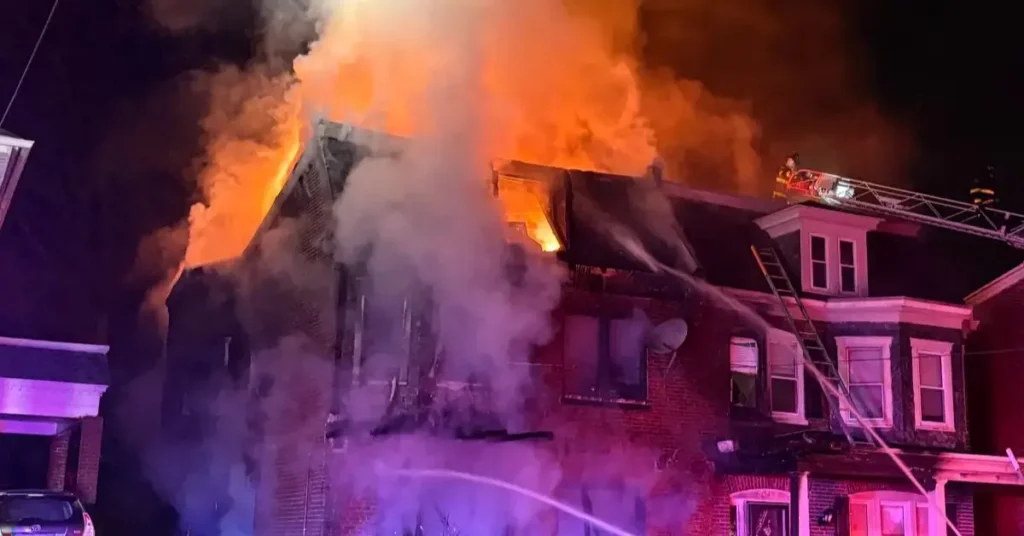
Authorities have not yet confirmed the exact cause of the fire. However, common sources in similar cases include electrical faults, heating equipment, and unattended appliances.
Even small triggers can turn serious, like this kitchen fire that caused major home damage.
A related update from NBC Philadelphia coverage of Wilmington fire also highlights the intensity of the blaze and structural damage involved.
What This Incident Reveals
Fatal house fires often share similar patterns:
- Lack of working smoke alarms
- Delayed response to fire or smoke
- No clear escape plan
These factors significantly increase risk, even in otherwise safe homes. A similar outcome was reported in another case where delayed response proved fatal, detailed in this Skowhegan house fire incident.
Essential Fire Safety Measures
Basic precautions can reduce the chances of a fatal outcome:
- Install smoke alarms in bedrooms and hallways
- Test alarms regularly
- Plan and practice escape routes
- Avoid overloading electrical outlets
These steps are simple but highly effective.
Why This Matters
House fires like this are not rare. According to the NFPA, thousands die in residential fires each year, mostly inside homes.
Data in home fire statistics shows how quickly these incidents turn fatal, often within minutes of ignition.
This highlights a simple reality. Fires spread faster than expected, and without early warning systems, the chances of survival drop significantly.
Basic safety measures like smoke alarms and planning an escape route can make a critical difference in real situations.
Final Thoughts
The Wilmington fire highlights how quickly a normal home can become a life-threatening environment. Rapid fire spread, structural collapse, and delayed detection create a narrow window for survival.
What safety measure has been overlooked at home recently?
Share thoughts in the comments and explore more practical safety insights on Build Like New. For more real-world home safety updates and breakdowns, follow Build Like New on X and Facebook.
Disclaimer: This article is based on currently available information. Details may change as the investigation continues. Always rely on official sources for confirmed updates and follow recommended safety guidelines.