Summer Is Here and Your Backyard Grill Is a Bigger Fire Hazard Than You Think
It starts the same way every time. A warm evening, burgers on the grill, maybe a drink in hand. You flip the meat, go inside to grab a plate, and come back to something that should not be possible.
The back of your house is on fire.
This is not a rare freak accident. It happens to ordinary homeowners across the United States every single summer. The terrifying part is that most of them never saw it coming.
The Numbers Nobody Talks About at the Cookout
The scale of this problem is genuinely shocking when you see it laid out.
According to the NFPA, an average of 10,600 home fires involving grills and barbecues happen every year in the US. Those fires cause approximately $150 million in direct property damage annually. Not wildfires. Not electrical faults. Backyard cookouts.
Gas grills alone are responsible for over 9,000 of those home fires each year. And according to State Farm citing NFPA data, grill fires produce the highest average financial loss per home structure fire, at $28,500 per incident on average.
That is one cookout turning into a $28,000 repair bill. On the low end.
Here is what makes it worse. About 80% of American households own a grill.
And a Kidde survey found that 58% of Americans do not actually know how to properly use a fire extinguisher, the one tool that can stop a grill fire in the first 30 seconds before it reaches the wall.
How It Actually Happens
Everyone pictures a dramatic explosion. That is rarely how it goes.
Over Memorial Day, a gas grill caused severe structural damage to a home in Duson, Louisiana. Investigators found that the gas line running from the grill to the propane bottle had ruptured.
The fire started quietly. By the time anyone noticed, the damage was already serious.
In South Farmingdale, New York, a homeowner used his grill, turned it off, and walked inside. Minutes later the back of his house was engulfed in flames.
He grabbed his daughter, his dogs, and called 911. He had not touched the grill again.
According to Aidan Carickhoff, a trial lawyer at Saltz Mongeluzzi Bendesky in Philadelphia, the pattern is consistent. “The cases I see most often involve fires that started small and escalated before anyone could intervene.
Grease fires, propane leaks, and grills positioned too close to structures are the most common culprits, and in many cases, they’re preventable.”
Heat from a gas grill radiates further than most people expect. A flare-up combined with wind can push flames three feet or more beyond the grill itself. If your grill is sitting near siding, an awning, or a wood deck railing, that distance closes fast.
The Three Mistakes Most Homeowners Make Without Knowing It
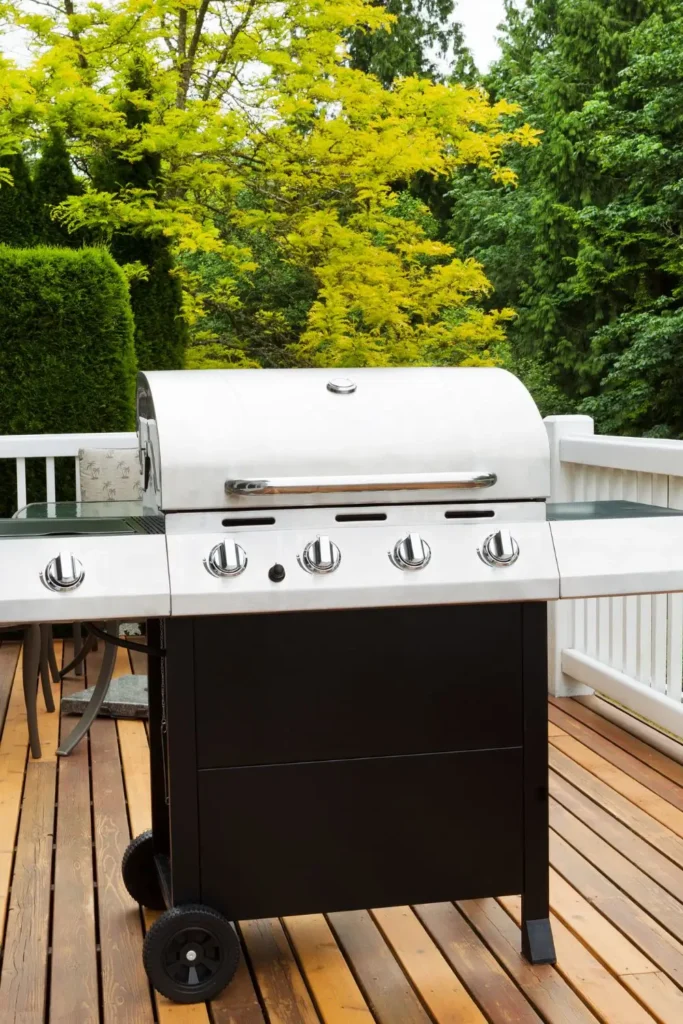
The first mistake is placement. Most people set their grill where it is convenient, not where it is safe. Under the patio cover, near the back wall, up against the deck railing. A grill should be at least 10 feet from any structure.
Edward Susolik, CEO and managing partner of Callahan and Blaine PC, puts it plainly.
“Get a measuring tape if you have to, because having it too close to the side of your home, the fence, the deck railing, or any branches overhead leaves you vulnerable to radiant heat and embers that can ignite anything flammable nearby.”
The second mistake is skipping the clean. In roughly one in five grill fires, the grill had not been properly cleaned. Grease and fat residue build up in trays and burners and become serious ignition fuel. Most people clean the grates and call it done. That is not enough.
The third mistake is trusting that “off” means safe. Gas lines and hose connections can develop slow leaks between cookouts, especially at the start of a new season. And this risk does not disappear when you stop grilling for the year.
The dangers of leaving your grill outdoors through the cold months go well beyond surface rust, and most homeowners have no idea until the damage is already done.
If you follow home safety and property news closely, there is a WhatsApp channel that covers stories like this as they break. Worth checking if you want to stay ahead without waiting for the news cycle.
According to grilling accident research from Hippo Insurance’s analysis of NFPA data, nearly 4 in 10 grill owners do not even know whether their homeowners policy covers grill fire damage. That gap in awareness is its own kind of risk.
Why This Matters
This is not a niche risk buried in some safety pamphlet. It is one of the most common and most preventable causes of serious home damage in America every summer.
According to State Farm’s grilling safety data, approximately 9,500 people are burned from grill fires or hot grills each year, and 21,682 patients visited emergency rooms due to grill-related injuries between 2020 and 2024.
Grill-related incidents cause approximately $172 million in annual property damage across the country.
Most homeowners insurance policies do technically cover fire as a standard peril. But complications come fast. Susolik is direct about this. “When you place grills in a way that breaks fire codes or goes against manufacturer specs, the insurer is likely to deny the claim.
Real financial damage happens right there, where you learn all too late that your grill was not far enough or it was not safe to fire up on the deck.”
And the damage does not always stay on your property.
This story of a family left homeless after a neighbor’s grill sparked a devastating fire shows exactly how fast this becomes someone else’s crisis too, and how the legal and financial weight of that can land on the person who just wanted to grill some burgers.
Key Takeaways
- Grill fires cause over $150 million in direct property damage in the US every year
- Gas grills are involved in more than 9,000 home fires annually
- The average grill structure fire causes $28,500 in damage per incident
- One in five grill fires happens because the grill was not cleaned properly
- About a quarter of all home grill fires start on a balcony or open porch
- 58% of Americans cannot confidently use a fire extinguisher
- Nearly 4 in 10 grill owners do not know if their homeowners policy covers fire damage
- Placing your grill too close to any structure can give your insurer grounds to deny your claim
Did you know any of this before reading, or did something here genuinely surprise you? Have you or someone you know ever had a close call with a grill fire?
Drop it in the comments. Genuinely curious whether people feel this risk gets talked about enough or quietly falls through the cracks every summer.
Wrapping Up
Most grill fires do not start with a careless person making an obvious mistake. They start with someone who did everything they normally do on a normal weekend.
The routine is the risk. And that is exactly why this one is so easy to miss until it is too late.
If this kind of story is your thing, Build Like New covers home safety, property risk, real estate, and the human side of what happens when things go wrong. Worth bookmarking if you want more than just the headline.
For more stories like this as they break, follow Build Like New on X (Twitter) and join the conversation over on the Facebook community. That is where these things get discussed the moment they happen.
Disclaimer: This article is for informational purposes only. All data is based on publicly available reports at the time of publication.