5 Clear Signs Your Bedroom Looks Messy (According to Pro Organizers)
I’ve spent years helping people tackle messy bedrooms, and one thing always surprises me: it’s rarely about the clutter you think. Clothes on the floor? Sure, that’s obvious. But professional organizers notice things you wouldn’t even consider—the subtle cues that instantly signal a room is out of control. I want to show you exactly what these experts spot in seconds, why it matters, and how you can fix it fast without buying a ton of fancy bins or spending hours rearranging furniture.
By the end of this article, you’ll see your bedroom through a pro’s eyes, learn the small tweaks that make a huge difference, and finally feel in control of your space every single day. Even small details—like whether your bedroom door stays open or closed at night—can affect how your space feels and functions. Let’s start by uncovering the first mistake almost everyone makes—one that’s hiding in plain sight in your bedroom right now.
Mistake #1: Clothes Everywhere — Lack of Effective Clothing Flow
I can tell the state of a bedroom in seconds just by looking at the floor. Piles of clothes on chairs, half-empty hampers, and closets spilling over are like a flashing neon sign: “This room has no clothing system.” And it’s not just about mess—it’s about how your habits around clothes affect your stress levels.
Here’s how you can fix it without feeling overwhelmed:
- Create zones for your clothing: a “wear-again” pile, a laundry pile, and a donation pile.
- Follow simple rules: hang or fold clothes immediately after wearing, and place hampers right next to your closet or bed.
- Be consistent: even small daily actions add up to a room that looks tidy instantly.
Clothing clutter is usually the first thing organizers notice because it signals deeper organizational gaps. It also affects your mood—seeing your clothes everywhere subconsciously adds stress. One pro organizer even says that clothes “in transit” mentally weigh you down, keeping your brain in clutter mode.
Mistake #2: Unmade Bed and Surface Clutter — Visual Chaos First
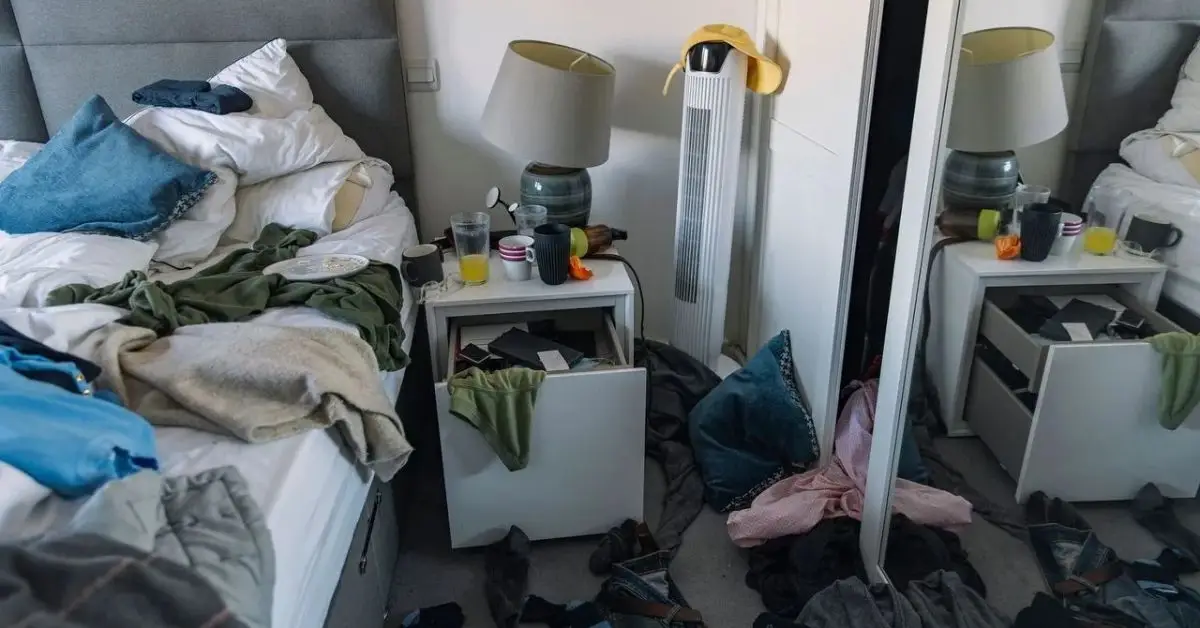
I’ve learned that the bed is more than a place to sleep—it’s the centerpiece of perception. An unmade bed and cluttered nightstands or dressers immediately tell you, and anyone who walks in, that the room is messy. It’s visual chaos that hits harder than floor piles.
Here’s a step-by-step way to tackle it:
- Make your bed every morning. It takes 60 seconds but dramatically improves how the room looks and feels.
- Clear surfaces: only leave essential items on nightstands or dressers. Everything else should have a home.
- Stack habits: link small routines like putting away your phone or water glass with bed-making so it becomes automatic.
Even pro organizers highlight that surface clutter is often underestimated—but it creates a huge psychological payoff when cleared. Once that’s done, you can focus on comfort and warmth by trying a few simple tricks to make your bedroom warmer this winter without cranking the heat. For extra guidance, I found this practical expert guide on decluttering your bedroom that explains simple habits professionals use to maintain a calm, tidy space.
Mistake #3: Invisible Clutter — No “Homes” for Things
I often walk into a bedroom and notice it looks “messy,” even when the floor seems clear. That’s because invisible clutter is everywhere—items with no real home get left on chairs, counters, or nightstands. Professional organizers can spot this immediately because it shows a room has no system.
Here’s how you can fix it:
- Designate a home for every item: shoes, accessories, electronics, papers—everything should have a clear place.
- Apply the rule: “If it doesn’t have a place, it doesn’t stay.”
- Ask yourself: “Where would I look for this if I needed it?” This simple question helps prevent random piles from forming.
This isn’t just about storage—it’s a system design problem. You can have bins and shelves, but if things don’t belong somewhere, clutter will always come back. At the same time, it’s smart to protect your space from unwanted visitors by learning a few simple natural ways to keep mice out of your bedroom.
Mistake #4: Too Many Storage Products With No Plan

I’ve seen it countless times: people buy bins, baskets, and organizers thinking it will magically fix the mess. Instead, the room ends up full of containers—and still chaotic. Professional organizers know that storage without a system often makes things worse.
Here’s the smarter approach:
- Declutter first: know exactly what you’re keeping before buying storage.
- Choose appropriate containers: small labeled boxes for items that tend to scatter; avoid oversized bins that just hide clutter.
- Be intentional: every container should have a purpose, not just take up space.
Many people on Reddit admit they’ve bought dozens of products only to find their rooms still messy—proof that products alone don’t solve the problem. For actionable tips on using storage wisely and designing your system, check out this practical bedroom organizing guide from House Beautiful.
Mistake #5: Inconsistent Habits = Recurring Mess
I’ve noticed a pattern: even when someone declutters perfectly, the mess often comes back. That’s because your daily habits aren’t aligned with your systems. Whether it’s ADHD, exhaustion, or just mental blocks, these small behaviors quietly undo all your hard work.
Here’s how to break the cycle:
- 5‑Minute Reset: Take five minutes before bed to put away clothes, fold blankets, or clear surfaces.
- Daily Tiny Tasks: Small actions—like putting one item back in its home—compound into a tidier room over time.
- Habit Stacking: Pair a new habit with an existing routine, like putting your phone on its stand right after brushing your teeth.
Even organizing psychologists emphasize that tiny, consistent behaviors outweigh occasional deep cleaning sessions. The goal isn’t perfection—it’s sustainability.
Behind the Scenes — What Organizers Think But Don’t Always Say
Sometimes, the mistakes aren’t obvious:
- Saving items “just in case” or for a special occasion.
- Ignoring shelf or drawer rules, leading to invisible chaos.
- Piles forming in “temporary” spots that never get emptied.
Quick self-audit checklist:
- Ask: “Does this item have a true home?”
- Look at surfaces—do they only hold essential items?
- Check recurring clutter spots—are they being ignored out of habit?
This section gives you a peek into the professional mindset and explains why pros don’t just move things around—they build systems that last.
Quick Action Checklist & Takeaways

Here’s how you can apply the five mistakes immediately:
- Clothes Everywhere → Create zones for wear-again, laundry, and donate.
- Unmade Bed & Surface Clutter → Make the bed and clear surfaces daily.
- Invisible Clutter → Assign a home to every item.
- Too Many Storage Products → Declutter first, then choose containers wisely.
- Inconsistent Habits → Start micro‑habits like a 5-minute nightly reset.
Start with one action tonight—it might feel small, but it compounds faster than you think.
I’d love to hear from you—what’s the one clutter habit you struggle with most in your bedroom? Share your thoughts in the comments below.
And if you want more practical, step-by-step tips to rebuild your space and life like a pro, check out Build Like New for guides, expert hacks, and real-life transformations.
Disclaimer: This article is for informational purposes only. Tips and strategies shared are based on professional organizing advice and real user experiences, but results may vary depending on your personal situation and habits.