Avoid These 5 Trees Near Your Driveway—Homeowners Regret It Later
I’ve seen this mistake more times than I can count. A homeowner plants a “nice-looking” tree near the driveway, everything feels fine for a few years, and then one day the concrete starts cracking. The driveway lifts. The car gets scratched by falling branches. And suddenly, a tree that was meant to add value becomes an expensive problem.
If you’re here, chances are you’re either planning to plant a tree—or you’re already dealing with driveway damage and trying to figure out what went wrong. I want to be clear upfront: the issue usually isn’t bad luck. It’s choosing the wrong tree in the wrong place.
Driveways are rigid. Tree roots are not. Roots grow toward moisture, oxygen, and space—and guess where all three exist? Right under concrete and paved areas. That’s why some trees you see recommended for shade or fast growth should never be planted anywhere near where you park your car.
In this guide, I’m going to walk you through five trees that can quietly destroy your driveway and even damage your car. Not theory—real-world behavior, real homeowner experiences, and practical insight you can actually use before it’s too late.
Before you plant anything—or before you ignore that first crack—ask yourself this: is the tree near your driveway helping your home, or slowly setting you up for a repair bill?
How Tree Roots Cause Damage — The Science Behind the Problem

Most people imagine tree roots going straight down like a taproot. That’s the biggest misunderstanding—and the most expensive one.
In reality, tree roots grow outward, not downward. They spread close to the surface because that’s where oxygen, moisture, and nutrients are easiest to find. And when you pour a driveway, you unintentionally create the perfect environment for roots to move toward it.
Here’s what’s really happening under your driveway.
Where roots actually go (and why it matters)
Roots don’t “hunt” concrete, but they do chase moisture. Driveways trap water underneath them, especially along the edges. I’ve seen roots travel far just to reach that damp, oxygen-rich soil.
According to Iowa State University Extension on managing trees near pavement, a mature tree’s root system can easily spread two to three times wider than its canopy, which means a tree planted at what feels like a “safe distance” often isn’t safe at all.
How soil and water make things worse
Your soil type plays a bigger role than most homeowners realize.
- Clay soil holds water longer, encouraging aggressive surface roots
- Sandy soil lets roots travel farther in search of moisture
- Poor drainage near driveways pushes roots upward, not deeper
Once roots start growing under concrete, they don’t crack it by force. They slowly lift and shift the slab as they thicken over time.
Common misconceptions I hear all the time
- “The tree is still small, so it’s fine”
- “Roots won’t grow under solid concrete”
- “If there’s no crack now, there won’t be one later”
All three assumptions ignore how roots behave over 5, 10, or 20 years.
Early warning signs most people miss
You don’t wake up one day with a destroyed driveway. The damage starts quietly.
- Hairline cracks along driveway edges
- One side of the driveway sitting slightly higher
- Pavers shifting or separating
- Small puddles forming where water never used to collect
If you’re noticing any of these, roots are already involved—even if you can’t see them yet.
Core Criteria: What Makes a Tree Unsafe Near a Driveway
Before I name specific trees, I want you to understand the pattern. These trees aren’t “bad” trees—they’re just the wrong trees for tight spaces and hard surfaces.
When I assess driveway damage cases, the same traits show up again and again.
Trees become risky near driveways when they have:
- Fast growth rates: Fast growth above ground usually means aggressive growth below ground.
- Spreading or invasive root systems: These roots don’t respect boundaries like concrete edges or compacted soil.
- Surface-level roots: Trees that grow roots close to the surface are more likely to lift slabs and pavers.
- Large canopies with high water demand: The more water a tree needs, the farther its roots will travel to find it.
If you keep these criteria in mind, you’ll start spotting risky trees even before someone warns you about them.
As you read the next section, don’t just look at the tree names. Ask yourself: Does this tree grow fast? Does it need a lot of water? Does it spread wide underground?
If the answer is yes, your driveway is already at risk.
Tree #1 — Silver Maple

If there’s one tree I’ve seen cause repeated driveway damage, it’s the silver maple. Homeowners plant it for fast shade, but that speed comes at a cost you usually don’t see until the concrete starts shifting.
Silver maple roots spread wide and stay close to the surface. Even if the tree looks a “safe distance” away, the roots often reach well under the driveway.
What usually goes wrong
- Roots grow directly beneath concrete slabs
- Driveways develop long cracks, not just hairline ones
- Slabs lift unevenly, creating trip hazards
- Edges crumble where roots push upward
I’ve come across multiple homeowner reports on forums where people had to choose between cutting down a mature silver maple or replacing sections of their driveway. In most cases, the driveway repair came after years of ignoring small cracks.
Arborists regularly warn against planting silver maples near structures, sidewalks, or paved areas because of how aggressive and shallow their roots are. This advice is also echoed by The Spruce’s guide on trees to avoid near driveways.
Safer alternatives to consider
- Amur maple
- Serviceberry
- Eastern redbud
These provide shade without the same level of root aggression.
Tree #2 — Willow (Weeping & Other Species)
Willows don’t just damage driveways—they change the soil under them. And that’s where the real danger starts.
Willow trees are extremely thirsty. Their roots grow fast and far in search of water, and they pull moisture from surrounding soil nonstop. If you have a driveway nearby, that constant moisture shift can weaken the base underneath the concrete.
Why willows are especially risky
- Roots aggressively chase water under pavement
- Soil stays overly wet, then dries unevenly
- Driveway base loses stability over time
- Cracks form from below, not just surface stress
I’ve seen homeowners share stories online where their driveway didn’t just crack—it slowly sank on one side. In many of those cases, a willow tree was planted nearby years earlier, often near a drainage area.
Better tree options
- Japanese tree lilac
- Crabapple varieties with compact roots
- Dogwood
These trees don’t disrupt soil moisture the same way willows do.
Tree #3 — Poplar / Cottonwood

Poplar and cottonwood trees look harmless when young. That’s part of the problem.
They grow incredibly fast, and fast growth means fast root expansion. Their root systems spread wide, while their wood remains relatively weak. That combination puts both your driveway and your car at risk.
Common problems I see with poplars
- Roots pushing under driveways within a few years
- Pavement cracking due to rapid root thickening
- Large branches breaking during storms
- Entire trees tipping over in high winds
Some homeowners have shared insurance claim stories where fallen cottonwood branches damaged parked vehicles—sometimes in driveways that were already compromised by root uplift.
If you want a safer replacement
- Columnar hornbeam
- Japanese zelkova (dwarf varieties)
- Smaller ornamental shade trees
These grow more slowly and don’t overwhelm paved areas.
Tree #4 — Sweetgum
Sweetgum trees don’t get talked about enough—and that’s exactly why they’re a problem.
At first glance, they seem like a solid choice. Nice fall color, tall shape, and widely available at nurseries. What most people don’t realize is that sweetgum trees develop strong surface roots as they mature.
Those roots don’t stay hidden.
How sweetgum trees damage driveways
- Surface roots creep toward driveway edges
- Concrete starts lifting from the sides, not the middle
- Expansion joints widen over time
- Pavers near the tree slowly shift out of place
I’ve seen cases where the driveway itself looked “fine,” but the edges kept breaking down year after year. That’s classic sweetgum behavior.
Why they’re still sold everywhere
- They grow fast and look attractive when young
- Problems usually show up after several years
- Nurseries focus on appearance, not long-term impact
By the time the damage becomes obvious, the tree is already established—and expensive to remove.
Better-looking, safer alternatives
- Tupelo (black gum)
- Red maple cultivars bred for compact roots
- Sweetbay magnolia
You still get visual appeal without the surface root headache.
Tree #5 — Bradford Pear (and Other Weak-Wooded Ornamentals)

Bradford pear trees are one of the most misleading landscape trees ever marketed.
They’re sold as neat, compact, and decorative. But in real-world conditions, they combine problematic roots with extremely weak wood—a bad mix for driveways and parked cars.
Why Bradford pears cause trouble
- Shallow root systems that interfere with pavement
- Dense canopy that catches wind
- Branches split easily during storms
- Fallen limbs regularly damage cars and driveways
Many homeowners don’t realize how messy it can get when a tree limb falls outside their property—if you’re curious about who’s responsible for cleaning up when a tree from your yard lands in a neighbor’s yard, this guide explains it clearly.
Many homeowners don’t realize how risky these trees are until a storm hits. Entire limbs can snap off without warning, especially once the tree matures.
Several state extension programs and home experts have openly warned against planting Bradford pears because of their structural weakness and invasive behavior. This issue has been widely covered, including by Southern Living’s reporting on invasive and problematic ornamental trees.
Why they’re still popular
- Fast growth and showy spring blooms
- Cheap and widely available
- Marketed as “low maintenance”
In reality, they often lead to higher long-term costs.
Bonus Trees That Might Be Risky Depending on Your Soil
Not every tree is automatically bad near a driveway. Some become risky only under the right conditions—and that’s where many homeowners get caught off guard.
Trees that need extra caution
- Elm (some varieties): Can develop spreading roots in compacted or clay-heavy soil
- Silver poplar relatives: Known for wide root systems in moist ground
- Liquidambar (sweetgum family): Especially risky in poorly drained soil
I’ve seen homeowner posts where someone planted an elm without issues for years—until soil compaction or drainage changes caused roots to push upward. One common story you’ll find on Reddit sounds like: “My elm cracked my pavers after five years, and I never saw it coming.”
If your soil holds water, drains poorly, or sits under constant irrigation, even “borderline” trees can turn into driveway problems.
Before we move on—does your soil stay wet longer than it should after rain? That one detail changes everything.
How to Protect Your Driveway if You Already Have These Trees
If you already have one of these trees near your driveway, don’t panic. Damage doesn’t always mean you have to remove the tree immediately—but you do need to act early.
I’ve seen people ignore small warning signs and end up paying thousands later. The goal here is control, not guesswork.
Root barriers: what actually works
- Physical root barriers can help only if installed correctly and deep enough
- Shallow barriers often fail because roots grow underneath them
- They work best for younger trees, not fully mature ones
Root barriers are a prevention tool, not a cure.
Simple inspection schedule you can follow
- Check driveway edges every 3–4 months
- Look for new cracks, lifting, or uneven sections
- After heavy rain, watch where water pools
Small changes are easier and cheaper to fix early. If root pressure is already shifting your driveway or surrounding soil, adding structural solutions can help—you can follow 7 easy steps to build a retaining wall for your backyard to manage soil and root issues safely.
When to call an arborist vs DIY
- Call an arborist if cracks are widening or slabs are lifting
- DIY is fine for monitoring, sealing hairline cracks, and managing surface roots. Just like you need to be careful with tree roots near your driveway, everyday tasks can affect neighbors too—learn 3 things every homeowner should know before dumping snow in your neighbor’s yard to avoid fines and disputes.
- Never cut large roots yourself—this can destabilize the tree and cause it to fall
Minor fixes vs expensive repairs
- Crack sealing: low cost, temporary
- Root pruning + barrier: moderate cost, preventive
- Slab replacement or tree removal: high cost, last resort
If you’re choosing between a healthy driveway and a risky tree, the driveway usually loses if you wait too long.
Best Trees to Plant Near a Driveway (Safer Alternatives)
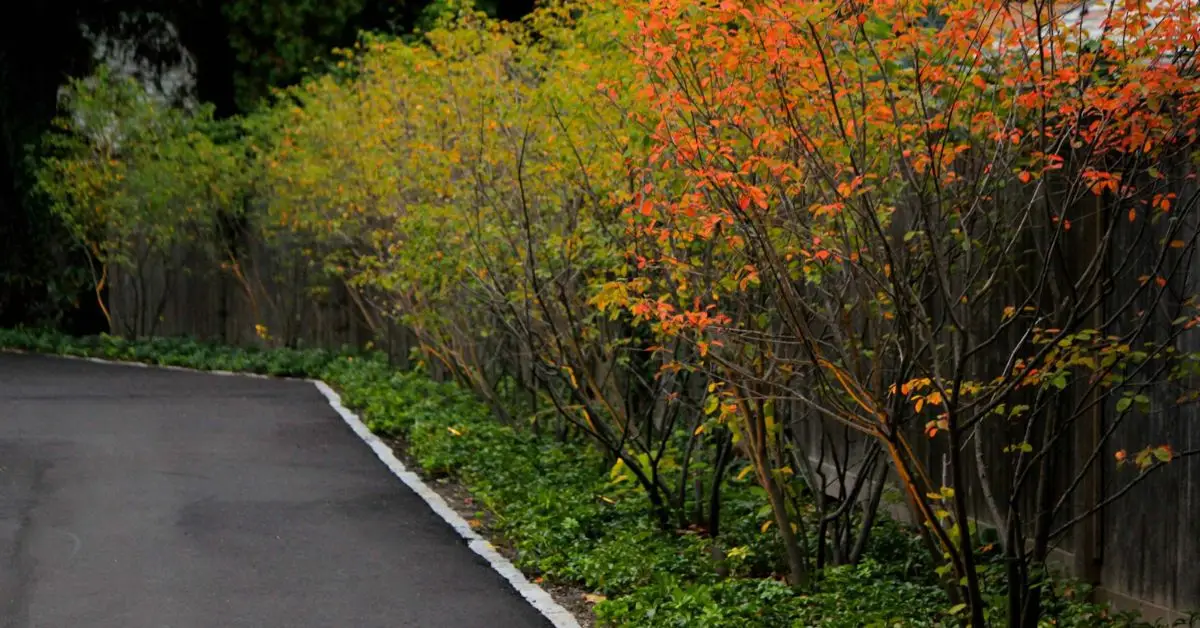
I don’t like telling people what not to do without offering better options. If you want shade or curb appeal without driveway damage, these trees are far safer choices.
Small-rooting ornamental trees
- Serviceberry
- Eastern redbud
- Japanese maple (non-invasive varieties)
Native trees that handle tight spaces well
- Dogwood
- American hornbeam
- Fringe tree
Why these work better
- Slower growth rates
- Deeper, less aggressive roots
- Lower water demand near pavement
These trees give you beauty and shade without putting your driveway at risk.
How to Evaluate Trees Before You Plant
Before you plant anything near a driveway, run through this checklist. It saves money, stress, and regret.
Ask yourself:
- How wide will this tree’s roots spread at maturity?
- How far is the planting spot from the driveway edge?
- Does my soil hold water or drain slowly?
- Is this tree known for fast growth?
Measure before planting
- Soil depth near the driveway
- Distance from concrete (not just the trunk—think roots)
- Nearby water sources like irrigation or drains
When to get professional help
- If planting within 10–15 feet of a driveway
- If soil stays wet for long periods
- If the tree is expected to grow large
A short consultation costs far less than driveway repair.
Common Mistakes Homeowners Make
I see these mistakes over and over again, even among careful homeowners.
- Planting too close because space is limited
- Choosing fast-growing trees for quick shade
- Trusting nursery tags without researching root behavior
- Ignoring early cracks and hoping they won’t get worse
Most driveway damage isn’t sudden—it’s the result of small decisions stacking up over time.
Summary
Let’s keep this simple.
Your 3-step action plan
- Assess: Look at what’s already growing near your driveway
- Avoid: Don’t plant fast-growing or shallow-rooted trees near concrete
- Protect: Monitor regularly and act early if you spot changes
Driveway damage is one of those problems that’s cheap to prevent and expensive to ignore.
If you’ve dealt with tree root damage—or you’re worried a tree near your driveway might be risky—drop a comment below. Real experiences help other homeowners avoid the same mistakes.
And if you want practical, no-fluff home improvement guidance, visit Build Like New for more expert-backed advice on protecting and upgrading your property.
Disclaimer: This article is for informational purposes only. The advice provided does not replace professional arborist, contractor, or landscaping consultation. Always assess your specific property conditions and consult qualified experts before making major tree or driveway decisions.