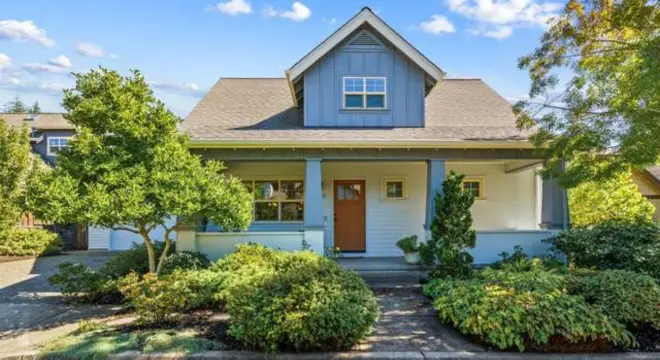
Brantley County Wildfire Contained After Historic Home Damage
When I look at the Brantley County wildfire update, it feels like a mix of relief and unease.
Yes, the fire has slowed. Officials say it has not grown in the last two days, and no new homes have been destroyed. After burning more than 22,000 acres and wiping out over 120 homes, that shift matters.
But if you pause for a second, you realize this is not really a “good news” story. It is a moment where the damage has already been done, and now the focus quietly shifts to what comes next.
A Historic Disaster for Georgia
When I looked deeper into this wildfire, one thing became clear. This is not just another fire update. This is now the most destructive wildfire in Georgia’s history in terms of homes lost.
More than 120 homes have already been destroyed across two fires. The Highway 82 fire alone has set a record no community ever wants to see.
According to WTOC, officials confirmed that no other wildfire in the state has caused this level of residential damage.
For you, that number might just look like a statistic. But on the ground, it means entire neighborhoods wiped out and families forced to rebuild their lives from scratch.
Two Fires, One Crisis
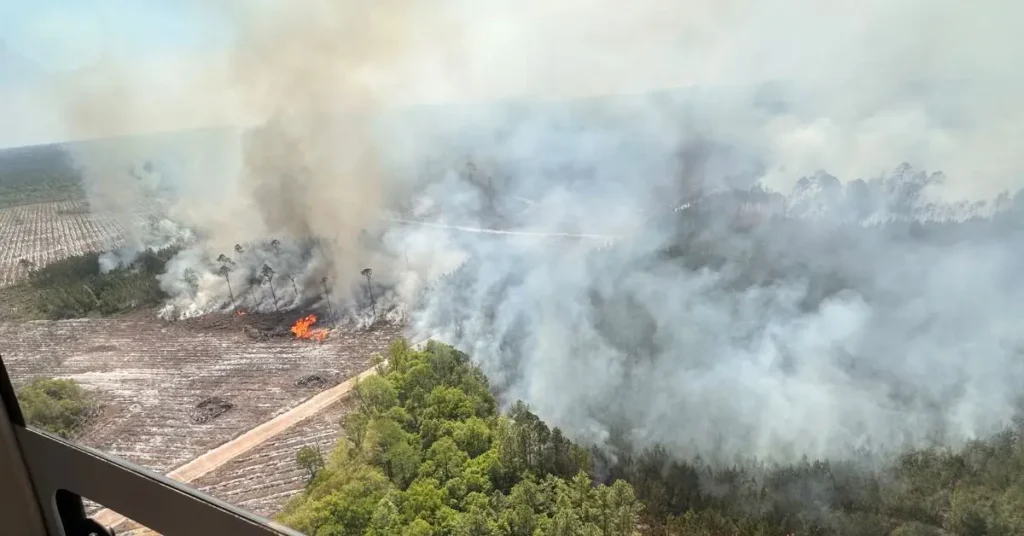
If you only follow headlines, it might seem like one fire. But in reality, two separate fires created this crisis.
The Pineland Road fire has started to slow down after days of aggressive spread. At the same time, the Highway 82 fire was doing the opposite just days ago.
Over the weekend, it nearly doubled in size, which pushed the situation from serious to historic.
This kind of split behavior is important to understand.
One fire calming down does not mean the overall danger is gone. It shows how unpredictable these situations can be, even within the same region.
Why the Fire Suddenly Slowed Down
If you are wondering what changed so quickly, the answer comes down to weather.
Cooler conditions, slightly higher moisture, and reduced wind speed gave firefighters the break they needed. Wildfires depend heavily on heat and dryness. When those conditions ease, the fire loses strength.
Think of it simply. Hot and dry weather acts like fuel, and wind spreads it faster. But when moisture increases and winds calm down, the fire slows and becomes easier to control.
Coverage from AP News also highlights how quickly fire behavior can shift with changing weather patterns.
This shift is the main reason you are hearing about the slowdown now.
I also keep sharing quick real-time updates and simple breakdowns when situations like this change fast, especially during active wildfire conditions.
Firefighters’ Strategy Shift
In the early phase, firefighters were not trying to completely stop the fire. Their goal was survival mode. Protect homes, hold whatever lines possible, and prevent it from getting worse.
Now that conditions have improved, their approach has changed.
They are moving from defense to control. Crews are actively strengthening containment lines and clearing vegetation that could fuel the fire further.
When officials say they are “holding the line,” it means they are finally able to stop the fire from advancing in key areas.
Why This Fire Became So Dangerous
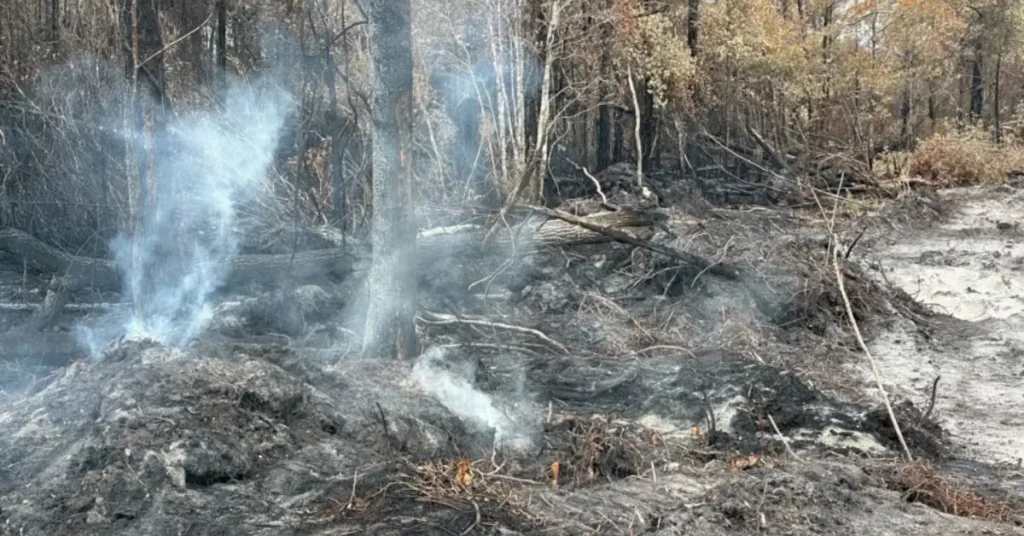
This wildfire did not become this destructive by chance. Everything lined up in the worst possible way.
In many cases, the real cause behind fires only becomes clear later during investigations, just like what we saw in this Gloucester Township fire incident now under active investigation.
There was plenty of dry vegetation acting as fuel. Strong winds kept pushing flames even when progress was made. On top of that, high temperatures made the fire more aggressive and harder to control.
When you combine dry fuel, wind, and heat, fires do not just spread. They grow rapidly and unpredictably. And that is exactly what happened in Brantley County, turning it into a historic disaster in a matter of days.
Homes Saved vs Homes Lost
When you hear that over 120 homes were destroyed, it feels overwhelming. Situations like this are not isolated either, similar to this Pico Union home fire that sent three people to the hospital, where even a single house fire can completely change lives overnight.
But there is another side to this story that most people miss.
Firefighters were able to stop the flames just feet away from many houses. In some cases, the fire had already reached the edge of people’s yards before crews stepped in and held the line.
That means while many families lost everything, many others were saved at the very last moment. It shows how close this disaster came to being even worse than it already is.
Human Impact — “It’s Heartbreaking”
When Georgia Governor Brian Kemp called the situation heartbreaking, it was not just a statement. It reflects what people on the ground are actually going through.
Families are not just dealing with property loss. Sometimes these incidents also overlap with other tragedies, like in this Elkhart County case where a shooting and house fire were connected, making recovery even more complicated for families.
They are dealing with sudden displacement, uncertainty, and emotional shock. One day you have a home, the next day you are figuring out where to stay and what to rebuild.
For you, this is where the story shifts from numbers to real life. This is about people trying to recover after losing everything they built.
Is the Danger Really Over
It is easy to hear that the fire has slowed and assume things are now under control. But that is not the full picture.
The fire may not have grown in the last couple of days, but it is still active. There are still hot spots, and conditions can change again if weather shifts back.
Wildfires do not end suddenly. They fade, flare up, and sometimes come back. That means the risk is still there, even if it feels quieter right now.
What This Wildfire Teaches
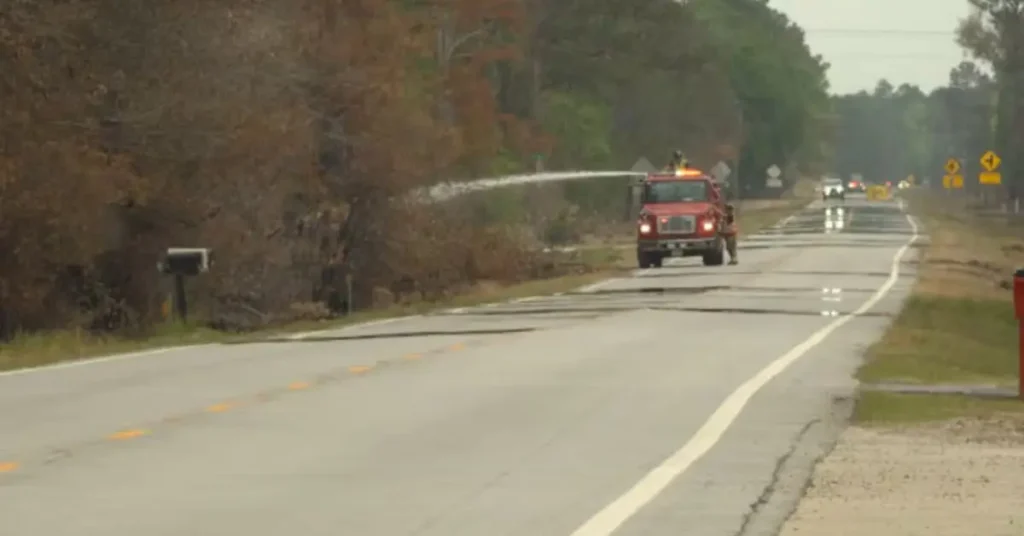
If you step back and look at the bigger picture, this wildfire leaves behind some clear lessons.
Weather plays a huge role. A small change in wind or moisture can completely shift how a fire behaves. That is exactly what you saw here.
Quick response also matters. Early containment efforts can mean the difference between saving a neighborhood and losing it.
And then there is vegetation. Dry, unmanaged fuel makes fires stronger and faster. Managing that risk before a fire starts is just as important as fighting it after.
If you want to understand how to stay prepared in situations like this, guidance from Ready.gov offers practical steps you can actually follow, from evacuation planning to protecting your home.
When you put all of this together, it becomes clear. This was not just a natural disaster. It was a combination of conditions that turned into something much bigger than expected.
What Happens Next for Brantley County
Recovery here is not going to be quick. When I look at situations like this, the real story often begins after the fire slows down.
Homes need to be rebuilt from the ground up. For many families, that means dealing with insurance, paperwork, and long waiting periods before anything actually moves forward.
But the bigger challenge is not just physical. It is emotional and financial. Losing a home changes everything. People are forced to restart their lives while still processing what just happened.
State support will play a big role here. From emergency aid to rebuilding assistance, how quickly help reaches these families will shape how fast the community can recover.
For you, this is the part that often gets overlooked. The fire may slow down in days, but recovery can take months or even years.
Final Perspective
When I step back and look at the Brantley County wildfire, it is clear this is more than just a breaking news story.
It is a reminder of how fast things can change, how much damage one event can cause, and how important preparation really is. The fire slowing down is a positive sign, but the real work is only beginning now.
If you have been following this closely, I would love to know your thoughts. Do you think communities like this are prepared enough for disasters like wildfires, or is there still a gap?
Also, if you want more real, practical insights on rebuilding, home safety, and smarter planning after disasters, you can explore more on Build Like New where we break things down in a way that actually helps you take action.
And if you like staying updated on real incidents like this and how people rebuild after them, you can also follow us on X and join our Facebook community where we share regular updates and practical insights.
Disclaimer: This article is based on currently available reports and official updates. Wildfire situations can change quickly, and details may evolve over time. Always refer to local authorities and official sources for the latest and most accurate information.