Utah Home Ceiling Collapses After Fire Suppression Line Bursts With No Fire in Sight
I’ve seen a lot of home damage stories. But this one from Elk Ridge, Utah stopped me cold, because the danger came from inside the house, from a system that was supposed to protect them.
What Happened That Tuesday Night
Ashley and Kade Olson were home, doing nothing unusual, when they heard what sounded like an explosion. No smoke. No fire. Just a sudden burst and then water, everywhere.
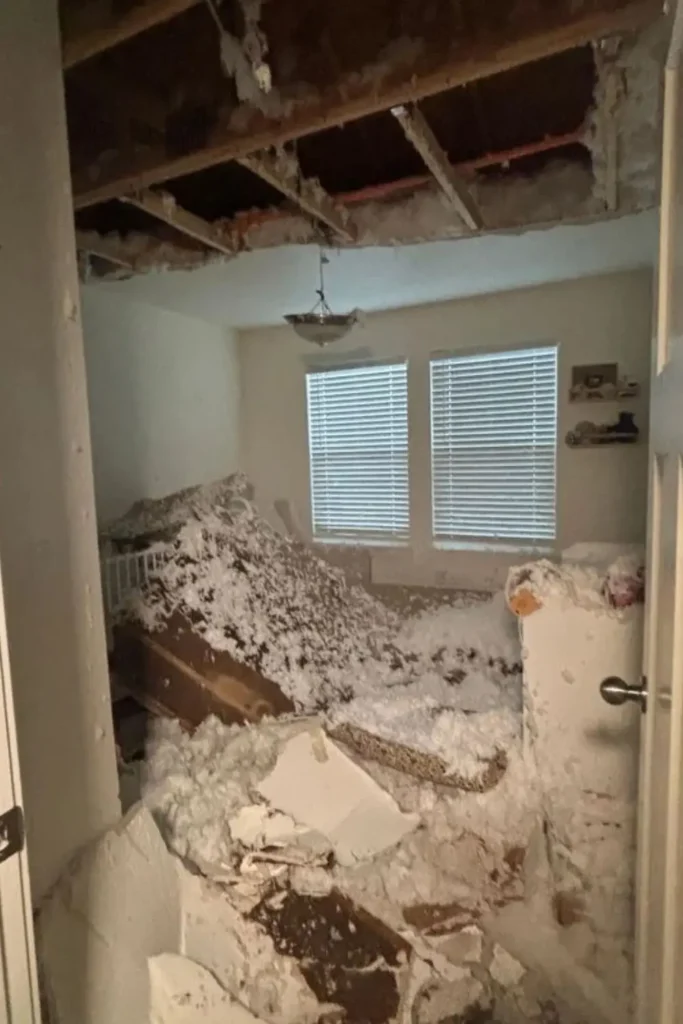
Within five minutes, the ceiling caved in. The whole upper floor flooded. The basement filled with half an inch of water.
Kade tried shutting off the main water supply. It didn’t work. The broken line was connected to the home’s fire suppression system, a completely separate pressurized line that kept running until it drained.
The hardest part? The ceiling collapsed directly over their daughter’s crib. She wasn’t in it. But she easily could have been.
Why the Sprinkler Line Burst With No Fire
Fire suppression systems don’t need a fire to fail. Residential sprinkler pipes can burst from overpressure in water lines, pipe corrosion, freezing and thawing cycles, or faulty installation.
Kade Olson asked all the right questions: Was there too much pressure? Did something happen with the city water system? Was it installed correctly?
The Elk Ridge Fire Department hasn’t responded to media. The cause is still officially unknown. That silence matters.
The Sprinkler Law Nobody’s Talking About
Here’s what every other report missed.
Elk Ridge City Code Section 10-12-38 requires sprinkler systems in all new residential construction.
But Utah State Law (SS 15A-5-203) restricts cities from mandating sprinklers unless specific conditions apply: wildland-urban interface zones, no hydrant access, steep road grades, or homes over 10,000 sq ft.
The Home Builders Association of Utah challenged this ordinance back in 2017.
If the Olson home’s system was installed under a legally questionable mandate, who bears liability when it fails? Nobody’s asking that. We should be.
This pattern of trusting safety systems without accountability isn’t new.
We covered a similar story in Largo, Florida, where a woman and her 4-year-old daughter died in a mobile home fire, raising the exact same question: who checks whether these systems actually work?
Does this raise questions about safety standards in your area? Drop your thoughts in the comments. I read every one.
The Real Cost
A single residential sprinkler head discharges 8 to 24 gallons per minute. In five minutes, that’s up to 120 gallons before anyone reacts.
When damage spreads across multiple rooms, ceilings, floors, and into the basement, you’re looking at Class 3 to 4 water damage. Restoration costs can run $20,000 to $150,000+.
The water itself isn’t clean. It’s been sitting in pipes collecting rust, sediment, and bacteria. Mold starts within 24 to 48 hours. Live electrical in a soaked ceiling makes it dangerous to even enter the room.
Will Insurance Cover It?
Short answer: maybe.
If the discharge was sudden and accidental, most homeowner policies will cover it. But if the insurer finds evidence of faulty installation or ignored corrosion, they can deny the claim under negligence exclusions.
We saw something similar with an elderly man in Springfield seriously injured after his home oxygen system caught fire, another case where “covered” vs. “denied” came down to exactly how the incident happened.
As noted in KUTV’s original report, the family is still searching for answers. The cause of the burst determines the coverage.
Why This Matters
According to water damage data from the Insurance Information Institute, 14,000 Americans are affected by water damage every single day. The average insurance payout is $13,954, and multi-room ceiling collapses go far beyond that.
Most homeowners with suppression systems have never located their shutoff valve, never had the system inspected, and never read the water discharge section of their insurance policy.
The Olsons’ daughter was in a crib directly under that ceiling. The ceiling didn’t care.
Stories like this keep happening, and most people only find out after the damage is done.
There’s a WhatsApp channel where incidents like this get shared as they break, along with practical home safety updates that rarely make mainstream news. Worth knowing about if you own a home.
What To Do Right Now
- Find your fire suppression shutoff valve. It is separate from your main water valve
- Get it inspected if it’s over 10 years old. Corrosion risk builds around the 12-year mark
- Check your insurance for “accidental water discharge” coverage today, not after an incident
- If a burst happens: get out, document on video, call a certified restoration company, then call your insurer
Safety systems only protect you if they’re maintained. Like in Janesville, Wisconsin, where four people died in fires and all four homes had no working smoke alarms. The systems existed. They just weren’t kept up.
The Ceiling Fell. The Questions Remain.
The Elk Ridge Fire Department still hasn’t explained what happened. The Olsons are living with damage, unanswered questions, and a near-miss that could have ended much worse.
This isn’t just about one burst pipe. It’s about homeowners trusting systems they don’t fully understand, installed under rules that may not have been legally sound, with no clear accountability when things go wrong.
Know where your shutoff is. Know what your policy covers. Don’t wait for the ceiling to tell you.
Have a fire suppression system at home? Have you ever had it inspected? Drop a comment below. Your experience might help someone catch a problem before it becomes a disaster.
For more stories like this, follow Build Like New on X (Twitter) and join the conversation on our Facebook page. Real incidents, real lessons, no fluff.
If you want deeper guides on home safety, water damage, and what to do when things go wrong, check out Build Like New. Everything is written for homeowners, not contractors.
Disclaimer: This article is for informational purposes only. Always consult a licensed fire protection professional or insurance advisor for guidance specific to your situation.