People in These States Should Be Checking Their Yards for Ticks Right Now
You stepped outside to mow the lawn, let the dog run loose, or just sit on the porch for twenty minutes. Nothing unusual. But by evening, someone in your house found a tiny dark speck attached to their skin.
That is not bad luck in 2026. That is the pattern playing out across millions of homes right now, and it is starting earlier in the season than most people expect.
Tick season this year is not just active. It is the worst it has been in nearly a decade.
The States Bearing the Worst of It
The Northeast is leading the surge, but the problem has moved well beyond its traditional borders.
According to the MyWild 2026 Tick Forecast, tick populations are surging in Ohio, Maryland, Virginia, West Virginia, Kentucky, and Tennessee, expanding into states where ticks were not historically considered a serious threat.
Add to that the usual high-risk zones: Pennsylvania, New York, New Jersey, Connecticut, Massachusetts, and most of the Upper Midwest.
The CDC’s Tick Bite Tracker recorded 71 per 100,000 emergency room visits in April 2026 as tick-related. That is more than double the historical average for that month. And April is not even peak season. Peak is still coming.
Why 2026 Is Hitting Harder Than Usual
The short answer is winter. The longer answer involves two opposite weather patterns doing the same damage.
In the Northeast and mid-Atlantic, a heavy snowpack acted as insulation. Theresa Smith, senior vice president of NaturaLawn of America, explains it this way: snow keeps the ground temperature stable even when air temperatures drop sharply.
Ticks sheltered beneath that snowpack survived in numbers that a harder freeze would have reduced.
In the South, the opposite happened. Above-average winter temperatures gave ticks ideal conditions to breed and reproduce. More ticks made it through. More ticks means a longer, heavier season.
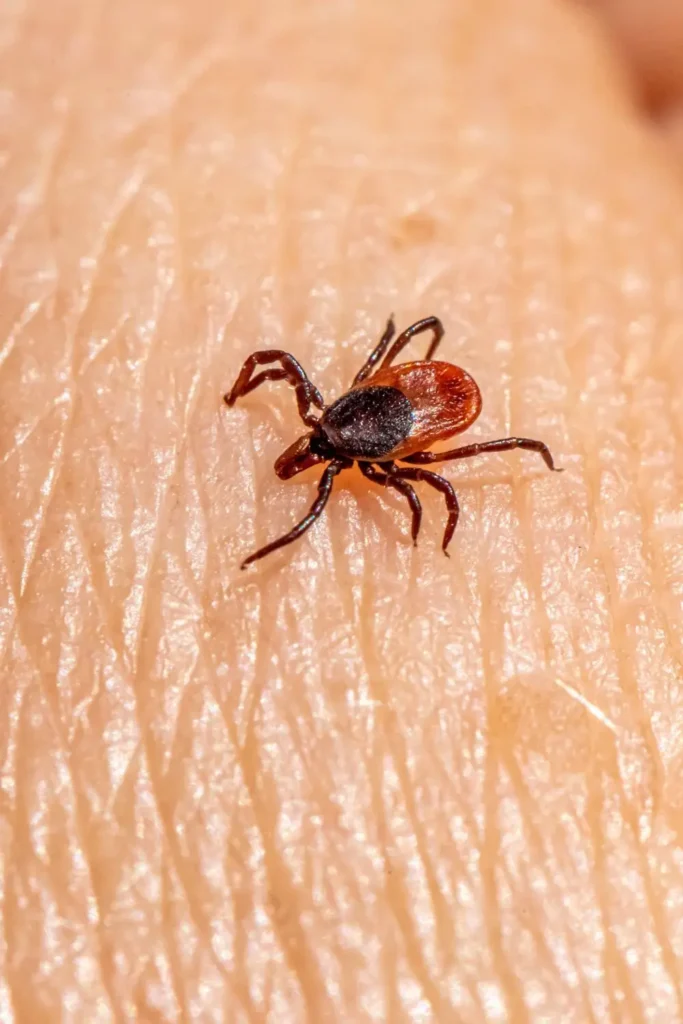
Nicole Carpenter, president at Black Pest Prevention, adds another layer: “The increase in tick populations is also about people spending more time and building homes in places where ticks are already active.
Wildlife like deer and other animals that move through neighborhoods more often now can bring new ticks.”
You can read the full breakdown of what is driving this spike at Realtor.com’s 2026 tick surge report.
It Is Not Just Lyme Disease on the Table
Most homeowners hear “tick bite” and think Lyme disease. That is one real risk, but it is not the only one showing up in 2026.
Dr. Linden Hu, infectious disease specialist at Tufts University, points out that deer ticks transmit Lyme by climbing on a blade of grass and waiting for a human or animal to brush by. Lone star ticks transmit ehrlichiosis and other serious infections.
Babesiosis, which infects red blood cells and can cause severe anemia, is spreading rapidly across the Northeast.
Alpha-gal syndrome, a red meat allergy triggered by a tick bite, is now documented in hundreds of thousands of people and moving beyond its traditional Southern range.
These are not rare edge cases. They are what makes this season more serious than a simple “watch out for ticks” advisory.
This pattern of small backyard pests carrying outsized consequences is something a lot of homeowners still underestimate. If you have ever spotted a ladybug indoors and assumed it was harmless, that same instinct of brushing things off is exactly what delays action when it matters.
Staying ahead of stories like this one as they develop is easier with a channel dedicated to it. Real Estate Pulse on WhatsApp covers home protection and property-level shifts as they happen, without the news cycle delay. Worth having in your feed.
Why This Matters for Homeowners Specifically
The forest trail is not the main risk point this year. Your backyard is.
Tick season in the Northeast and mid-Atlantic now runs from early April through late November. That nine-month window covers yard work, kids playing outside, pets tracking things indoors, and every weekend you spend in your own outdoor space.
The CDC estimates that 476,000 Americans are diagnosed and treated for Lyme disease every year. That number is already considered a significant undercount.
The economic burden of Lyme disease alone sits between $345 million and $968 million annually, not counting missed work, delayed diagnoses, or long-term treatment costs.
There are practical steps you can take at home right now.
Hamilton Allen, entomologist and vice president at Fox Pest Control, recommends a year-round approach: remove leaf litter, install wood chips or gravel near the yard-to-forest transition zone, mow regularly, and use tick-preventative medications for pets.
Carpenter adds cedar oil spray along fence lines, shaded corners, and yard edges as a deterrent ticks genuinely avoid.
For the plant-based layer, Smith recommends lavender, rosemary, and marigolds planted near the spaces where your family and pets spend the most time.
And if your property has no fence, that is a real gap because deer, rodents, and stray animals are the primary delivery system for new ticks into a yard.
A lot of this connects to a broader seasonal approach to protecting your home. These common foods already in your kitchen can double as natural pest repellents around entryways and yard edges, which adds a low-effort first layer.
And the homeowners who stay ahead of seasonal pest pressure consistently are the ones who have built these seasonal home habits into their regular routine before problems show up.
What happens outside your home directly affects how you live in it, and what it costs you later.
Key Takeaways
- The CDC recorded 71 tick-related ER visits per 100,000 in April 2026, more than double the historical average
- Tick populations are surging beyond traditional hotspots into Ohio, Virginia, Kentucky, Tennessee, and West Virginia
- Two opposite winter patterns, heavy snowpack in the North and warm temperatures in the South, both helped ticks survive in larger numbers
- Deer ticks can transmit Lyme disease, babesiosis, and other infections in the same bite
- Alpha-gal syndrome and ehrlichiosis are rising tick-borne threats most homeowners are not aware of
- Tick season now runs April through late November in most affected states
- Removing leaf litter, mowing regularly, using cedar spray, and adding fencing are the most effective yard-level defenses
- Pets are a primary entry point for ticks into the home and need year-round preventative treatment
Have you spotted ticks around your yard or home this season already? And have you changed anything about how you use your outdoor space because of it?
Drop your experience in the comments. Genuinely curious what people in the affected states are dealing with right now.
Wrapping Up
The surge is real, the data backs it up, and for homeowners in the affected states it is already at your back door.
The good news is that the right habits at the property level make a real difference. You do not have to wait for a bite to take this seriously.
If this kind of story is useful to you, Build Like New covers the practical side of homeownership, what is actually happening to homes, yards, and neighborhoods, and what smart homeowners are doing about it. Worth bookmarking if you want more than just a news headline.
For more stories like this as they break, follow Build Like New on X (Twitter) and join the conversation over on the Facebook community. That is where these topics get discussed in real time.
This article is for informational purposes only. All data is based on publicly available reports at the time of publication and is not a substitute for medical advice.