Declutter Every Room in Your House in Just One Day With These 8 Tips
I’ve walked into homes where clutter wasn’t the problem—exhaustion was. People weren’t lazy or careless. They were just tired of staring at the same mess and not knowing where to start.
If you’re reading this, I’m guessing you want one simple thing: to reset your home in one day, without turning it into a week-long project or an emotional breakdown.
Here’s what I’ve learned after years of doing this the hard way—decluttering every room in a day isn’t about moving faster. It’s about making fewer decisions, touching things once, and working in the right order. When you get that part right, the house starts to clear almost on its own.
This isn’t about matching containers or perfect labels. It’s about clearing the stuff that’s stealing your space, your time, and honestly, your mental peace. We’ll move room by room, focus only on what matters, and ignore everything that slows people down.
If you can commit one focused day, I’ll show you how to use it well.
Before we start, tell me this— which room feels the heaviest every time you walk into it?
Before You Start: Plan Your One-Day Decluttering Sprint
I know this part doesn’t feel exciting, but this is where your day either stays under control or completely falls apart. When you’re already overwhelmed, a simple plan gives your brain something solid to hold on to. You’re not planning every move—you’re just removing chaos before it starts.
Set a realistic schedule with time blocks
I never try to declutter an entire home without time blocks. Not because I’m strict—but because time limits stop overthinking.
When you decide in advance how long you’ll spend in each room, you don’t keep asking yourself whether to keep going or move on. If staying focused for long stretches feels hard, using short, timed work sessions can help—these
Pomodoro-style decluttering tricks are especially useful when your energy starts to dip. The timer makes that call for you.
Here’s what usually works best:
- Bigger rooms get more time, not more perfection
- Smaller rooms get quick, focused passes
- Breaks are short and intentional, not accidental
This time-blocking approach is also recommended by professional organizers at The Spruce because it keeps momentum high without burning you out halfway through the day.
Gather supplies and sorting bins (keep, donate, trash, relocate)
Before you start decluttering, stop and set this up properly. It sounds small, but it saves a surprising amount of time.
I always work with four bins or bags:
- Keep – stays in this room
- Donate – leaves the house
- Trash – broken, expired, unusable
- Relocate – belongs somewhere else
This works because you’re not deciding storage or organization yet. You’re only deciding what stays in your life. That alone reduces decision fatigue and keeps clutter from spreading into new piles.
Prep helpers or enforcers (family, partner, friends)

If you live with other people, decluttering solo can feel exhausting fast.
You don’t need helpers who reorganize everything—you need people who:
- Take donation bags out immediately
- Handle trash runs
- Answer quick “keep or toss?” questions
Even one person handling logistics can help you finish the whole house instead of stalling halfway through.
The Winning Mindset: Focus on Progress, Not Perfection
This is where most people get stuck—trying to do things right instead of doing them enough.
I don’t aim for perfect rooms on day one. It also helps to remember that most homes only rely on a small portion of what they own—this breakdown of the 80/20 decluttering rule explains why progress matters more than keeping everything. I aim for less stuff, clearer surfaces, and mental breathing space. You can organize later. Today is about removing what doesn’t belong.
Start with “no-brainer” items first
Momentum matters more than motivation.
I always begin with things that don’t need emotional energy:
- Trash
- Expired food or products
- Broken or unused items
- Obvious duplicates
These quick wins build confidence. Once you see visible space, decisions start feeling lighter instead of heavier.
Work visible to hidden — quick wins first
One rule I stick to every time: clear what you can see before what you can’t.
Start with:
- Countertops
- Tables
- Floors
- Open shelves
Visible progress changes how you feel in the room. And when you feel calmer in the space, tackling drawers and cabinets later doesn’t feel nearly as hard.
Before we move on, tell me honestly: What slows you down more—overthinking what to keep, or losing energy halfway through?
Room-by-Room One-Day Strategy (8 Smart Tips)
This is where things stop feeling theoretical and start feeling doable. When you declutter room by room, you’re not fighting the whole house at once—you’re winning one clear zone at a time. I always follow the same order, because it builds momentum instead of draining it.
Tip 1 — Kitchen: Counters, Cabinets, and Expired Food
The kitchen creates stress faster than any other room. When surfaces are crowded and cabinets are stuffed, your brain never really rests.
I start here because results show up fast. If you get stuck deciding what should leave your cabinets, this guide on reverse decluttering your kitchen and closets can make decisions easier by flipping the process and starting with empty space.
Kitchen priority areas
- Clear countertops and the dining table first
- Toss expired pantry and fridge items without overthinking
- Do a quick sort of flatware and utensils—keep only what you actually use
Once surfaces are clear, the entire room feels calmer, even if cabinets aren’t perfect yet.
Tip 2 — Living Room: Surface Sweep & Quick Sort
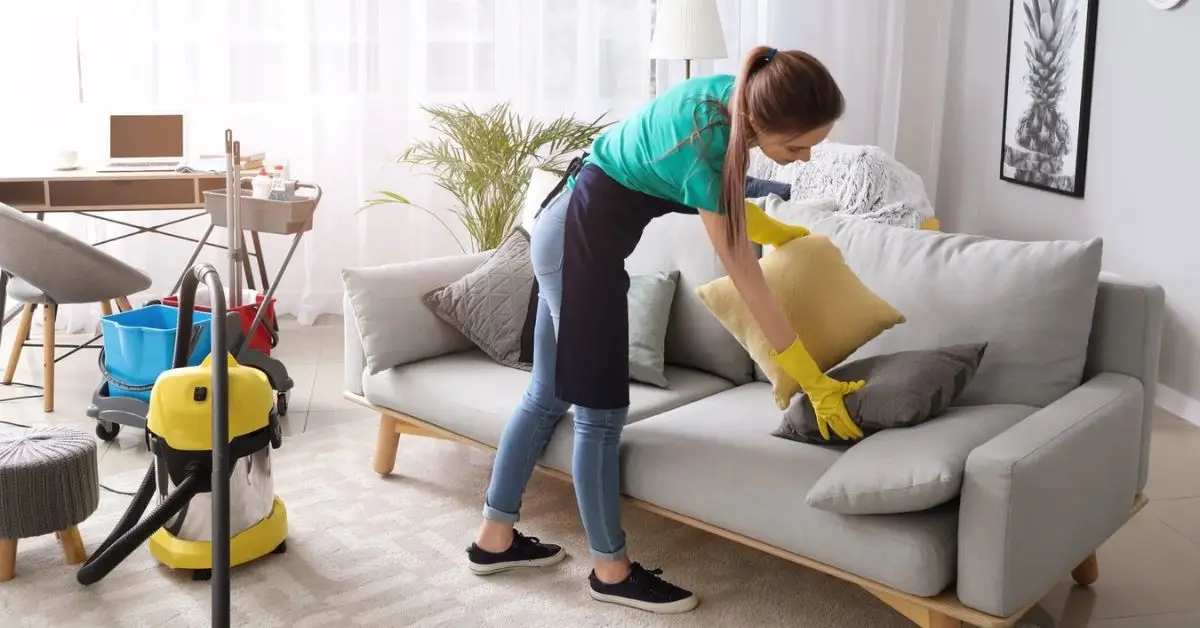
This is usually the most-used room, which means clutter shows up daily. Clearing it gives an immediate psychological lift.
Living room checklist
- Remove items that don’t belong here and drop them in the relocate bin
- Keep only core furniture and everyday-use items
- Use baskets or trays to corral loose objects instead of spreading them
I don’t rearrange furniture on declutter day. That’s a different task for another time.
Tip 3 — Entryway and Drop Zones
The entryway sets the tone for how your home feels every single day. If this area is chaotic, you feel it every time you walk in.
According to Good Housekeeping entryways are one of the most overlooked clutter zones—and also one of the most stressful.
Fast wins at the front door
- Shoes, bags, and mail go back to known homes or donation
- Create a temporary “in/out” bucket for things you’re unsure about
This one small reset can make the whole house feel more controlled.
Tip 4 — Bathroom Blitz: Expired Stuff and Essentials Only
Bathrooms are small, which makes clutter feel bigger than it is. The good news? They’re fast to fix.
Bathroom priorities
- Trash expired meds, makeup, and skincare
- Remove duplicates you don’t actually use
- Clear counters so daily routines feel easier
I don’t organize drawers deeply here—just remove what shouldn’t be there.
Tip 5 — Bedrooms: Closets, Drawers, and Quick Keep Decisions
Bedrooms carry emotional clutter. Clothes, old habits, “someday” items—it all lives here.
I stick to one simple rule to keep things moving.
Bedroom declutter sub-steps
- Clothes decision based on wear frequency, not guilt
- Drawer contents sorted by category: socks, tees, accessories
If you haven’t worn it in the last year and it doesn’t serve a clear purpose, it doesn’t earn space today.
Tip 6 — Home Office + Paper Piles

Paper clutter slows people down fast. This is where many one-day declutters stall—so keep it simple.
Quick office strategy
- Prioritize piles: papers, files, cords
- Immediate scan for trash vs keep
- No filing systems today—just reduction
The goal is fewer piles, not perfect organization.
Tip 7 — Closets, Storage Rooms & Hallways
These spaces collect everything you didn’t want to decide about earlier. That’s why they come later in the day, once decision-making is easier.
Smart closet system
- One-touch rule: pick it up, decide once
- Move out-of-room items immediately to the relocate bin
This prevents clutter from creeping back after your declutter day ends.
Tip 8 — Garage or Misc Spaces (If Time Allows)
Not every home has a garage, and not every one-day declutter needs it. Treat this as a bonus round, not a requirement.
Quick garage cleanup
- Trash goes first, no sorting
- Group sports gear or outdoor tools loosely
- Stop when time’s up—unfinished is still progress
Even partial progress here is a win.
Before we move on, quick check-in with you: Which room do you think will be the hardest emotionally—not physically—to declutter today?
Final Hour: Cleanup & Wrap-Up Tasks
This last hour decides whether your effort actually sticks or slowly unravels over the next few days. I’ve seen it happen too often—everything looks better, but bags sit around, piles creep back, and the win doesn’t feel real. This is where you lock it in.
Take out trash and recycling
I treat this as non-negotiable.
If trash and recycling stay inside the house, clutter has a way of re-forming. Even sealed bags create visual noise and mental friction.
Do this first in the final hour:
- Take all trash out immediately
- Break down boxes and recyclables
- Don’t “stack it neatly”—remove it
Once it’s gone, your space feels lighter in a very real way.
Load donation items or schedule pickup
This step is what separates real decluttering from temporary shuffling.
Donation bags that sit around turn into “maybe later” piles. And “maybe later” almost always means “back into the closet.”
I recommend one of these, right away:
- Load donation items into your car
- Schedule a pickup
- Drop them at a nearby donation center the same day
Committing to removal protects your decisions and keeps second-guessing out of the picture.
Final walk-through and reset
I always end with a slow walk through the house. Not to judge—just to notice.
This is your moment to:
- Put stray items back where they belong
- Wipe a few visible surfaces
- Acknowledge what you actually finished
That quick reset helps your brain register completion. According to guidance shared by Real Simple, recognizing visible progress plays a big role in feeling satisfied enough to maintain results instead of undoing them later.
Pause for a second here. Look around. Let it land.
After the Sprint: Maintain a Clutter-Free Home
One day can reset your home—but what keeps it clear is what you do after. The goal isn’t to keep decluttering forever. It’s to stop clutter from building up again.
Daily 15-minute maintenance blocks
I don’t believe in marathon cleanups after this.
What works better:
- One 15-minute reset a day
- Same time if possible
- Stop when the timer ends
This isn’t about cleaning everything. It’s about catching clutter before it grows legs.
Simple weekly checkpoints
Once a week, I do a quick scan:
- Entryway
- Kitchen counters
- One clutter-prone room
If something’s drifting, I course-correct early. Five minutes here saves hours later—and keeps overwhelm from coming back.
Before we wrap up, I want to ask you something honestly: What’s one small habit you could keep this week to protect the work you just did?
Common Mistakes to Avoid When Decluttering in One Day
This part matters because most one-day declutters don’t fail from lack of effort—they fail from a few predictable mistakes. If you know what to avoid, you protect your energy and finish strong instead of stalling halfway through.
Avoid perfectionism (progress matters more)
Perfection is the fastest way to lose time.
I see this all the time—people adjusting items, wiping shelves twice, or rethinking decisions they already made. On a one-day declutter, “good enough” is more than enough.
If a space is clearer than it was this morning, you’re doing it right. You can always refine later. Today is about momentum, not polish.
Don’t start with sentimental items
Sentimental clutter isn’t hard because it’s messy—it’s hard because it’s emotional.
Photos, gifts, old letters, childhood items… these slow you down and drain your focus. I always leave them for another day, when you’re not racing the clock.
If you come across something emotional:
- Put it in a labeled box
- Close the lid
- Keep moving
You’re not avoiding it—you’re protecting your progress.
Don’t try to organize while decluttering
This is the mistake that quietly eats hours.
Decluttering and organizing are two different jobs. When you mix them, you end up doing both badly. Today, your only question is: Does this stay or go?
Organization comes later—after you know what’s actually staying.
Bringing It All Together
If you made it this far, you’ve already done something important—you chose action over overwhelm.
Decluttering every room in a day isn’t about having endless energy or discipline. It’s about making fewer decisions, following a clear order, and letting progress be enough. Even if your home isn’t perfect, it’s lighter, calmer, and easier to live in than it was this morning.
And that matters.
I’d love to hear from you— Which room felt the most satisfying to finish, and which one surprised you the most? Drop your experience or questions in the comments.
If you want more practical, real-life home improvement and reset guides like this, explore more at Build Like New—where the goal isn’t perfection, just making your space work better for you.
Disclaimer: This guide is meant for general informational purposes only. Decluttering results may vary based on home size, time available, and personal circumstances. Always use your own judgment and adjust the process to fit your needs and comfort level.