How to Tidy Up Your Junk Drawer and Keep It That Way
Open your kitchen drawer and there’s a good chance you’ll see the same thing I used to — loose batteries, random keys, old receipts, rubber bands, and pens that barely work. The famous junk drawer almost always starts as a temporary spot for small items, but over time it quietly turns into a clutter trap.
I’ve noticed that the real problem isn’t the drawer. It’s that nothing inside it has a clear place. Once everything gets tossed together, even useful items become hard to find.
The good news is you don’t need a big organizing project to fix it. With a simple system, you can clean your junk drawer and keep it organized in a way that actually lasts.
Before we get into the steps, it helps to understand why junk drawers become messy so quickly.
Why Your Junk Drawer Turns Into Chaos — And Why It Matters
In most homes, a junk drawer doesn’t start as a mess. I’ve seen it begin as a simple place to keep small things that don’t belong anywhere else. A battery here, a rubber band there, maybe a spare key.
But over time, that “temporary spot” becomes a catch-all drawer.
When everything gets tossed into one place without any structure, the drawer slowly turns into a pile of random items. I’ve noticed the same pattern in almost every home.
Most junk drawers end up filled with things like:
- Loose pens and markers
- Old receipts or paperwork
- Takeout menus
- Random cables and chargers
- Rubber bands and paper clips
- Spare keys and tiny tools
The problem isn’t that these items exist. The real issue is that none of them have a defined place inside the drawer.
Once that happens, finding something simple—like scissors or tape—suddenly turns into digging through a pile of clutter.
Even organization experts point out that junk drawers become chaotic mainly because they’re treated as a dumping ground rather than intentional storage. For example, home organization advice from Better Homes & Gardens explains that clutter builds up quickly when small items are repeatedly tossed into a drawer without categories.
That’s why the first step isn’t organizing. It’s deciding what shouldn’t be there at all.
What to Remove First — Decluttering Rules Pros Use
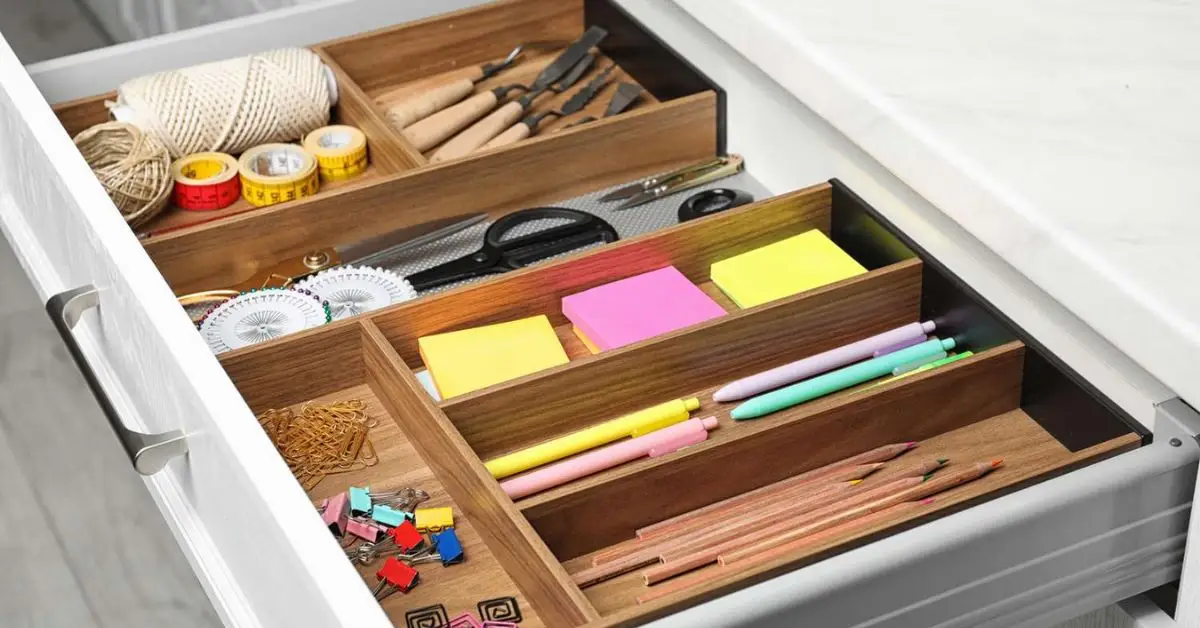
When I help someone clean a junk drawer, the hardest part is usually the beginning.
You open the drawer, look at dozens of tiny items, and suddenly every object feels like it might be useful someday.
Instead of overthinking it, I like to start with a quick elimination round.
Quick Reject List — Items You Should Toss or Relocate
Removing obvious clutter first creates momentum. Once these items are gone, the rest of the drawer becomes much easier to organize.
Start by pulling out things like:
- Pens that don’t work
- Dead batteries
- Old receipts or expired coupons
- Broken tools or gadgets
- Random packaging pieces
- Extra cords that don’t belong to anything
- Takeout menus you never use
Most people are surprised how much space opens up after removing just these items.
If something belongs in another room—like a screwdriver from the garage or a charger from your office—move it right away instead of leaving it behind.
Decluttering Rules That Make Decision-Making Easy
If you feel stuck deciding what to keep, I use a few simple rules that make the process faster.
The 20/20 Rule
If you can replace the item for under $20 and within 20 minutes, it usually doesn’t need permanent space in your drawer.
The 90/90 Rule
Ask yourself two questions:
- Have I used this in the last 90 days?
- Will I realistically use it in the next 90 days?
If the answer is no to both, it probably doesn’t belong in the drawer.
The One-In, One-Out Rule
Every time you add something new to the junk drawer, remove something else.
This simple habit prevents clutter from slowly creeping back.
Once you remove the obvious clutter and apply these rules, you’ll usually end up with far fewer items than you expected—which makes organizing the drawer much easier.
Prep Work — Empty, Clean, and Assess
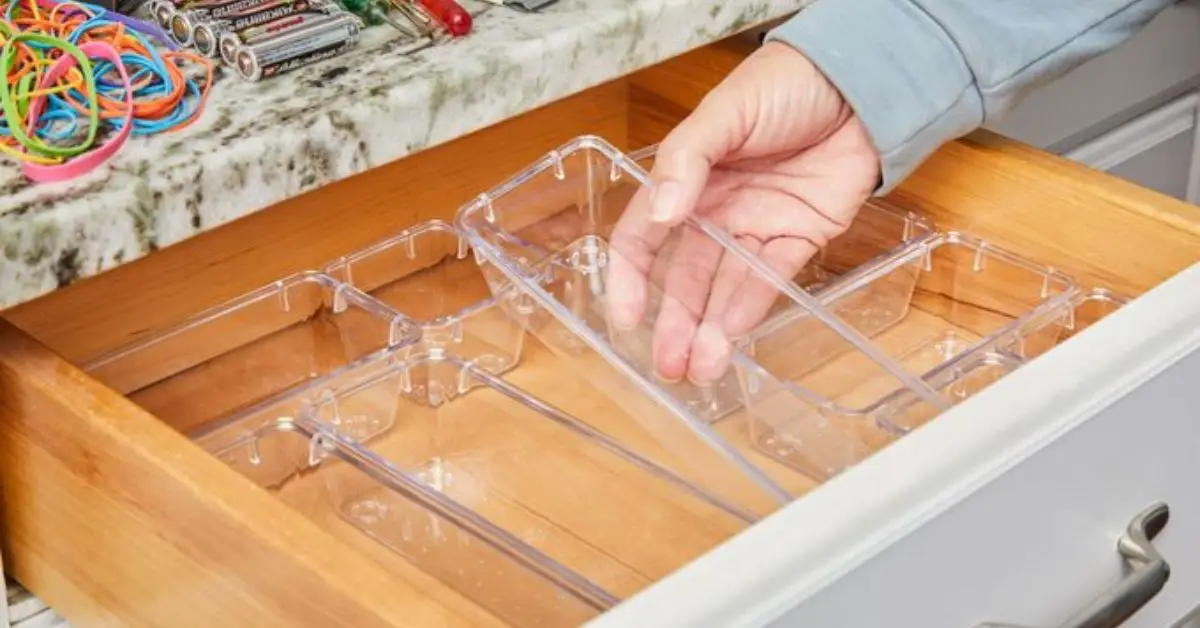
Before I organize any junk drawer, I always do one thing first: I take everything out.
Most people skip this step and try organizing items while they’re still inside the drawer. That usually leads to the same clutter coming back a few weeks later.
Starting with a completely empty drawer gives you a clean slate and helps you see exactly how much space you actually have.
Empty It Completely
Pull everything out of the drawer and place it on the counter or table.
Yes—everything.
When I do this, people are usually surprised by how many random items were hiding inside.
You might notice things like:
- Duplicate tools
- Random coins
- Expired coupons
- Old keys
- Chargers for devices you don’t even own anymore
Seeing everything together makes it much easier to decide what truly belongs in the drawer.
Clean the Drawer Surface
Once the drawer is empty, take a minute to clean it.
Crumbs, dust, and sticky residue often build up over time, especially in kitchen drawers.
A quick cleaning routine works best:
- Wipe the surface with a damp cloth
- Vacuum small crumbs from corners
- Let the drawer dry before putting anything back
This step may seem small, but it makes the whole organizing process feel fresh and intentional. While cleaning the drawer, you might also notice sticky grease buildup around the edges or corners. If that happens, these 2 simple tricks to remove sticky grease from kitchen drawers fast can help you clean it quickly without damaging the surface.
Measure the Drawer Dimensions
Before putting items back, I always measure the inside of the drawer.
Why? Because the right organizer only works if it actually fits your drawer.
Measure three things:
- Width
- Depth
- Height
This helps you choose dividers or trays that maximize the space instead of wasting it.
Many home organization experts recommend measuring before buying organizers because drawers come in many sizes and shapes. Guidance from PODS Moving & Storage also highlights measuring as an important step to ensure drawer dividers and trays actually fit and prevent shifting.
Once your drawer is empty, clean, and measured, you’re ready for the next step: sorting what’s actually worth keeping.
How to Sort and Group Items That Are Worth Keeping
After removing clutter, you’ll probably notice that the remaining items fall into a few natural categories.
This is where most people make a mistake—they simply put everything back randomly.
Instead, I organize junk drawers using zones.
Zones give every item a small, clear home inside the drawer so things don’t mix together again.
Use “Zones” — Group by Purpose
Think of your drawer as several small sections rather than one big space.
You can create zones based on how items are used.
Common zones that work well include:
- Everyday tools – scissors, tape, small screwdriver
- Writing supplies – pens, markers, pencils
- Hardware – batteries, small screws, hooks
- Tech items – chargers, earbuds, adapters
Grouping items this way makes it easier to find things quickly.
Instead of digging through a pile, you’ll know exactly which section to check.
I’ve seen many people share similar systems in organization discussions online, where dividing the drawer into purpose-based sections makes everyday items much easier to locate.
Handling Weird Odds and Ends
Every junk drawer has those items that don’t clearly belong to any category.
Things like:
- Random keys
- Small clips or hooks
- Spare parts from gadgets
- Tiny tools
Instead of letting these items float around the drawer, I recommend containing them.
You can do this by:
- Using a small tray or container
- Labeling a section “miscellaneous”
- Placing rarely used items in a small pouch or box
If you’re unsure whether something is worth keeping, place it in this container and review it after a few months.
If you still haven’t used it, that’s usually a sign it doesn’t need to stay in the drawer.
Best Organizers for Junk Drawers (With Sizing Guidance)
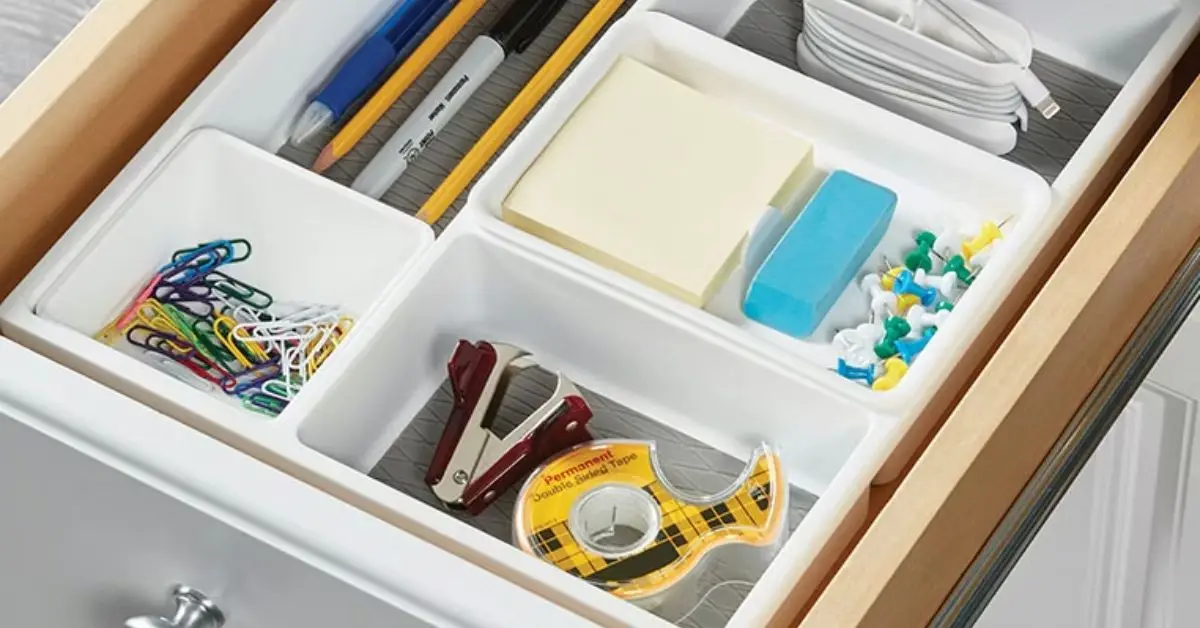
Once you’ve sorted your items into categories, the next step is choosing the right organizers. I’ve noticed many guides simply say “use drawer organizers,” but they rarely explain how to choose ones that actually work for your drawer.
The key is matching the organizer to both your drawer size and the type of items you keep.
Adjustable Dividers (Best for Flexible Storage)
If your junk drawer holds a mix of tools, batteries, and supplies, adjustable dividers are usually the most practical option.
These expand to fit the width of the drawer and allow you to create custom sections.
They work well because you can:
- Change section sizes anytime
- Separate tools from small items
- Prevent things from sliding around
They’re especially useful if your drawer contents change often.
Small Containers for Tiny Items
Tiny items are what usually create the most clutter.
Instead of letting them scatter across the drawer, I like to use small containers such as:
- Ice cube trays
- Small tins
- Mini plastic bins
- Jewelry trays
These containers create instant sections for things like:
- Paper clips
- Rubber bands
- Spare screws
- Batteries
According to organizing tips shared by The Muse, using small containers inside drawers is one of the easiest ways to keep tiny objects from mixing together.
Non-Slip Drawer Liners
One small detail many people overlook is the drawer surface itself.
Without a liner, trays and containers can slide around every time you open the drawer.
A simple non-slip liner helps by:
- Keeping organizers in place
- Protecting the drawer surface
- Making cleaning easier later
It’s a small upgrade, but it makes the whole drawer feel much more stable and organized.
A Daily and Weekly Routine to Keep It Organized
Cleaning a junk drawer once feels great—but if there’s no simple routine, the clutter usually comes back within a few weeks.
What I’ve found works best is building tiny maintenance habits.
These take almost no time but prevent the drawer from slowly filling up again.
Quick Daily Reset (2 Minutes)
Whenever you take something out of the drawer, try to return it to its section right away.
This small habit keeps categories from mixing together.
A quick daily reset usually means:
- Putting tools back after using them
- Returning pens to their section
- Throwing away receipts or wrappers immediately
It takes less than two minutes, but it prevents clutter from building up.
Monthly Mini-Audit
About once a month, I like to do a quick check of the drawer.
You don’t need to empty everything again—just review the categories.
Ask yourself:
- Did I use this item recently?
- Does it still belong in this drawer?
If something hasn’t been used in months, it may not need that space anymore.
This quick audit keeps the drawer from quietly filling up again.
Family Habits That Help
If multiple people use the same drawer, organization only works if everyone understands the system.
A few simple habits can make a big difference:
- Label sections so everyone knows where items belong
- Keep commonly used items in easy-to-reach spots
- Avoid turning the drawer back into a dumping ground
Once the drawer has clear sections and simple habits around it, keeping it organized becomes surprisingly easy.
Junk Drawer Mistakes That Make Organization Fail

Even after organizing a junk drawer, I’ve seen people end up with the same mess again a few weeks later. Usually, it happens because of a few simple habits that slowly bring the clutter back.
Avoiding these mistakes makes a big difference.
Overfilling the Drawer
Once the drawer looks organized, it’s tempting to keep adding more things.
But when every inch of space is packed, items start mixing again and the system stops working.
I always leave a little empty space so the drawer stays manageable.
Using the Drawer as a “Temporary Home”
Another common mistake is treating the drawer like a waiting room for random items.
For example:
- Tools that belong in the garage
- Chargers from another room
- Random packaging pieces
When these things stay too long, the drawer quickly becomes cluttered again.
Keeping Too Many Duplicates
Many people keep multiple versions of the same item.
Things like:
- Five pairs of scissors
- Several rolls of tape
- Too many spare batteries
In many organization discussions online, people admit their junk drawer filled up mainly because they kept duplicates they rarely used. Limiting extras keeps the drawer simple and functional. It’s also worth checking if your drawer contains items that shouldn’t be stored there at all. Many homeowners are surprised to discover 7 hidden dangers lurking in your junk drawer you’ll want to check now before organizing everything again.
What to Do With Items You Don’t Truly Need
Once you finish decluttering, you’ll probably end up with a small pile of items that don’t belong in the drawer anymore.
Instead of putting them back somewhere else in the house randomly, it helps to decide what to do with them right away.
Donate, Rehome, Recycle, or Shred
Different items need different solutions.
You can handle them like this:
- Donate: small tools, office supplies, or organizers someone else can use
- Rehome: items that belong in another room of your house
- Recycle: dead batteries, old electronics, packaging materials
- Shred: paperwork or documents with personal information
Handling these items immediately prevents them from quietly returning to the drawer later.
Create a Small Utility Storage Spot
Sometimes the problem isn’t the junk drawer—it’s that your home doesn’t have a proper place for small household items.
A simple solution I often suggest is creating a small utility bin or box somewhere else in your home.
You can store things like:
- Extra batteries
- Spare cables
- Small hardware pieces
- Backup office supplies
This keeps your junk drawer focused on frequently used items, not long-term storage. If you’re organizing kitchen drawers, you might also be curious about the space under your oven. Many people don’t realize whether the oven’s bottom drawer is actually for storage or something else, which can help you decide where certain kitchen items should really go.
Long-Term Strategies for Clutter-Proof Living
A well-organized junk drawer is great, but the real goal is preventing clutter from slowly returning.
A few simple habits can make organization much easier long term.
Use the 80/20 Space Rule
One principle I always follow is leaving extra room in storage spaces.
If a drawer is filled to the edge, it becomes harder to maintain.
Follow the One-In, One-Out Rule
Every time something new enters the drawer, remove something else.
This keeps the drawer from slowly expanding over time.
Do Seasonal Reviews
A quick check every few months helps keep things under control.
During these reviews, ask yourself:
- Did I actually use these items recently?
- Do they still belong here?
These small check-ins keep your drawer functional without needing another big cleanup later.
Bonus — Quick Checklist You Can Print
If you want to keep things simple, here’s a quick checklist you can follow whenever your junk drawer starts getting messy again.
Junk Drawer Decluttering Checklist
- Empty the entire drawer
- Throw away broken or useless items
- Move items that belong in other rooms
- Group remaining items by category
- Measure the drawer before adding organizers
- Use trays or dividers to create sections
- Leave some empty space
- Do a quick reset every few days
Keeping this checklist handy makes future cleanups much faster.
Final Thoughts
A junk drawer isn’t a bad thing. In fact, I think every home needs one. The problem only starts when the drawer becomes a dumping ground instead of a small, organized storage space.
Once you remove the clutter, create simple sections, and build small habits around it, the drawer becomes surprisingly useful. You’ll know exactly where things are, and you won’t have to dig through a pile of random items anymore.
If you found these tips helpful, I’d love to hear from you.
What’s the strangest thing you’ve ever found in your junk drawer?
Share your experience in the comments.
And if you enjoy practical home improvement and organization guides like this, you can explore more helpful ideas on Build Like New, where I regularly share simple ways to improve and organize your home.
Disclaimer: This article is for general home organization guidance only. Results may vary depending on your storage space, household habits, and personal needs. Always follow proper recycling or disposal guidelines in your local area when getting rid of items.