
The Average Lightning Strike Now Costs Homeowners More Than $26,000 in Damages
Most people think lightning damage means a scorched roof and a quick insurance call. The reality is a lot messier and a lot more expensive.
In 2025, the average lightning damage claim hit $26,616. That’s a 147% jump from a decade ago. U.S. insurers paid out $1.65 billion total, a 59% increase from the year before. And that’s just what insurers paid. What you’re left covering depends entirely on what your policy actually says.
The Number Nobody Warned You About
The cost jump isn’t because storms are getting worse. It’s because your home got more expensive to damage.
Smart HVAC systems, home offices, EV chargers, connected appliances, security systems. One power surge doesn’t kill one device anymore.
It moves through your entire electrical system. Repair costs alone rose roughly 14% between 2022 and 2024, and are up an estimated 61% over the past decade in some markets.
Your insurer isn’t raising your rate overnight because of one claim. But when claims across the board get this expensive, rate recalibrations follow. That’s already happening.
Where It Hurts Most
Florida leads in volume with 5,167 claims in 2025. Texas leads in cost with an average of $60,382 per claim, nearly double the national figure. California, Georgia, North Carolina, and Louisiana aren’t far behind.
But this isn’t just a Sun Belt problem. A strike doesn’t need to hit your house directly to do serious damage.
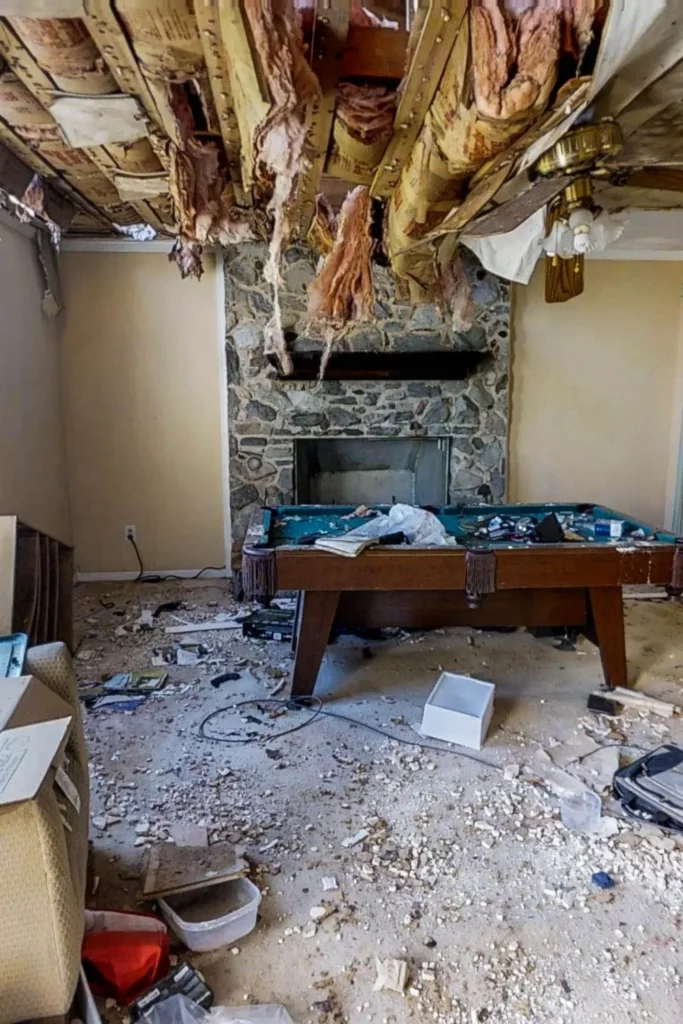
Lightning can hit a tree, jump to your home looking for a better path to ground, and cause damage nearly identical to a direct strike. It can branch mid-flash and hit multiple structures at once.
North Texas saw multiple homes damaged in a single severe storm event proving that you don’t need a bull’s-eye hit for a devastating loss.
Why This Matters
The Insurance Information Institute confirmed that lightning-related homeowners losses reached $1.65 billion in 2025 the highest total since 2020. Claim severity hit a seven-year high. Rebuilding costs are up nearly 30% over five years.
The home you own today costs significantly more to repair than the one you bought in 2019. Most homeowners haven’t updated their coverage limits to match.
It doesn’t always look catastrophic from the outside, but one family in Bardstown came home from vacation to find their house burned to the ground after a single strike while they were away.
What Your Policy Covers and Where It Gets Complicated
Standard homeowners policies cover direct lightning strikes. But there are two other damage types that get denied far more often than people expect.
A near-miss strike surges into your home through the electrical panel, underground plumbing, or metal in your foundation without ever touching the structure.
A ground surge travels through power lines from a strike blocks or miles away and accounts for nearly half of all lightning claims, according to State Farm.
Here’s the fine print problem. Some policies exclude damage from “artificially generated electrical current.” Insurers sometimes invoke this clause when the surge origin isn’t obvious.
Without documentation like weather records, utility outage logs, and exact timestamps, they have room to push back.
Also worth asking your agent about: replacement cost vs. actual cash value. If lightning kills a 7-year-old appliance, actual cash value pays you its depreciated worth.
Replacement cost pays for a new one. The difference in premium is usually modest. The difference in your payout can be thousands.
If you want to stay on top of stories and coverage updates like this as they happen, there’s a WhatsApp channel worth following where homeowner news, policy changes, and real case breakdowns get shared regularly.
The Hidden Damage Problem
This is the part most articles skip and it’s where homeowners lose the most money.
Surge damage is often invisible on day one. Your HVAC compressor, wiring inside walls, and circuit boards in appliances can all be damaged without showing any outward signs. Everything seems fine. Then two weeks later, your AC stops working.
By then, your insurer’s adjuster has already closed the initial inspection. Connecting that failure to the original event becomes your burden to prove.
A Memphis woman lost her home of 42 years to a strike that looked survivable at first glance and it’s a story every homeowner should read before assuming they’re fine after a storm passes.
Document everything immediately. Note the exact date, time, and weather. Get an electrician to inspect your panel even if nothing looks obviously wrong. Keep that report.
What to Do Before the Next Storm
A whole-home surge protector costs $200 to $800 installed. The 2020 National Electrical Code now requires them in new construction. Most existing homes still don’t have one.
Before storm season, do three things: read your policy’s power surge clause, ask your insurer directly whether ground surges and near-miss strikes are covered, and get a licensed electrician to assess your panel.
And think twice before filing small claims. Most deductibles run $500 to $2,500. If your damage is close to that number, filing anyway creates a claims record and can raise your rates, especially in high-risk states. Get a repair estimate first. Claim second.
Final Thoughts
One bolt. $26,000. And a policy full of language most homeowners have never read.
The people who come out okay after a lightning event aren’t just lucky. They knew what their policy covered before the storm hit, had surge protection already installed, and documented damage immediately after. That’s the whole playbook.
Have you ever filed a lightning damage claim? Did your insurer pay out what you expected or did something get denied that surprised you? Drop it in the comments. Someone reading this right now needs to know what you learned.
For more stories and coverage on protecting what you’ve built, visit Build Like New.
Follow us on X (Twitter) and join the conversation in our Facebook community where we cover homeowner news like this regularly so you’re never the last to know.
Disclaimer: This article is for informational purposes only. Please consult a licensed insurance professional for guidance specific to your policy and situation.