Blackstone Launches Massive Homebuilder Lending Program Amid Housing Crisis
Blackstone just dropped a bombshell in the housing market. The Wall Street giant announced it’s launching a massive lending platform to finance 50,000 new homes every year. That’s not a typo – 50,000 homes annually.
This isn’t Blackstone buying up homes to rent out (we’ll get to that history in a minute). This time, they’re funding homebuilders to construct houses for sale.
The platform runs through Blackstone Real Estate Debt Strategies (BREDS), backed by their portfolio company Brio Homebuilder Solutions.
Tim Johnson, who heads BREDS, says “America needs more homes, and we are proud to be part of the solution.” Sounds good on paper. But let’s dig into what this really means.
The Housing Crisis Nobody’s Solving
Here’s the brutal truth: America is short 4.03 million homes right now. That’s up from 3.8 million just last year.
In 2025, only 1.36 million homes were built while 1.41 million new households formed. We’re falling further behind every single year.
For young people, it’s even worse. There are 1.82 million “missing” Millennial and Gen Z households – the highest in four years. These are people who should have their own places but can’t afford to move out.
Want to buy a starter home? You need $86,000 in annual income and $30,400 for a down payment. For most young families, that means seven years of aggressive saving.
Meanwhile, 7.2 million extremely low-income renters can’t find affordable housing. Only 35 affordable units exist for every 100 households who need them.
Why Banks Abandoned Homebuilders
Here’s what most articles won’t tell you: traditional banks are running scared from construction loans.
Between 2015 and 2025, banks’ share of corporate lending dropped from 48% to 29%. That’s massive. Federal Reserve data shows 46% of banks tightened lending standards in Q2 2023 alone.
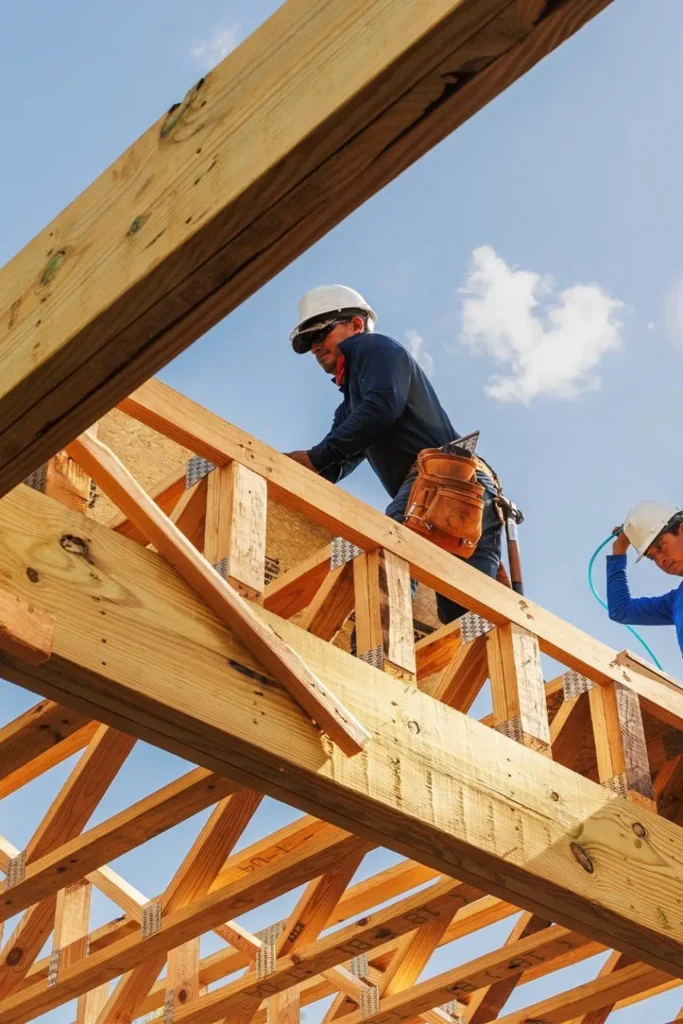
Why? Regulatory pressure after 2008, capital constraints, and rising interest rates made construction lending too risky for their balance sheets.
Regional banks used to fund 70% of commercial real estate loans. Now they’re pulling back hard, leaving builders scrambling for money.
Fewer homes are being built today than in 1960, even though America’s population has nearly doubled. Think about that for a second.
And it’s not just big developments feeling the squeeze. Even smaller, community-level housing solutions are getting creative to fill the gap.
California families are literally building entire homes in their backyards because traditional housing supply just isn’t keeping up with demand – a trend that tells you everything about where mainstream construction has failed.
Private Credit Steps In (For a Price)
Enter private equity. The private credit market now sits at $1.4 trillion in the U.S. – roughly the size of the entire leveraged loan market.
These firms offer what banks won’t: speed, flexibility, and custom deal structures. No rigid underwriting. No waiting months for approval.
One Miami-based lender put it bluntly: “For banks, a $10 million+ residential loan with complex ownership is a red flag. For us, it’s our bread and butter.”
Blackstone isn’t alone. Apollo Global Management launched Olympus Housing Capital for land financing. Pretium raised $500 million for builder loans. This is Wall Street’s new frontier.
But here’s the catch – private credit charges higher interest rates than traditional banks. Builders pay more, which often gets passed to buyers.
If you want to stay ahead of how these financing shifts are reshaping construction and real estate policy, there’s a community tracking exactly this kind of analysis across markets – worth keeping an eye on as this story develops: Build Like New on WhatsApp.
Blackstone’s Baggage Problem
Let’s address the elephant: Blackstone owns about 66,000 single-family rental homes after buying Tricon Residential.
In 2021, they acquired Home Partners of America for $6 billion. The rent-to-own program flopped – fewer than one-third of renters actually bought their homes. Many got evicted instead.
A UN housing expert slammed Blackstone in 2019 for “devastating consequences for tenants.” Critics accused them of buying up homes during the foreclosure crisis and jacking up rents.
When President Trump announced plans to ban institutional investors from buying single-family homes in January 2026, Blackstone’s stock tanked $17 billion in one day.
Their defense? They own less than 1% of housing in each market. Single-family homes represent just 2% of their real estate portfolio. They’ve been net sellers for a decade.
Fair points. But trust takes time to rebuild.
So Who Actually Benefits Here?
For homebuilders, this is a lifeline. They get capital when banks say no. Projects that would’ve died can move forward.
For first-time buyers? Maybe. More supply theoretically means downward pressure on prices. But 50,000 homes is only 3.7% of last year’s total housing starts.
Do the math: at this rate alone, it would take 80 years to close the 4-million-home gap. Even with a 50% jump in overall construction, experts say it’ll take seven years minimum.
And that assumes these homes are affordable. If Blackstone-financed projects are luxury spec houses, it does nothing for the $86,000-income buyer.
Renters see almost no benefit. This is for-sale housing. The 7.2-million affordable rental unit shortage remains untouched.
Communities might see job growth and economic activity. But infrastructure costs are real – and often overlooked. When new developments push demand on local systems, somebody ends up paying.
It’s exactly what happened in Southington, where a sudden jump in water rates sent shockwaves through the community – a reminder that housing growth without infrastructure planning just shifts the burden onto residents.
The Real Question: Solution or New Risk?
Here’s the uncomfortable truth: institutional investors bought foreclosed homes after 2008, contributing to the homeownership decline. Now they’re positioning as housing crisis heroes.
But they’re still profit-driven, not mission-driven.
The private credit market already shows cracks. Industry reports note that while headline default rates sit below 2%, the “true” default rate approaches 5% when you include selective defaults and liability management exercises.
Payment-in-kind (PIK) usage is rising, meaning borrowers are deferring cash payments – a classic late-cycle warning sign.
If builders can’t repay these loans, we’re looking at another financial mess. Just with different players this time.
Why This Matters
This isn’t just about Blackstone or one lending platform. It’s about a fundamental shift in how homes get built in America.
According to housing data from the National Low Income Housing Coalition, no state has adequate affordable housing supply. The shortage exists in every major metropolitan area.
When Wall Street replaces Main Street banks, the rules change. Lending becomes less transparent. Risk concentrates in unregulated spaces. Profit margins matter more than community needs.
Blackstone’s move is significant – $78 billion in capital backing, established infrastructure through BREDS, and serious scale.
But 50,000 homes won’t fix a 4-million-home shortage. Not even close.
What’s needed? Zoning reform to allow denser housing. Streamlined permitting. Public-private partnerships with affordability requirements. Tax incentives for first-time buyers.
Without policy changes, this is just Wall Street capturing a new market – not solving a crisis.
What to Watch Next
Pay attention to which homebuilders partner with Brio. What loan terms does Blackstone offer? Are interest rates reasonable or predatory?
More importantly: what type of homes get built? Starter homes in suburban communities, or luxury spec houses in exclusive markets?
Will Blackstone hit that 50,000-home target, or is this PR spin with modest follow-through?
And will other private equity firms pile in, creating a construction lending bubble?
The next 12-24 months will tell us if this is a genuine supply solution or just Wall Street’s latest profit play.
And while everyone watches the big money moves, don’t sleep on what’s happening at the policy level.
Pennsylvania’s approach of paying landowners to grow wildflowers is a small but telling example of how states are experimenting with land-use incentives in ways that could eventually reshape how residential development gets approved and funded.
What do you think – is Blackstone part of the solution, or just Wall Street finding a new way to profit from a crisis?
Drop your take in the comments below. And if you’ve seen how private equity or big lending is changing housing in your area, share it – real stories from the ground matter more than press releases.
Key Takeaways
Blackstone’s lending platform could finance significant housing supply. But it’s not a silver bullet.
The housing shortage is structural – caused by decades of underbuilding, restrictive zoning, bank pullback, and rising costs.
Private credit fills the void banks left. That’s helpful short-term but risky long-term without proper oversight.
Blackstone’s rental history raises trust issues. Their pivot to financing for-sale homes is different, but skepticism is warranted.
For real change, we need more than Wall Street money. We need policy reform, community-focused development, and affordability mandates.
The Bottom Line
Blackstone’s plan to finance 50,000 homes annually is notable. It acknowledges the supply crisis and puts serious capital behind construction.
But let’s be clear: Wall Street isn’t riding in on a white horse. This is business. They’ll make money whether homes are affordable or not.
The real test? Whether these homes actually reach the families priced out of today’s market.
If Blackstone finances $800,000 houses in booming metros, it’s great for their returns – but useless for the $86,000-income buyer still living with parents.
Housing needs both supply AND affordability. One without the other just enriches developers and investors.
If this breakdown was useful, you’ll find more like it on X (formerly Twitter) and in the Build Like New Facebook group – where we dig into what’s actually happening in construction, development, and housing policy before it hits the mainstream.
For more insights on real estate trends, homebuilding strategies, and housing market analysis, visit Build Like New – where we break down what’s really happening in construction and development.
Disclaimer: This article is for informational purposes only and does not constitute financial, investment, or real estate advice. Market conditions change rapidly; consult qualified professionals before making decisions.