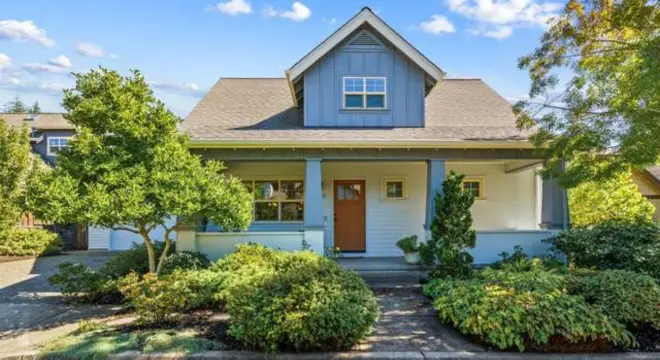
Downsizing Your Space? 5 Ways to Keep Storage and Style Intact
Downsizing can feel exciting until you start looking at everything you own.
I’ve seen this happen often. You want a smaller, easier home, but you don’t want it to feel cramped, plain, or stripped of personality.
You still need places to store the things you use, room to host people you love, and a home that feels like you when you walk in.
The good news is that downsizing is not about giving up comfort. It is about being more honest about how you live.
With the right furniture, smart storage, a lighter layout, and a few careful choices, a smaller home can feel calm, stylish, and surprisingly complete.
In this guide, I’ll walk you through five smart ways to downsize without sacrificing style or storage.
Downsizing Isn’t About Less Space — It’s About Better Living
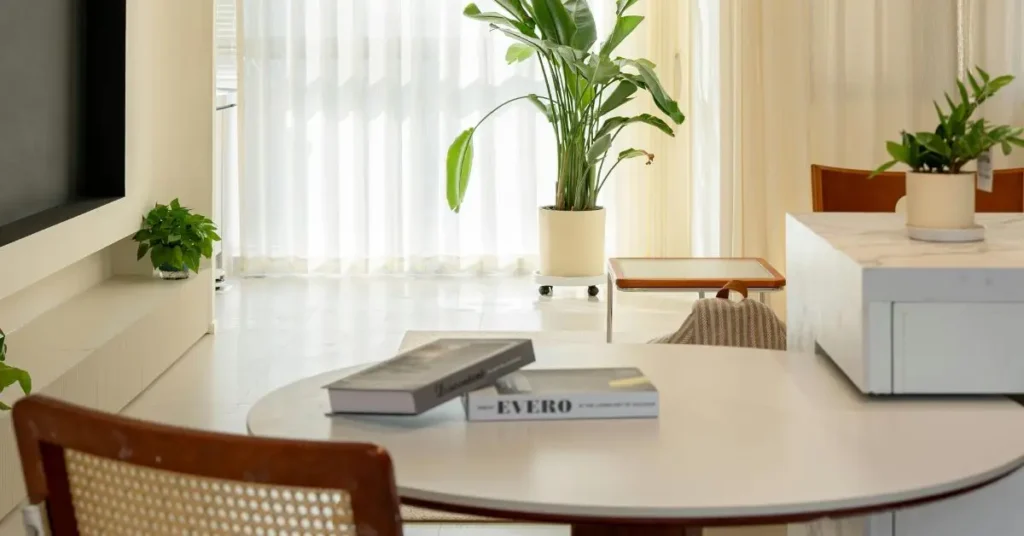
Downsizing works best when you focus on how you live, not how much space you have.
Why people resist downsizing (real problem)
Most people don’t struggle with space, they struggle with letting go.
You may feel attached to your belongings, or worry that a smaller home will take away your comfort and routine. There’s also a common belief that less space means a cramped and limited life, which stops many people from even trying.
The shift that changes everything
The real change happens when you shift your thinking.
- Instead of chasing more space, you start focusing on better function.
- Instead of adding storage everywhere, you choose storage that actually works for your daily life.
What Smart Downsizing Actually Looks Like in Real Life
A smaller home can feel more complete when it’s designed with intention.
A smaller home can feel more complete, not less
When you keep only what you use, your space becomes easier to manage and more comfortable to live in.
You move around more freely, and your home feels calmer. Research from Harvard Health Publishing also suggests that less clutter can reduce stress and improve focus.
The 4 principles behind successful downsizing
These basics make downsizing actually work.
- Focus on furniture that serves more than one purpose.
- Use built-in or smart storage instead of adding more items.
- Keep your layout visually open.
- And design your home around your real lifestyle, not just looks.
5 Smart Ways to Downsize Without Losing Storage or Style
If you get these five things right, your smaller home won’t feel like a compromise.
1. Choose Furniture That Serves More Than One Purpose
In a smaller home, furniture should work harder for you.
What to prioritize
- Look for storage beds with lift systems so you can hide bulky items.
- A daybed can handle both seating and guest needs without taking extra space.
- Extendable dining tables give you flexibility when you need it, without crowding the room daily.
Why it matters
When each piece has more than one job, you need fewer items overall. That means less clutter, but you’re not giving up anything important.
And once you start optimizing space, even simple things like bedding storage can make a big difference — here are some easy ways to keep your closet neat and organized.
If you look at real setups on Reddit or small home tours on YouTube, you’ll notice this pattern everywhere.
2. Replace Visible Clutter With Built-In Storage
Instead of adding more storage items, make storage part of your space.
Smart upgrades
- Wall-integrated shelves help you use vertical space without making the room feel heavy.
- Built-in wardrobes keep everything contained and clean.
- Drawers are usually more practical than deep cabinets because you can actually see and reach everything.
Hidden benefit
- Your home instantly looks more organized.
- There’s less visual noise, which makes even a small space feel calmer.
If you’re not sure where clutter usually builds up, this guide on storage spots experts say you must avoid can give you a clear starting point.
Most people keep adding baskets and boxes, but that often makes the space feel busier, not better.
3. Use Layout and Design to Make Space Feel Bigger
You don’t always need more space. You need better flow.
Proven design tricks
- Stick to a light color palette to keep things open.
- Use the same flooring across rooms to create continuity.
- Avoid too many partitions so your space feels connected.
Why perception beats square footage
When your eye moves smoothly across a room, it feels larger than it is.
Design ideas shared by Better Homes & Gardens often highlight how simple layout changes can completely change how a space feels.
4. Plan Your Storage Before You Move In
This is where most people go wrong.
The “Pre-Move Planning Method”
- Start by listing what you own.
- Then decide where each item will go in your new space.
- Only after that should you decide what to keep or remove.
Common mistake
- People move everything first and try to figure it out later.
- That’s when small homes start feeling cramped and stressful.
It also helps to know what not to store in the first place — especially if you’re thinking about extra storage options. This list of things you should never keep in a storage unit can save you from costly mistakes.
A little planning here saves you a lot of frustration later.
I often share quick planning checklists and small-space ideas that make this process easier, especially before moving. These kinds of updates can really help you avoid common mistakes.
5. Design Rooms That Adapt to Your Life
Your rooms don’t need to have just one purpose.
Multi-use space ideas
- A guest room can double as a home office.
- Your dining area can also work as a workspace.
- Even a closet can turn into a compact office setup if needed.
Long-term advantage
Your home stays useful as your needs change.
Instead of running out of space, you keep adjusting how you use it.
Mistakes That Destroy Both Style and Storage
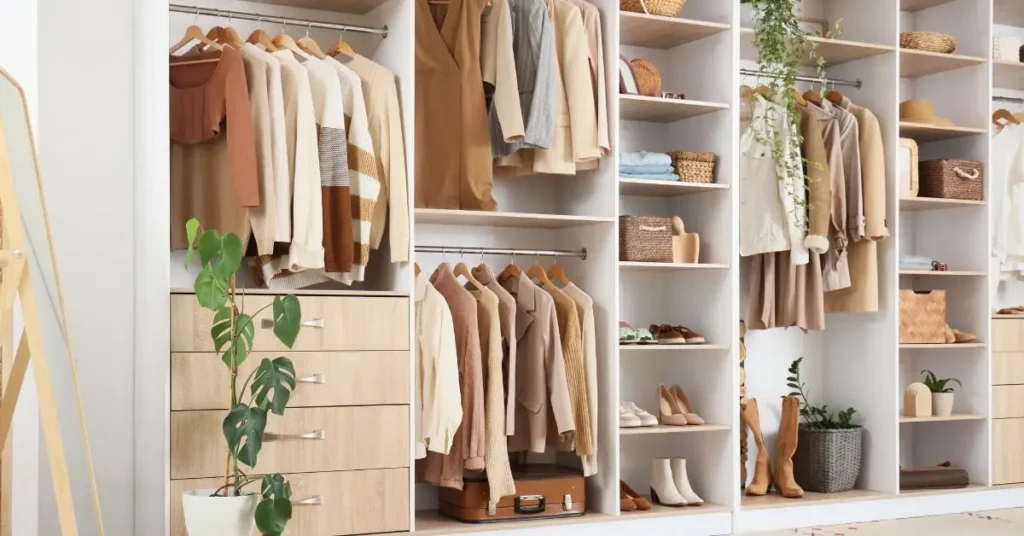
Small mistakes can make a downsized home feel worse than a bigger one.
- Keeping oversized furniture is one of the biggest issues. It eats up space and makes everything feel tight.
- Ignoring vertical space means you miss out on easy storage without crowding the room.
- Overloading with storage bins often creates more mess than it solves.
- Dark, heavy interiors can make even a decent space feel smaller.
- And if you don’t plan based on your lifestyle, your home won’t support your daily routine.
Most of these problems happen when you focus on fitting things in, instead of thinking about how you actually live.
Why This Matters
Downsizing is not just a space decision. It affects your time, money, and how you feel every day.
When done right, downsizing can reduce your living expenses and simplify your life.
Less clutter helps you focus better and feel less overwhelmed.
A smaller home is easier to clean and maintain, which saves time and energy.
Research shared by UCLA has shown that cluttered environments can increase stress levels, which makes simplifying your space more important than it seems.
Real-life impact
- You spend less time managing your home.
- You often save more money over time.
- And your daily life feels more organized and easier to handle.
Real Homes, Real Inspiration
Seeing how others have done it makes everything clearer.
How People Are Living Better in Smaller Spaces
Many people are creating homes that feel complete without being large.
What to include
- Look at small apartments and tiny homes shared on social media.
- Notice how designers use simple layouts and smart storage.
- Before and after transformations can also show how much difference the right choices make.
When you see real examples, it becomes easier to picture what could work for you.
Practical Takeaways You Can Apply Immediately
If you keep things simple and intentional, downsizing becomes much easier to handle.
- Buy fewer but smarter pieces that serve more than one purpose.
- Plan your storage before you start filling your space.
- Keep your layout open so your home feels easy to move through.
- And most importantly, focus on how you live, not how much you own.
These small shifts can completely change how your home feels day to day.
If you’re planning to downsize or already going through it, I’d love to hear from you. What’s been the hardest part so far? Share your experience in the comments.
And if you want more practical home ideas like this, you can explore more on Build Like New. If you enjoy seeing real small-space ideas and smart home setups, you can check out what we share on X and inside our Facebook community. There’s always something practical you can pick up.
Disclaimer: This content is for general guidance only. Every home, budget, and lifestyle is different, so what works for one person may not work the same way for you. Always plan based on your specific needs before making any major changes.