How One Bridge Street Fire Jumped Two Streets and Took Down 6 Buildings in Lowell
It was 2:51 PM on a Tuesday when a Bridge Street home in Lowell caught fire. Within minutes, the wind had already made the decision for firefighters: this was not going to be one fire.
The flames jumped over a three-story building. Embers landed on Wachusett Street. Then May Street.
By the time crews arrived, they were staring at three separate fires on three different streets, and they had to split up just to survive the afternoon.
When One Fire Becomes Six
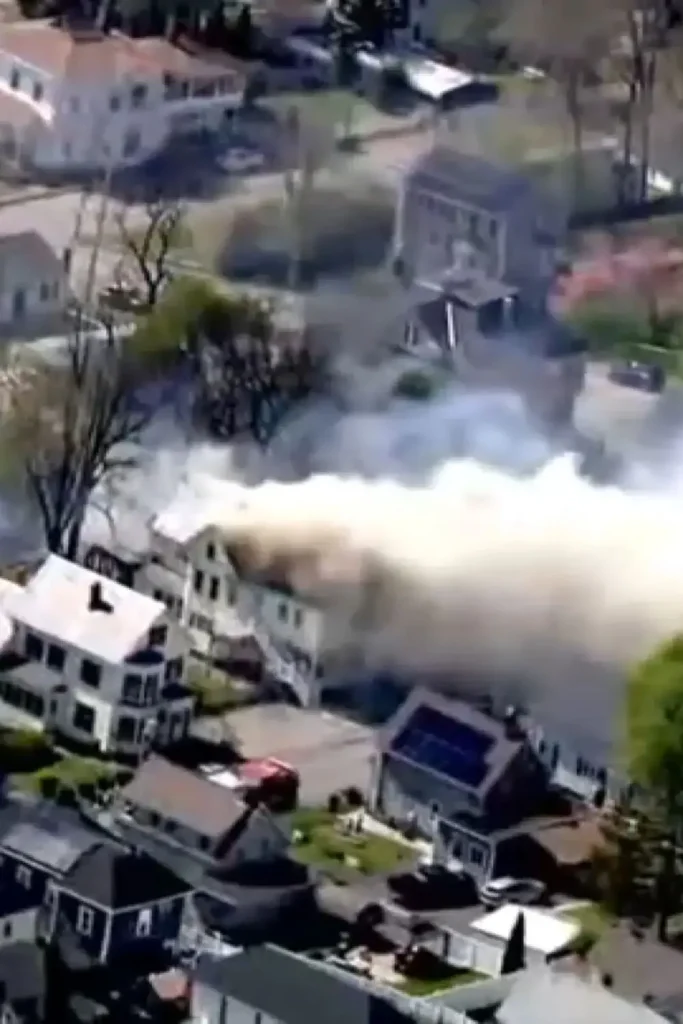
The first call came in shortly before 3 PM at a Bridge Street home. Wind carried the fire up and over a three-story building onto two adjacent streets, Wachusett and May. Crews split immediately to tackle fires in multiple locations at once.
By the time it was over, six buildings in Lowell’s Centralville neighborhood had burned. Firefighters came from as far as Burlington, Massachusetts, and Salem, New Hampshire, to help contain the blaze.
What Residents Lived Through
One woman said she ran out her back door, jumped a fence, and cut through another home to escape. “It went from just a tiny little fire all the way to the whole house in a few seconds,” she told reporters.
A man on Bridge Street said he went upstairs to his bedroom and felt heat. By the time he came back down, the building next to his was fully engulfed.
At least 25 people were displaced, their homes damaged by fire, water, and heavy smoke. Fires like this rarely give any warning.
A propane heater malfunction in Stockton Springs and a Lakeland mobile home fire that killed a resident and two dogs both showed the same pattern: everything fine one moment, everything gone the next.
Around 7 PM, firefighters hacked through a charred door and walls at the Bridge Street home. Water poured down blackened steps.
Two firefighters were hospitalized for smoke inhalation and heat exhaustion. The cause is still under investigation.
Why This Matters And Why Centralville Was Vulnerable
This is not just a Lowell story. According to a CommonWealth Beacon investigation into Massachusetts wildfire risk, fires in the densely packed Northeast carry a much greater potential to cause rapid conflagration compared to other parts of the country.
Centralville’s housing stock makes this worse. Most homes there were built before 1939, packed close together with minimal setbacks between buildings.
Fire Chief Phillip Charron pointed directly to the ongoing drought and dry conditions as factors.
He warned against discarding cigarettes outdoors, noting that embers can spread rapidly between buildings in close proximity. His words after it was over: “We’re very lucky. With the wind, it could have been 12, 15 buildings.”
Massachusetts recorded 1,300 wildfires in 2024 alone, a historic fire season that prompted state-level guidance on home safety from the Department of Conservation and Recreation. Even smaller fires leave permanent damage.
A Hamden house fire on Grandview Avenue cost a family their pet — proof that no fire, big or small, comes without cost.
If you want to stay updated when fire incidents like this happen near residential neighborhoods, there is a community channel on WhatsApp where these stories get shared as they break.
For the full live coverage of the Lowell fires as it unfolded, WCVB News has ongoing reporting here.
If You Are in a Dense Neighborhood, Do This Now
Do not use outdoor grills, fire pits, or throw cigarette butts on dry days with wind advisories. Sign up for your city’s emergency alert system. Know where your nearest shelter is before you ever need it.
The Lowell Senior Center at 276 Bridge Street remains open for anyone displaced or in need of support.
If this story concerns you, follow along on X (Twitter) and Facebook where we cover fire safety, home damage stories, and what real families go through when disaster hits close to home.
Final Thoughts
Twenty-five families are not home tonight. A neighborhood that has existed since 1851 came inches from losing far more.
What happened in Lowell on May 5, 2026, was predictable. Drought, old housing, wind, and buildings packed wall-to-wall made this almost inevitable.
If you live in a dense Massachusetts neighborhood, now is the time to check your home, not after the next warning.
Have you ever lived through a house fire or know someone who has? What do you think could have been done differently here?
Drop your thoughts in the comments below. And if you are working on a home renovation or restoration project, visit Build Like New for practical, expert guidance built for real homeowners.
Disclaimer: This article is for informational purposes only. Details about the Lowell fire are based on reports available as of May 6, 2026. The cause of the fire is still under investigation. For official updates, refer to the City of Lowell and local news sources.