Metro Detroit Got Hit Hard Last Night – Is Your Home Storm-Proof?
Monday night hit Metro Detroit like a warning nobody was ready for.
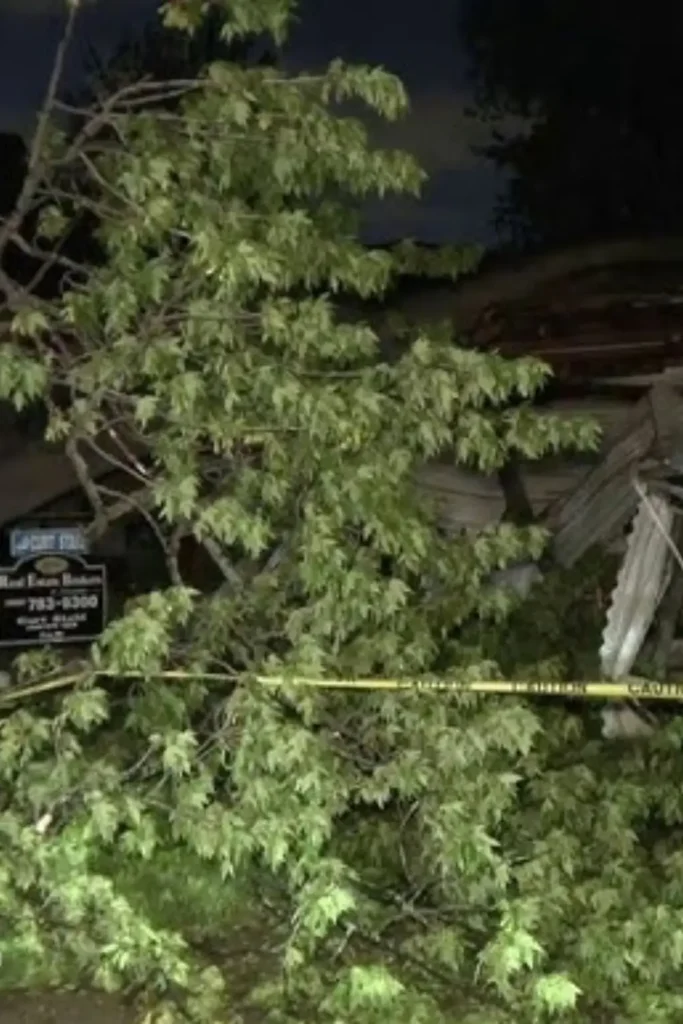
By the time severe thunderstorm warnings expired across Wayne, Macomb, and St. Clair counties on May 4, 2026, at least one home had already taken a direct hit a tree crashing into a St. Clair Shores property, destroying the roof and the front of the house.
The only reason no one was injured? The home happened to be listed for sale.
That kind of luck does not hold twice.
What the Storm Actually Did to Metro Detroit
The National Weather Service issued a severe thunderstorm warning citing 60 mph wind gusts and quarter-size hail.
The storm moved northeast at 40 mph, tearing through Warren, St. Clair Shores, Sterling Heights, Grosse Pointe, and Clinton Township within minutes.
According to WDIV ClickOnDetroit, trees came down across St. Clair Shores, a sparking downed power line was reported near 11 Mile and Gratiot in Roseville, and nearly 5,000 DTE customers lost power at peak impact.
This kind of sudden structural damage does not always come from the most dramatic events. We have covered cases where homes took serious damage from something as contained as a propane heater fire and even then, the aftermath caught homeowners completely off guard.
Why This Matters More Than You Think
Here is the part local news almost always skips.
According to NOAA’s National Centers for Environmental Information, Michigan has experienced 60 confirmed weather and climate disaster events exceeding $1 billion in damage since 1980, 41 of those were severe storms.
The annual average used to be 1.3 events per year. In the most recent five-year stretch, it jumped to 4.4 events per year.
Michigan’s home insurance rates spiked nearly 36% over the last two years because of this exact trend. In 2024 alone, five separate storms crossed the billion-dollar damage threshold.
Your home is not safer than it was ten years ago. The storms are just getting louder about it.
If Your Home Was Damaged, Do These Things Now
Call your insurer first not a contractor.
Your policy requires timely reporting. That first call can also unlock Additional Living Expenses (ALE) coverage hotel stays, meals, temporary housing while your home is being assessed.
Document everything before touching anything.
Walk the entire property with your phone camera. Photograph exterior damage, interior water entry points, and every affected item. Do not throw anything away. This is your proof of loss.
Make only temporary repairs.
Tarp the roof. Cover broken windows. Keep every receipt. But do not replace your roof, siding, or gutters until the adjuster has completed their inspection. Permanent repairs before that point can legally compromise your claim.
Know what your policy actually covers.
Wind damage, hail, and a tree falling on your structure? Typically covered. Flood damage from surface water or sewer backup? Usually not that needs a separate policy.
Have you already called your insurer, or are you still figuring out your first step? Drop your situation in the comments even a quick question can help someone else in the same spot make the right call faster.
Watch Out for Storm Chasers
Within 24 to 48 hours of any major storm, unlicensed contractors start canvassing damaged neighborhoods.
They knock on doors, offer free inspections, and pressure homeowners into signing contracts on the spot sometimes with blanks still unfilled.
Do not sign anything without verifying a contractor’s license through Michigan LARA. Get at least three written bids.
Never hand over your insurance check to a repair company. FEMA does not endorse contractors anyone claiming otherwise is running a scam.
Storm-related damage hits hardest when there is no plan in place. We covered a case where a Lakeland mobile home fire left a family with almost nothing to recover and no clear next step.
There is also a community channel sharing real-time updates on home damage cases, contractor red flags, and recovery tips worth having before the next storm, not after.
One Thing to Do Before the Next Storm
Check your homeowners insurance policy for two things right now: whether you have Replacement Cost Value or Actual Cash Value coverage, and whether your dwelling limit reflects what it would actually cost to rebuild today.
The difference between those two coverage types could mean tens of thousands of dollars on a hail-damaged roof.
Most people discover this gap only after something goes wrong.
We covered a case where a small residential fire on Grandview Avenue created an insurance situation the family was completely unprepared for the lesson was the same every time: knowing your policy before an incident is the only version that ends well.
Final Thoughts
Metro Detroit storms are not getting gentler. Homeowners who move fast, document well, and avoid the wrong contractors will come out of this far better than those who freeze or trust the wrong person at the door.
If you want to follow more stories like this, we cover home damage and real recovery on X (Twitter) and in our Facebook community. Come find us there.
For honest guidance on what storm repair actually involves, visit Build Like New and drop your situation in the comments. What damage did you see in your neighborhood?
Your question might help someone else navigating the exact same thing.
Disclaimer: This article is for informational purposes only. For claim-specific guidance, contact your insurance provider or the Michigan Department of Insurance and Financial Services at michigan.gov/difs.