A Cleaning Pro Just Revealed the One Thing You Should Never Do to Your Greasy Stove Knobs
Most people look at their stove knobs, grab a wet cloth or a dish soap sponge, wipe once, and move on. The grease stays. And every time you do that, it gets harder to remove.
That is not a cleaning fail. That is a method problem.
Stove knobs are touched more than almost anything else in a kitchen. And most people have never once cleaned them the right way.
The Problem Is Not the Grease. It Is What the Grease Becomes.
Cooking oil that lands on a warm surface does not just sit there. It goes through a chemical process called polymerization, where the fatty molecules bond together and harden into a sticky, semi-solid film.
This is not grease you can wipe away. It behaves more like a thin layer of plastic bonded to the surface.
Water cannot break that bond. Dish soap and water will soften it slightly, move it around a little, and leave the knob feeling just as grimy once it dries. That is why your knobs never actually feel clean no matter how often you wipe them.
The Three Cleaning Habits That Are Making It Worse
- Spraying cleaner directly onto the knobs. Any liquid sprayed onto the appliance can seep behind the knob base and push grease deeper in while also damaging the internal components over time.
- Using dish soap and water as your go-to. Prolonged water exposure swells the rubber grip material and lifts the printed label markings that show your heat settings. Do this enough times and the labels start fading permanently.
- Scrubbing with rough sponges or abrasive tools. It feels like progress. It is not. You are stripping the surface finish and scratching off the same markings you use every time you cook.
What Actually Works
For a quick clean without removing the knobs, spray your multipurpose cleaner onto a microfiber cloth first, never directly on the appliance. Then wipe. For the tight gaps around the base, a cotton swab gets in where a cloth cannot.
For grease that has already hardened, rubbing alcohol at 70% or above is the most effective option available in any home. It dissolves polymerized grease without swelling rubber or degrading the plastic. Dip a cotton swab, work around the knob, and the buildup lifts off.
According to The Spruce’s cleaning expert guide, using a non-abrasive method and never spraying directly on the appliance are the two rules most people skip.
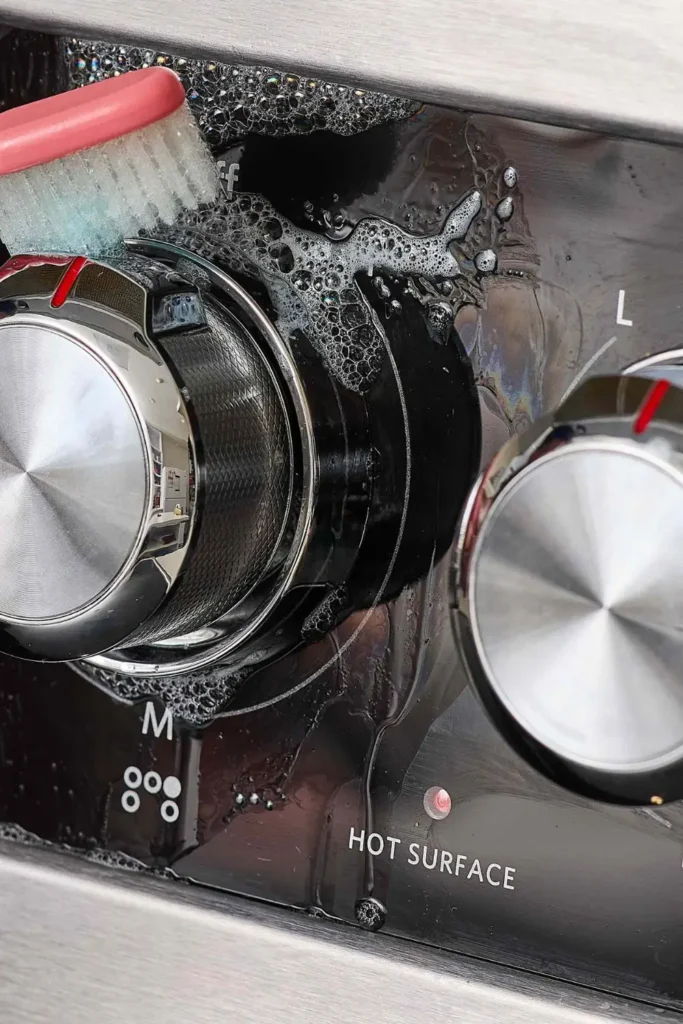
For a full deep clean, gas stove knobs pull straight off the stem without any tools. Soak them in warm water with a small amount of dish soap for 15 minutes, scrub gently with a toothbrush, rinse, and dry completely before putting them back.
Electric stove knobs are different. Unplug the appliance before cleaning without removal to avoid accidentally switching on a burner.
The one rule that applies to every type: dry the knobs completely before reattaching. Moisture trapped at the base causes mold and, on electric units, can create a safety issue.
If you want to take stovetop cleaning further, this method for cleaning a greasy stovetop fast using just a dishwasher tablet is one of the most practical things you can do right after sorting the knobs.
There is a WhatsApp channel that covers exactly these kinds of kitchen maintenance tips as they come up. Worth having around if you like staying on top of this stuff without having to search for it each time.
Why This Matters
NSF International, one of the most credible kitchen hygiene research organizations in the US, ranks stove knobs in the top ten germiest spots in the average home. These are surfaces you touch before and after handling raw food, multiple times a day, often without thinking about it.
Grease buildup is not just a visual problem. It is a hygiene problem that most standard cleaning routines completely miss.
And it is not just the knobs. Most people are also unaware of the 5 most dangerous items stored next to a stovetop and where to actually put them, which is just as overlooked as knob cleaning in most kitchens.
Cleaning the knobs properly every one to two weeks takes under five minutes. Waiting until the grease polymerizes fully means the only option left is a full soak and scrub, which takes longer and risks damaging the knobs if done with the wrong method.
Key Takeaways
- Stove knob grease hardens through heat into a form that water and dish soap cannot remove
- Spraying cleaner directly onto knobs pushes liquid into the base and causes internal damage
- Prolonged water soaking swells the rubber grip and lifts the label markings
- Rubbing alcohol at 70% or above is the most effective quick-clean method
- Gas knobs are removable. Electric knobs require the appliance to be unplugged first
- Dry completely before reattaching, every single time
- Clean every one to two weeks to stop grease from hardening past the point of easy removal
What method have you been using on your stove knobs? Drop it in the comments. Genuinely curious how many people are still reaching for the dish soap first.
Wrapping Up
Stove knobs are one of those things that look clean until you actually try to clean them properly and realize they were never clean to begin with. The method matters more than the effort.
If this kind of practical home content is your thing, Build Like New covers real cleaning methods, kitchen maintenance, and the fixes most guides skip right over. Worth bookmarking if you want more than just the basics.
For more tips like this as they come out, follow Build Like New on X (Twitter) and join the conversation over on the Facebook community. That is where these topics get discussed as soon as they go up.
Disclaimer: This article is for informational purposes only. Cleaning methods may vary depending on your stove type and brand. Always check your appliance manual before removing knobs or applying any cleaning product.