Utah Firefighter Suffers Injuries While Fighting House Fire
When I first went through the incident details, one thing stood out — how quickly this fire could’ve turned into a full-blown tragedy. A home on the 400 block of 1500 South in Bountiful caught fire just after noon, and from everything officials shared, it started where most people never expect danger: the front porch.
The fire had already moved into the eaves by the time crews arrived. If you’ve ever seen how fast flames travel upward, you know how close this home came to losing its entire attic or more. But firefighters got there within minutes and knocked it down before it pushed into the interior. That quick response made all the difference.
One firefighter did get hurt during the attack. Officials called the injury “minor,” and they were released from the hospital the same day — something everyone in the community seemed relieved to hear. No one inside the home was injured, and that’s honestly the outcome we all hope for in a situation like this.
Right now, investigators are still looking into what sparked it. Porch fires can start from so many everyday things — electrical cords, heaters, even a discarded cigarette — so it’ll take time before they pinpoint the cause.
If you lived on that street, what would be the first question on your mind after seeing smoke?
How Firefighters Stopped the Fire Before It Reached the Inside
When I looked at the official timeline shared by KUTV, the first thing I noticed was how fast everything escalated — and how fast the crews reacted. The fire was already chewing into the eaves, which is one of the worst spots because flames can slip right into the attic and take a whole home with them.
But the team didn’t let that happen. They hit the porch hard, pulled back the extension in the eaves, and created just enough of a buffer to stop the fire before it reached the living areas. If you’ve ever watched a house fire up close, you know this window is unbelievably small. A few minutes of delay can flip the outcome entirely.
I want you to imagine this from a homeowner’s perspective: you step outside to find smoke pouring from your porch, and by the time help arrives, your entire roof could be at risk. That’s what makes quick exterior attacks like this so powerful — they don’t just control the fire; they protect everything that matters inside.
What part of this response surprised you the most — the speed or the precision?
How the Firefighter Was Hurt — And What Officials Shared Publicly
The department confirmed that one firefighter was injured during the suppression effort. They didn’t go into detail about what exactly happened, but they did call it a “minor” injury. From the updates posted on Facebook, we know they were taken to a nearby hospital and released later the same day.
If you’ve ever watched crews work up close, you know how easy it is for someone to get hurt even in what looks like a “simple” exterior fire. Slippery surfaces, collapsing porch materials, hot eaves — it all adds up fast in those first few minutes.
For me, the reassuring part was the tone of the update. You could feel the relief in the way officials phrased it. No civilian injuries, quick hospital clearance, and a clear message that the firefighter was okay. In an incident like this, that’s the news everyone waits for first.
We’ve covered similar incidents before too, like the Bristol house fire where one person was injured, you can read that update here.
Have you ever seen a fire scene where a small injury changed the mood of the whole neighborhood?
What Neighbors Saw and Said as the Fire Unfolded
Whenever a house fire breaks out in a neighborhood, people react long before the story hits the news. And in cases like this, the first wave of information usually comes from the folks who saw the smoke before the sirens even arrived.
From what I gathered, neighbors in the area quickly noticed the flames on the porch and the smoke traveling upward toward the eaves. A few residents mentioned how fast the fire crews moved once they pulled up — that’s something you hear a lot in tightly packed neighborhoods where everyone watches out for each other.
The most common reaction? Relief. Relief that the fire didn’t break into the home. Relief that everyone got out. Relief that the firefighter who got hurt was okay. When a fire breaks out on your street, you don’t just watch it — you feel it.
If you were standing outside watching your neighbor’s porch burn, what would be the first thing you’d do?
Damage to the Home — And What Was Saved
One thing I always look for in these incidents is the difference between where the fire started and where it stopped. In this case, the damage stayed limited to the porch and the eaves. That tells me the attack was fast, targeted, and controlled.
The interior of the home stayed untouched, which honestly isn’t common in porch fires. Once flames hit the eaves, they usually sneak upward into the attic and spread across the rafters like a fuse. The fact that none of that happened here says a lot about how well the crews timed their knockdown.
There’s always cleanup, of course — charred wood, smoke-stained siding, damaged trim — but preserving the interior changes everything. It means a family doesn’t lose their home. It means months of rebuilding become weeks of repairs.
If this happened to your place, what part of the damage would you worry about first — the repair costs or the emotional shock?
If you follow real-time safety updates on WhatsApp, you may have seen similar porch-fire alerts shared recently — those quick notifications often help people understand how fast these situations develop.
What Crews Did on the Ground — From First Arrival to Final Sweep
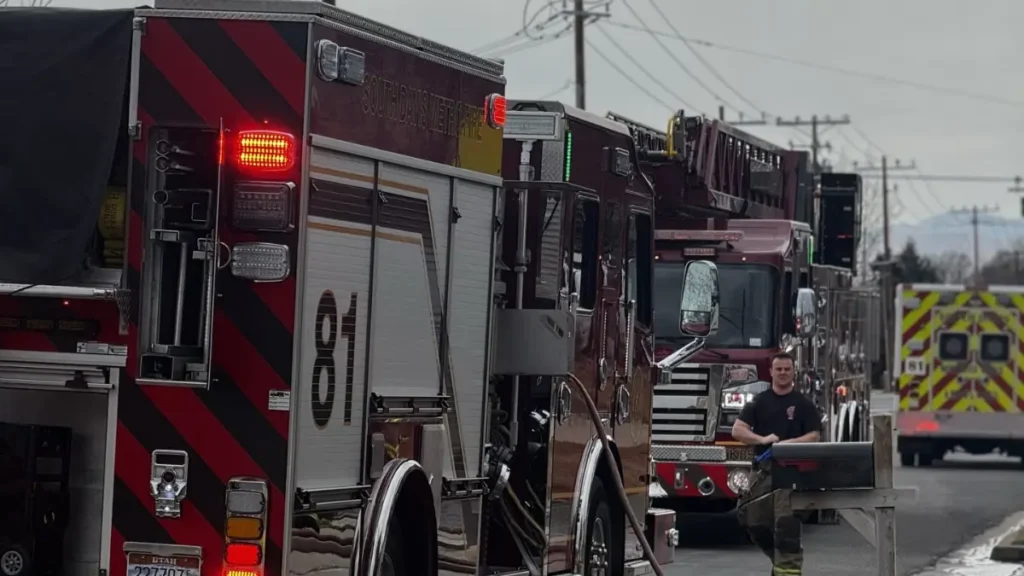
Whenever I break down a fire response, I look at the chain of events almost like a timeline. And in this one, the sequence tells a clear story: fast dispatch, fast engagement, fast containment.
Here’s what stood out:
- Multiple chiefs and battalion command on scene
- Several medic engines and ambulances rolling in back-to-back
- A truck company handling elevated access and ventilation checks
- Crews coordinating exterior attack while checking for any hidden extension
- A thorough sweep of the attic space to confirm no fire had made it inside
This kind of layered response is exactly why the damage stayed outside. When several units arrive with clear roles, the fire has fewer chances to jump, hide, or spread unnoticed.
And I’ll be honest — the presence of multiple medical units likely helped the injured firefighter get immediate care without slowing the fire attack. That’s the sort of coordination you only see in well-trained teams.
In Arizona, a mobile home fire recently caused critical injuries and far more structural damage.
If you were watching all these units line up on your street, what would stand out to you the most — the number of trucks or the way everyone moved with purpose?
How the Community Reacted After the Fire?
Whenever a house fire hits a neighborhood, you can feel the shift in the community — the worry, the relief, the small conversations happening on porches and driveways. That happened here too.
People in the area shared the same mix of emotions I’ve seen in a lot of fire incidents: shock at how fast the flames grew, gratitude for how quickly crews arrived, and real concern when they heard a firefighter had been hurt. You don’t need to know someone personally to feel that moment in your stomach.
What I found interesting was how calm and supportive the tone was compared to many fast-moving news situations. Folks were more focused on the family and the firefighter than on speculation or blame. That says something about the kind of community this is.
If you saw smoke from a neighbor’s home, would you stay inside or step out to check on them?
A Quick Fire Safety Reminder for Anyone Living in Utah
Whenever I see porch fires, I think about how many of us store everyday things outside without really thinking about the risks — extension cords, old chairs, boxes, even heaters in winter. Fires like this remind you that the outside of a home needs as much attention as the inside.
If you’re living in Utah, you already know how dry the air can get, especially during colder weeks. That dryness helps flames travel faster than most people expect. Simple checks — outdoor outlets, old wiring, clutter on the porch — can make a big difference.
I’m not trying to scare you; I just know how quickly something small becomes something big. And house fires don’t give warnings. Most of the time, you only realize it when you see smoke.
And in some cases, like a North Memphis house fire we covered earlier, those few minutes make the difference between life and death.
What’s one outdoor thing you’ve always meant to fix or clean up but never got around to?
Why Fast Fire Response Matters More Than Most People Realize
The more I looked at this incident, the more one thing stood out: timing. If firefighters had arrived even a few minutes later, the flames might’ve slipped into the attic, and this story would’ve had a completely different ending.
Porch fires are tricky. They burn hotter and faster than people think, and once they reach the eaves, the whole structure becomes vulnerable. That’s why the speed of the response mattered so much here. It saved the house. It protected the family. It kept a dangerous fire contained to the outside.
And when you add an injured firefighter to the picture, you realize how much risk is packed into those first few minutes. It’s not just about putting water on flames. It’s about navigating heat, collapse hazards, smoke, and chaos — all while staying sharp enough to stop the fire from spreading.
If you had to guess, how long do you think it takes a porch fire to double in size?
What Happens Next in the Investigation
Right now, the cause is still under investigation, and that’s completely normal. Exterior fires take longer to analyze because so many everyday items can spark them. Investigators will look at the burn patterns on the porch, the condition of the eaves, any electrical sources, and anything that might have been stored outside.
What I want you to understand is this: fire investigations aren’t rushed. They’re methodical. One detail out of place can change the entire conclusion. That’s why officials don’t guess, and they don’t release causes early.
Over the next few days, they’ll likely revisit the site, check structural areas that cooled down, and piece together the sequence of events. Once they’re certain, that’s when the public update comes.
If you were the homeowner, would you want the answer right away or prefer investigators take their time to get it right?
Final Thoughts: A Moment to Reflect on What This Fire Really Shows
As I went through every detail of this fire, one thing kept coming back to me — how something that starts small on a porch can ripple through an entire neighborhood. A quick-moving fire. A home at risk. A firefighter sent to the hospital. Families stepping outside to watch, hoping the flames don’t spread. That’s how fast life shifts when fire is involved.
You and I both know it doesn’t take much for a routine afternoon to turn into an emergency. And that’s why stories like this matter. They remind us to pay attention to the small things — the wiring we ignore, the clutter we leave outside, the outlet we keep meaning to replace. It’s never about fear. It’s about awareness.
The good news here is simple: the home was saved, the family is safe, and the firefighter who got hurt is okay. Not every fire ends that way.
Now I want to hear your take — If a fire broke out on your street tomorrow, what’s the first thing you think you’d do?
If you want updates on similar incidents, safety reminders, and real-time fire coverage, you can follow us on X and join our Facebook community.
Disclaimer: This article is based on information released by local officials and public sources available at the time of writing. Details may change as the investigation continues. Readers should refer to official agencies for the most updated statements and findings.