10 Essential Rules to Follow Before Planting Trees Near Power Lines
I’ve seen this happen more times than I can count.
A homeowner plants a beautiful young tree under the power lines in their front yard. It looks harmless. It looks small. Five years later, the branches are tangled in live wires, the utility company is trimming it aggressively, and suddenly that “perfect” tree looks butchered — or worse, it’s causing outages.
So let’s answer the real question you’re probably here for: can you plant trees near power lines?
Yes — but only if you do it the right way.
Most articles online give you generic advice like “choose small trees” or “plant away from wires.” That’s not enough. Power lines aren’t just visual obstacles — they’re legal boundaries, safety hazards, and long-term maintenance traps if you don’t plan ahead.
I want you to think beyond today’s planting day.
You’re not planting for this spring. You’re planting for the next 20 years.
One wrong species choice can mean:
- Constant pruning
- Utility company interference
- Property damage during storms
- Even fire risk in dry climates
And here’s what many homeowners don’t realize — utility companies don’t ask before cutting back trees that interfere with lines. If your tree becomes a hazard, it will be trimmed to clearance standards, not aesthetics.
That’s why I’m not going to just tell you whether you can plant near power lines.
I’m going to walk you through the rules you need to follow so you don’t regret it later.
Before you dig that first hole, let me ask you something:
Are you planting for shade today — or for safety and value over the next two decades?
Why You Can’t Just Plant Trees Anywhere Near Power Lines
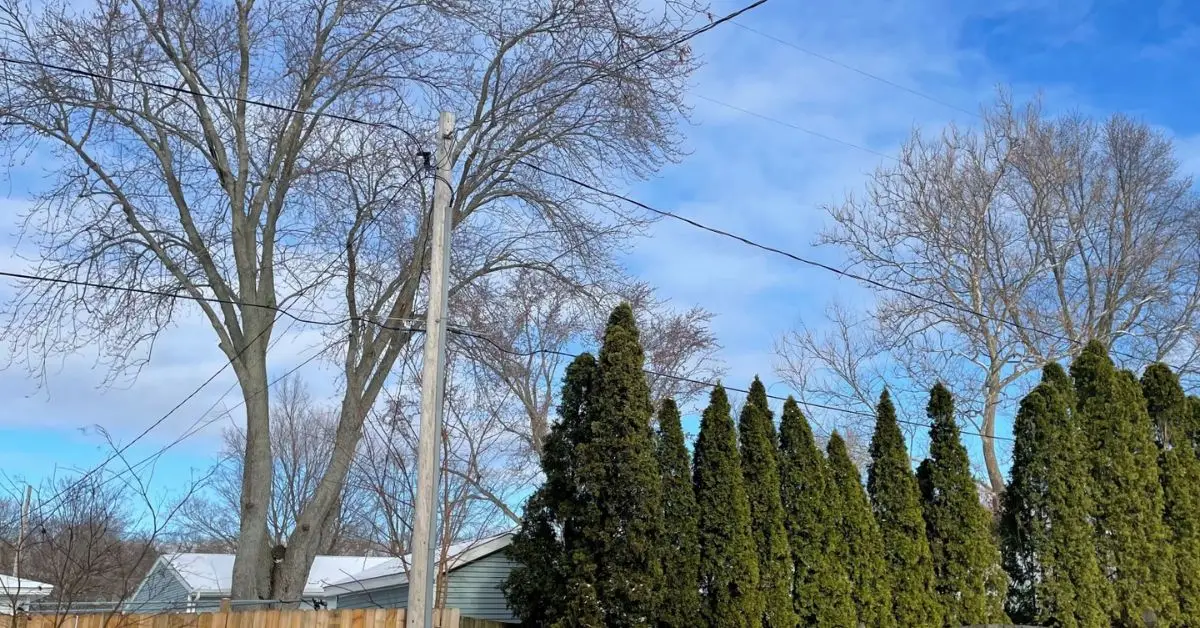
I get it. You look up, see open sky, and think — there’s space. Let’s plant.
But power lines aren’t just hanging wires. They’re active electrical systems with strict safety clearance rules. When trees grow into them, the consequences are real — and expensive.
Here’s what can actually happen:
- Branches touching lines can cause sparks or fires
- Heavy limbs can bring down wires during storms. And if that falling tree damages a neighbor’s property, the legal responsibility can quickly become complicated — I’ve explained how it works in this guide on who’s responsible when a tree from your yard lands in a neighbor’s yard.
- Utility companies may trim your tree aggressively to maintain clearance
- Repeated trimming can weaken the tree’s structure
- In some cases, homeowners face fines or removal costs
According to Safe Electricity guidelines, planting the right tree in the right place is one of the most effective ways to prevent outages and electrical hazards. That’s not landscaping advice — that’s infrastructure protection.
And here’s something many homeowners don’t realize: if your tree interferes with power lines, the utility company has the legal right to cut it back to required safety standards. They won’t shape it for curb appeal. They’ll clear it for safety.
I’ve seen beautiful trees reduced to awkward stubs because they were planted without thinking long term.
So before you even choose a species, you need to understand that this isn’t just about gardening. It’s about safety, liability, and planning ahead.
Understanding Tree Growth + How It Relates to Overhead Power Lines
When you plant a tree, you’re not planting what you see today. You’re planting what it will become.
Most overhead distribution lines sit roughly 20–40 feet above ground. Some trees easily exceed that — even if they start as a 6-foot sapling from your local nursery.
Here’s what you need to think about:
- Mature height — not nursery height
- Canopy spread — branches grow outward, not just upward
- Growth rate — fast growers reach wires much sooner
- Wind sway — branches don’t stay still; they move toward lines
- Root systems — aggressive roots can affect poles, sidewalks, and foundations
Some tree species are especially known for causing underground damage, which is why you should review this guide on 7 trees that can damage your home’s foundation and pipes before choosing anything near utilities.
A common mistake I see is homeowners choosing a “medium-sized” tree without checking its mature height. A tree listed at 25 feet might still interfere with lower lines over time — especially if you factor in seasonal growth spurts.
Fast-growing species are even trickier. They give you shade quickly, but they also reach clearance zones faster. That means more pruning, more maintenance, and more long-term stress on the tree.
You have to plan with the tree’s 15- or 20-year version in mind.
If you’re standing in your yard right now looking at those wires, ask yourself:
Will this tree still be safe here when it’s fully grown — or will it become someone else’s problem to cut back later?
Rule 1: Start With Local Utility Guidelines Before You Plan Anything
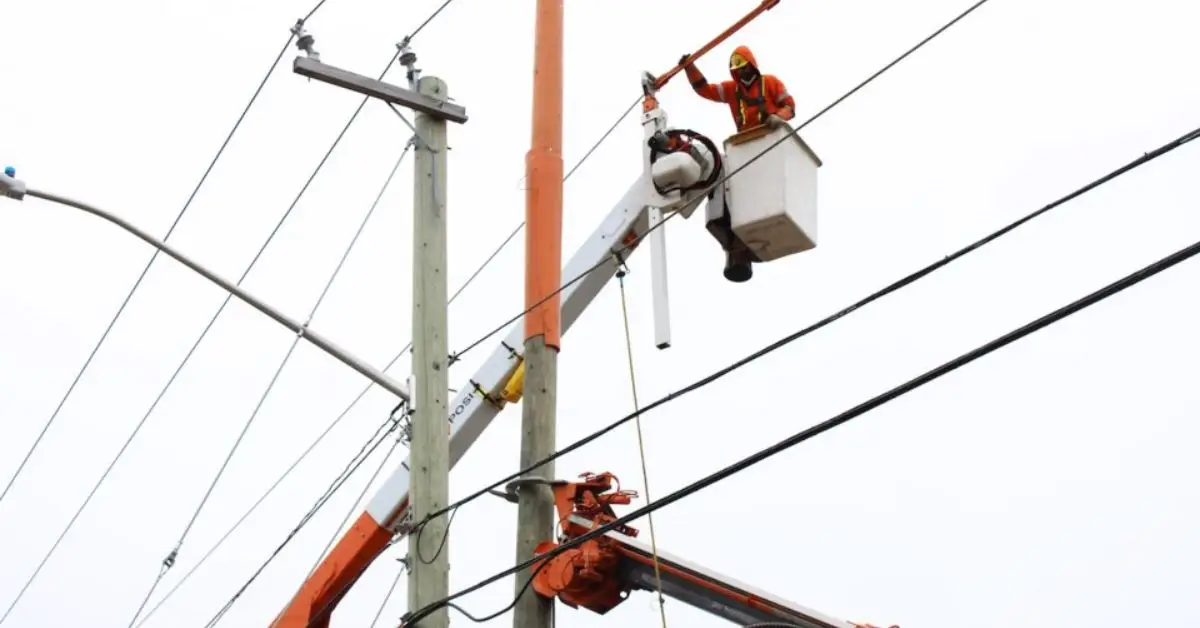
Before you pick a tree, before you mark a spot, before you even visit the nursery — I want you to check your local utility rules.
Every utility company has clearance requirements. These aren’t suggestions. They’re safety standards tied to voltage levels and maintenance access.
Here’s what you should do first:
- Call 811 before digging to mark underground utilities
- Visit your local electric provider’s website for vegetation guidelines
- Ask about required vertical and horizontal clearances
- Confirm if your property has a utility easement
Clearance distances vary depending on voltage. Lower distribution lines typically require several feet of separation, while higher-voltage transmission lines require significantly more buffer space.
For example, Pacific Gas & Electric outlines tree clearance safety zones in their vegetation management guidance.
When I plan planting near overhead lines, I never guess. I work backward from the clearance requirement, not forward from the aesthetic goal.
If you skip this step, you’re gambling with future trimming, safety risks, and potential removal.
Rule 2: Avoid Planting Directly Under Power Lines Wherever Possible
If you remember only one thing from this article, let it be this:
Don’t plant directly under overhead power lines.
Yes, you technically can plant something there. But should you? Almost never.
Here’s why planting directly below wires creates problems:
- Even small trees can grow into clearance zones
- Utilities will prune vertically, often creating unnatural shapes
- Storm damage risk increases
- Long-term maintenance becomes unavoidable
I’ve seen homeowners try to “manage” trees under lines with regular trimming. It works for a while. Then the tree outgrows the space — and the utility company takes over.
A smarter approach?
Use those areas for:
- Low-growing shrubs
- Ornamental grasses
- Perennials
- Ground cover
Shift taller trees to zones away from overhead lines — typically toward the center or edge of your property where they can mature without conflict.
When you give a tree room, it thrives. When you restrict it under wires, you’re signing up for a constant battle.
Rule 3: Choose Trees That Stay Well Below Line Height at Full Maturity
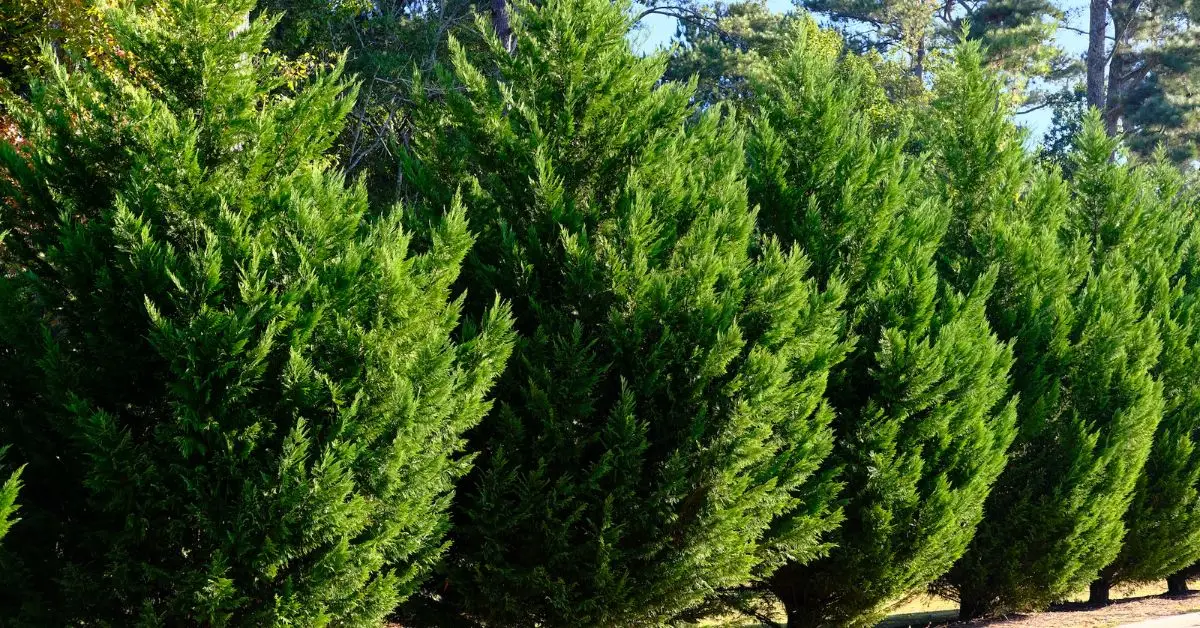
This is where most people make mistakes.
They buy based on how the tree looks today — not how tall it will be in 20 years.
When you’re evaluating species, ignore nursery height. Focus only on mature height.
Here’s how I approach it:
- Check the listed mature height range
- Compare it to the height of your overhead lines
- Subtract a safety buffer (at least several feet)
- Choose species that never exceed that limit
As a general rule:
- Trees under 20–25 feet are safer near lower distribution lines
- Medium trees (30–40 feet) usually need to be planted well away
- Large shade trees (50+ feet) should never be near overhead wires
Examples of typically lower-maturing ornamental trees include:
- Serviceberry
- Eastern redbud
- Flowering dogwood
Always verify height ranges using reliable arborist charts or university extension guides.
You’re not choosing a tree for today. You’re choosing its final form.
Rule 4: Plan for Lateral Growth — Not Just Height
Most homeowners think vertically.
Power lines are above, so the only concern is height. That’s incomplete thinking.
Trees grow outward just as much as they grow upward.
Here’s what lateral growth affects:
- Branches extending sideways into lines
- Wind-driven sway during storms
- Maintenance access for utility crews
- Clearance from poles and transformers
When I evaluate placement, I look at the mature canopy spread — not just height.
If a tree has a 25-foot canopy spread, that means 12 feet in every direction from the trunk.
So ask yourself:
Will those outer branches reach the wires, even if the trunk is safely positioned?
Map the mature spread before you plant. Visualize a full circle around the trunk. That’s your future footprint.
Ignoring lateral growth is one of the biggest gaps I see in most advice online.
Rule 5: Avoid Fast-Growing Species Near Lines
Fast-growing trees feel rewarding.
You get shade quickly. You get privacy faster.
But near power lines, fast growth becomes a liability.
Why?
- Rapid vertical growth reaches clearance zones sooner
- Soft wood can break during storms
- More frequent pruning stresses the tree
- Maintenance costs increase over time
Examples of commonly fast-growing trees that can cause problems near lines:
- Silver maple
- Hybrid poplar
- Willow varieties
Slower-growing ornamental trees are often safer because they:
- Stay within height limits longer
- Have stronger branch structure
- Require less aggressive trimming
If you’re planting near overhead utilities, patience pays off.
Would you rather wait a few extra years for shade — or deal with decades of cutting and reshaping?
Rule 6: Always Leave Space for Utility Work Zones Around Power Lines
This is something most homeowners don’t think about — until a utility truck needs access.
Power lines are part of infrastructure that crews must reach safely for repairs, upgrades, and emergencies. If there’s no clear space around them because of trees or shrubs, work becomes more difficult, slower, and sometimes more dangerous.
Here’s what you should keep in mind:
- Crews need room for bucket trucks and ladders
- Poles, transformers, and guy wires require clear access
- Space must be maintained for safe vegetation management
Also, many properties have utility easements — legal rights that allow companies to access portions of your land for maintenance. Planting inside an easement without clearance can mean your vegetation gets removed or pruned without notice.
Before planting, check your property survey or title records for easement details.
And when determining how much space to leave, it helps to know what utilities consider safe. For practical planting safety recommendations, resources like this from Jackson EMC explain how to avoid power line conflicts when you landscape.
When you respect the work zones, you protect your landscape and avoid surprise removals later.
Rule 7: Consult an Arborist for Trees Close to Any Utility Infrastructure

There’s a point where DIY judgment isn’t enough.
If a tree will reach close to overhead lines at maturity — even marginally — I always recommend consulting a certified arborist before planting.
You don’t need professional help for every shrub. But when stakes are high, expert input can prevent costly mistakes.
Talk to an arborist when:
- The tree’s mature height is close to the lines
- You’re unsure about canopy spread
- There are multiple structures nearby
- You want a second opinion before planting
Good questions to ask an arborist include:
- What will this species realistically grow to in my climate?
- Does this species tolerate pruning?
- What distance should I maintain from the line?
A short professional consult now can save you years of trimming frustration.
Rule 8: Think Beyond Wires — Consider Nearby Structures Too
Most people focus only on the wires. But trees don’t grow in isolation.
When planning your landscape, you also need to evaluate how the mature tree interacts with:
- Your home’s roof and gutters
- Fences and sheds
- Driveways and walkways
- Neighbors’ property lines
A tree that clears the wires might still drop limbs on your roof or block maintenance access to other structures. And it’s not just roofs — certain species can crack concrete and even damage parked vehicles over time, which I’ve covered in detail in this breakdown of 5 trees that can destroy your driveway and damage your car.
Before planting, imagine how the tree will look in full size — not just today, but 10 and 20 years from now. That’s the kind of thinking that keeps your yard both beautiful and functional.
Rule 9: Plan for Seasonal Changes in Tree Canopies
Trees don’t behave the same way all year long. And neither should you ignore that.
Here’s how seasons affect trees near power lines:
- Leaf growth increases mass and wind resistance
- Ice and snow add weight and bend branches
- High winds make swaying branches more likely to reach wires
- Growth spurts in spring and summer change clearance needs
A tree that looks safe in calm weather may behave very differently in winter or windstorms.
When planning pruning schedules, aim for:
- Early spring for structural trimming
- Avoiding heavy cuts during peak growth
- Keeping a balanced canopy to reduce sway
Thinking seasonally reduces unexpected line conflicts.
Rule 10: Use Utility-Approved Shrubs or Ground Covers Under Power Lines
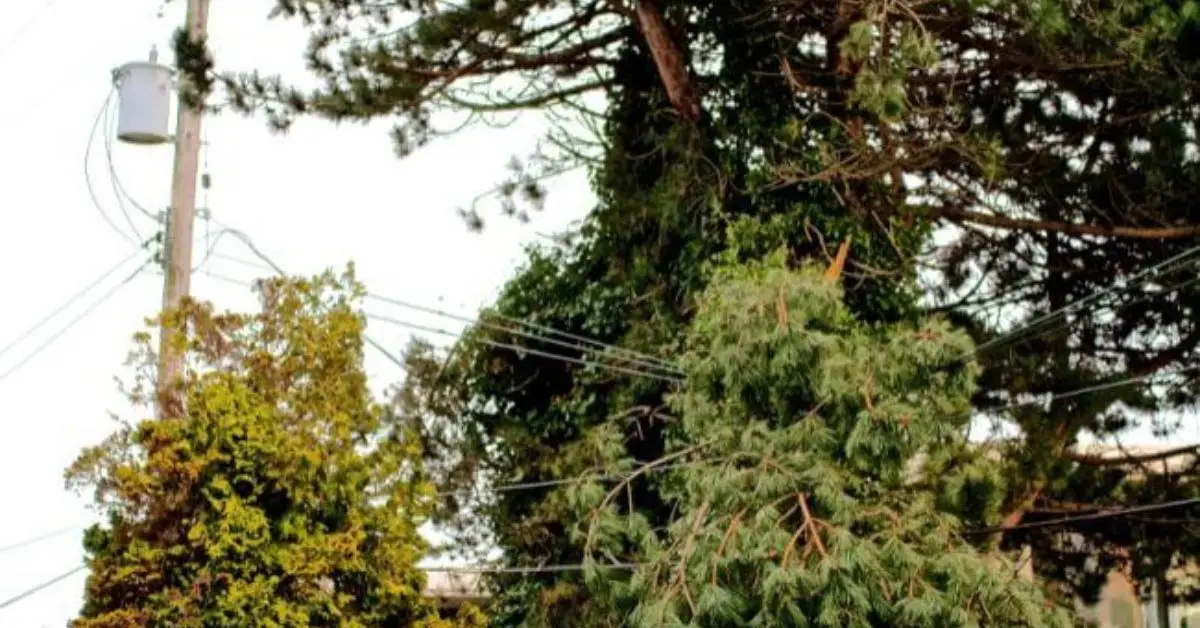
If a tall tree just doesn’t belong under the wires, don’t force it.
Replace the urge to plant a big tree with smart species that enhance your yard without interfering with utilities.
Good options include:
- Low-growing shrubs that stay under the line height
- Native grasses and pollinator-friendly plants
- Perennials with seasonal color
- Ground covers that reduce weeds and improve soil
When you choose plants designed to stay low, you:
- Keep the area safe and serviceable
- Avoid frequent trimming
- Maintain curb appeal
Treat those under-wire zones as intentional garden design spaces — not just “empty spots.”
Practical Checklist Before You Plant
Before you grab a shovel, slow down and run through this checklist with me.
This is where planning turns into smart action.
Before you plant:
- Check your property survey for utility easements
- Call 811 to mark underground lines
- Visit your local utility’s website for clearance guidelines
- Measure the height of nearby overhead lines (estimate conservatively)
- Look up the mature height and canopy spread of your chosen tree
- Leave a safety buffer below and around line height
- Consider wind sway and seasonal growth
- Decide whether a low-growing shrub might be a better option
Contact utilities if:
- You’re unsure about required clearance
- The tree will grow within reach of wires
- You’re planting near a pole or transformer
Document your decision:
- Write down the species name
- Record mature height and spread
- Note the distance from power lines and structures
- Save utility guidance for future reference
When you document your choices, you’re not just planting randomly. You’re making a long-term property decision with intention.
And that’s the difference between reactive landscaping and smart planning.
Final Thoughts Before You Dig
Planting near power lines isn’t automatically wrong.
But planting without thinking ahead is.
If you remember anything from this guide, let it be this:
You’re not planting for today — you’re planting for the next 15 to 25 years.
The right tree in the right place:
- Protects your property value
- Prevents unnecessary trimming
- Reduces safety risks
- Keeps your yard looking the way you intended
The wrong tree becomes a maintenance battle you didn’t sign up for.
Now I want to hear from you.
Have you ever planted a tree that later became a problem near power lines? Or are you planning one right now and unsure about placement?
Drop your experience or question in the comments — I read them.
And if you found this helpful, visit Build Like New for more practical, no-nonsense home improvement insights designed to help you build smarter and avoid expensive mistakes.
Disclaimer: This article is for informational purposes only and does not replace guidance from your local utility company, municipality, or a licensed arborist. Clearance requirements and regulations vary by location, so always confirm with your local authorities before planting near power lines.