How to Declutter Your Closet Fast: The 3-Step Method That Actually Works
I used to open my closet and feel overwhelmed before my day even started.
The strange thing? My closet was full of clothes… but I still felt like I had nothing to wear.
If you’ve ever stood in front of a packed wardrobe and thought the same thing, you’re not alone. Most people don’t struggle because they lack clothes. They struggle because they have too many choices.
Research on decision fatigue from Harvard Business Review shows that when we face too many options, even simple decisions start to feel mentally exhausting. Your closet becomes one of those places where your brain quietly gets tired.
And the more clothes we accumulate, the worse it gets.
In fact, data from the Environmental Protection Agency shows that millions of tons of textiles end up in landfills every year. That means most of us are holding onto far more clothing than we actually wear.
I’ve seen this happen again and again.
You keep a shirt because you might wear it someday.
You keep jeans because you paid good money for them.
You keep a dress because it used to fit perfectly.
Slowly, your closet turns into storage for the past instead of something that supports your life today.
The good news is that decluttering your clothes doesn’t need to be complicated, emotional, or time-consuming.
You don’t need a weekend-long organizing project.
You don’t need expensive storage systems.
And you definitely don’t need to throw away everything you own.
You just need a simple way to decide what stays and what goes.
In this guide, I’ll show you three straightforward steps that help you declutter your clothes quickly and take back control of your closet—without feeling overwhelmed.
And once you try this method, getting dressed in the morning becomes a lot easier.
But before we start, I’m curious:
When was the last time you actually wore everything in your closet?
Why Your Closet Feels Overwhelming (And Why Decluttering Feels So Hard)

Before we talk about how to declutter clothes, it helps to understand why it feels so difficult in the first place.
I’ve noticed something interesting when people start cleaning their closets. The problem is rarely the amount of space. The real problem is the mental load that comes with too many clothes.
Your closet quietly turns into a place filled with tiny decisions, emotions, and unfinished intentions.
And that’s exactly why opening it can feel overwhelming.
Let’s break down the real reasons behind it.
Decision Fatigue Is the Real Problem
Every morning, your brain has to make dozens of small decisions.
What shirt should you wear?
Which jeans match?
Is this outfit right for today?
When your closet is full of options, your brain works harder than it should.
When we face too many choices, even small decisions become mentally exhausting. That’s exactly what happens when your wardrobe is packed with clothes you rarely wear.
You might notice things like:
- You try multiple outfits before leaving the house
- You still end up wearing the same few items
- Getting dressed feels stressful instead of easy
I’ve experienced this myself. A full closet doesn’t always make life easier — sometimes it just creates more daily friction.
Emotional Attachment to Clothes
Another reason decluttering feels hard is emotional.
Clothes often carry memories, expectations, or guilt.
You might keep something because:
- “I might wear this someday.”
- “I paid too much for it.”
- “This used to fit me perfectly.”
- “I’ll wear this when I lose weight.”
I see this happen all the time. Your closet slowly turns into storage for past versions of yourself.
The problem is that every unused item quietly becomes another decision waiting to happen.
And the more decisions waiting for you, the harder it becomes to actually start decluttering.
The Hidden Cost of a Cluttered Closet
A cluttered closet doesn’t just take up space. It quietly affects your time, stress levels, and even your spending habits.
Many people don’t realize this until they start cleaning their wardrobe.
Here are some hidden costs I see most often:
- You waste time searching for something to wear
- Mornings feel stressful when outfits don’t come together quickly
- You buy duplicate clothes because you forget what you already own
- Unworn items pile up, taking valuable space
Clothing waste data from the U.S. Environmental Protection Agency textile waste report shows that millions of tons of textiles end up discarded each year.
A big reason for this is simple: people own far more clothing than they actually use.
Your closet slowly fills with items that no longer fit your lifestyle.
The 3-Step Method to Declutter Clothes Without Getting Overwhelmed
Here’s the mistake I see most people make when they try to declutter their clothes.
They start without a clear system.
So they remove a few shirts, make a couple of decisions, feel tired… and stop halfway through. Then the closet slowly returns to the same cluttered state.
That’s why I always recommend using a simple three-step framework. If you like structured decluttering systems, you might also find the 10-10 decluttering method useful because it focuses on removing small groups of items quickly to make tidying feel easier.
It keeps the process focused and prevents the most common mistakes.
The system looks like this:
- Sort – Bring everything out so you can see what you actually own
- Decide – Quickly determine what stays and what goes
- Organize – Put back only the clothes that serve your current life
This method helps you avoid common problems like:
- Decluttering too slowly
- Creating endless “maybe” piles
- Overthinking every single item
- Giving up halfway through
When you follow a clear structure, the whole process becomes much easier and faster.
And once you try it, you’ll realize that taking control of your closet doesn’t require a complicated organizing system — just a smarter approach.
Step 1 — Pull Everything Out to See What You Actually Own
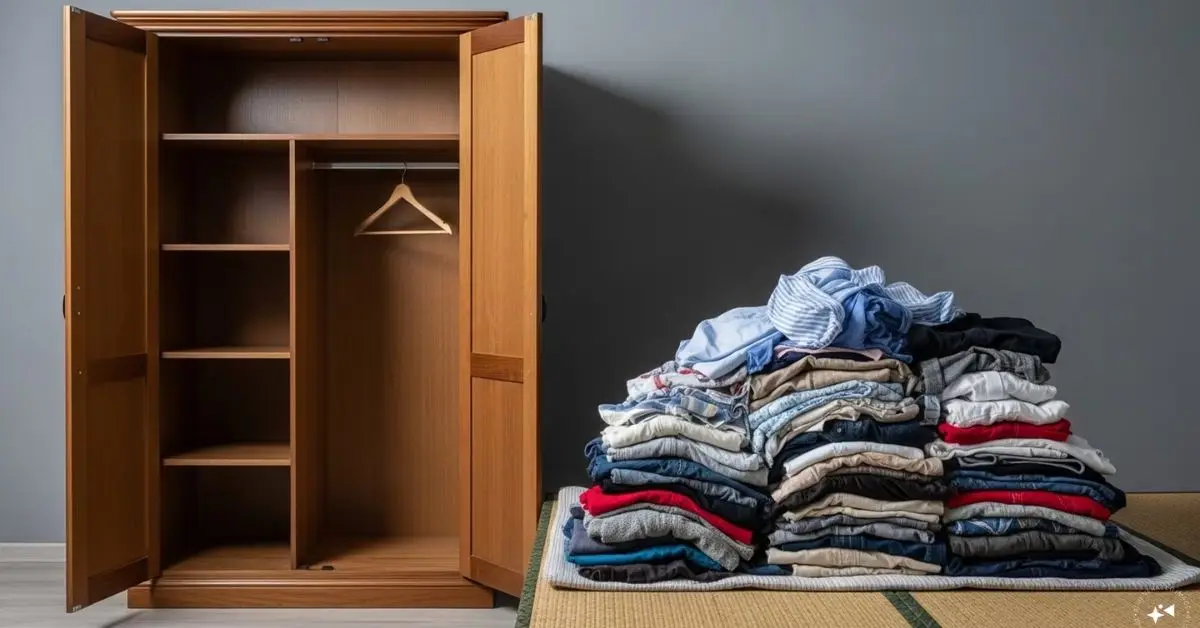
When I help people declutter clothes, I always start with one rule:
Take everything out.
Not just the closet. Everything.
If you leave items hidden in drawers or storage boxes, you never see the full picture. And without that moment of clarity, decluttering becomes much harder.
So start by pulling clothes from:
- Your closet
- Dressers and drawers
- Storage bins
- Suitcases or seasonal boxes
Place everything on your bed or floor.
Yes, it might look messy for a moment. But this step creates something powerful: awareness.
Once you see all your clothes in one place, your brain immediately starts noticing patterns you never realized before.
The “Visual Inventory” Trick
I call this step the visual inventory.
Instead of guessing what you own, you see the entire wardrobe laid out in front of you.
Psychologically, this works because your brain processes visual information much faster than scattered items hidden in different places.
Suddenly you notice things like:
- Clothes you completely forgot about
- Items you haven’t worn in years
- Several pieces that look almost identical
That’s the moment when most people say, “Wow… I didn’t realize I owned this much.”
And that realization becomes the motivation to declutter.
Group Clothes by Category
Once everything is out, don’t start deciding yet.
First, sort your clothes into simple categories.
For example:
- T-shirts
- Jeans
- Jackets
- Work clothes
- Activewear
- Sweaters
When similar items sit together, something interesting happens. You start noticing patterns.
Maybe you own 12 black T-shirts.
Or five pairs of nearly identical jeans.
Grouping items removes the illusion that every piece is unique.
It makes decisions much easier later.
Spot Duplicates Instantly
This step is where the real clarity appears.
When clothes are grouped together, you’ll start asking simple but powerful questions like:
- How many black shirts do I actually own?
- Why do I have five similar pairs of jeans?
- Do I really wear all these sweaters?
I’ve seen people genuinely shocked at this stage.
And it’s not just personal experience. In online communities like Reddit’s minimalism discussions, many people say the exact same thing — once they put similar clothes in one pile, they realize they own far more duplicates than they thought.
That realization is often the turning point.
It’s the moment when decluttering stops feeling difficult and starts feeling obvious.
Step 2 — Use the 5-Second Rule to Decide What Stays
Now that everything is sorted, it’s time to make decisions.
This is where most people get stuck. A big reason is that people unknowingly repeat common organizing mistakes, something professional organizers explain in this guide on decluttering mistakes you should stop making.
They overthink every item, create huge “maybe” piles, and lose momentum.
So I use something simple: the 5-second rule.
Instead of debating each piece of clothing, you ask a few quick questions and trust your first reaction.
Ask These 5 Quick Questions
Hold one item and ask yourself:
- Did I wear this in the last year?
- Would I buy this again today?
- Does it fit comfortably right now?
- Does it match my current lifestyle?
- Do I feel confident wearing it?
If the answer is mostly no, the decision becomes much easier.
The goal here isn’t perfection.
The goal is speed and clarity.
Create Only Three Piles
To keep the process simple, stick to just three categories:
- Keep – Clothes you actually wear and love
- Donate – Good condition items someone else can use
- Discard – Damaged or unusable clothing
One important rule I always follow:
Avoid the “maybe” pile.
Maybe piles grow quickly, and they usually end up back in the closet.
Making a clear decision now saves you from repeating the same process later.
When It’s Okay to Break the Rules
Not every item needs to follow the strict decision rule.
Some clothes naturally fall into special categories, like:
- Formal wear you only use occasionally
- Seasonal clothing (winter coats, heavy sweaters)
- Sentimental pieces with real emotional value
These items can stay — but keep them separate from everyday clothes.
That way they don’t add clutter to your daily routine.
Step 3 — Rebuild Your Closet With Only What You Love
Once you remove the unnecessary items, your closet finally has breathing room.
Now comes the step that prevents clutter from returning.
Instead of putting everything back randomly, rebuild your closet intentionally.
Organize Clothes by Frequency of Use
Think about how often you wear each type of clothing.
Then place them accordingly.
For example:
- Everyday clothes at eye level
- Frequently worn pieces within easy reach
- Occasional items on higher shelves
This simple layout makes getting dressed faster because the clothes you use most are always visible.
Try the “Hanger Flip Method”
If you’re unsure about certain clothes, this trick works incredibly well.
Here’s how I use it:
- Turn all your hangers backward.
- When you wear something, flip the hanger the correct way.
- After 3–6 months, check what hasn’t been flipped.
Those untouched items reveal something important: you’re probably not wearing them at all.
This method removes guesswork and lets your real habits decide.
Create a Mini Capsule Wardrobe
At this stage, many people notice something surprising.
They actually need far fewer clothes than they thought.
That’s why some people create a mini capsule wardrobe, which simply means keeping a smaller collection of versatile pieces that work well together.
Benefits often include:
- Fewer outfits to manage
- Faster morning routines
- Less impulse shopping
- A closet that feels calm instead of crowded
The goal isn’t minimalism for the sake of it.
The goal is having a closet filled with clothes you actually enjoy wearing.
And once your wardrobe reaches that point, getting dressed becomes one of the easiest parts of your day.
What to Do With Clothes You Remove

One reason many people hesitate to declutter is simple: they don’t know where the clothes should go after they leave the closet.
Throwing everything away feels wasteful. But keeping things “just in case” brings the clutter right back.
I’ve found that decluttering becomes much easier when you already have a plan for where each item can go. This becomes even more important if you’re preparing for a move, since packing unnecessary items only adds extra work, which is why many people start by decluttering these things you should remove before moving. Most clothes can either help someone else, earn you a little money, or be recycled responsibly.
Donation Options
If your clothes are still in good condition, donation is usually the easiest option.
Many organizations rely on donated clothing to help people who need basic essentials.
Common donation options include:
- Local shelters
- Charity thrift stores
- Community clothing drives
- Nonprofit donation centers
Before donating, I follow two simple checks:
- The clothes are clean
- The clothes are still wearable
If you’d feel comfortable giving the item to a friend, it’s usually perfectly fine to donate.
And knowing your clothes might help someone else often makes the decision to let go much easier.
Selling Valuable Items
Some clothes may actually be worth selling.
If you own branded clothing, high-quality jackets, or pieces that were worn only a few times, resale can be a good option.
Many people sell clothing through:
- Resale apps
- Online marketplaces
- Consignment stores
Personally, I keep a simple rule: if selling something feels like too much effort, I donate it instead.
Decluttering works best when the process stays quick and simple.
Recycling Damaged Clothing
Some clothes are simply too worn out to donate or sell.
Instead of throwing them away, you can look for textile recycling programs in your area. These programs reuse old fabric to create new materials like insulation, cleaning cloths, or recycled fibers.
Many decluttering experts also emphasize that having a clear plan for removed clothing makes the process much easier, which is explained well in this practical decluttering guide Once you know your clothes won’t simply go to waste, letting them go feels far less difficult.
The One Habit That Keeps Your Closet Clutter-Free
Decluttering once feels great.
But if you’re not careful, clutter slowly finds its way back. A few new purchases here, a few “just in case” items there, and suddenly the closet is crowded again.
That’s why I rely on one simple habit that keeps everything under control.
The “One-In, One-Out” Rule
This rule is incredibly simple.
Whenever you bring one new clothing item into your closet, remove one old item.
For example:
- Buy a new sweater → donate an old sweater
- Buy new jeans → remove an older pair
- Buy new workout clothes → remove something you rarely wear
This small habit keeps your wardrobe from growing endlessly.
Instead of expanding, your closet stays balanced and manageable.
Monthly 5-Minute Closet Reset
Another habit that works surprisingly well is a quick monthly reset.
Once a month:
- Take a quick look through your closet
- Notice anything you didn’t wear recently
- Remove at least one item
It takes only a few minutes, but it prevents clutter from quietly building up again.
Shop With Intention
Many closet problems actually begin while shopping.
Before buying something new, I ask myself one simple question:
“Will I realistically wear this at least 10 times?”
If the answer is uncertain, I usually skip it.
That small pause helps prevent impulse purchases that eventually turn into clutter.
Signs Your Closet Is Finally Working for You

When your wardrobe becomes organized and intentional, you’ll start noticing small but meaningful changes in your daily routine.
These are signs your closet is finally working for you instead of against you.
You might notice things like:
- Getting dressed takes less than five minutes
- You stop digging through piles of clothing
- Every item in your closet fits comfortably
- You actually wear most of the clothes you own
- Shopping becomes easier because you know what you truly need
At that point, your closet stops feeling stressful.
Instead, it becomes a calm and functional space that makes everyday life just a little bit easier.
A Closet That Works for Your Life, Not Against It
A cluttered closet quietly adds stress to your day.
You spend extra time searching for things. You try multiple outfits before leaving the house. And even with a full wardrobe, getting dressed still feels frustrating.
But once you declutter your clothes, something simple changes.
Your mornings become easier.
Your closet feels lighter.
And every piece you keep actually fits your life.
You don’t need a perfect wardrobe to get there. You just need a closet that works for you instead of against you.
The best part is that you don’t have to do everything at once.
Start small.
Open one drawer today.
Pick out just a few items you no longer wear.
Make one simple decision.
Small steps like that quickly turn into big changes.
And before you know it, your closet becomes a space filled only with clothes you actually enjoy wearing.
If you found this guide helpful, I’d love to hear from you.
How many clothes do you think you could remove from your closet today? Share your thoughts or experience in the comments.
And if you enjoy practical home organization tips like this, you can explore more helpful guides and ideas on Build Like New, where we share simple ways to improve your space and everyday life.
Disclaimer: This article is for informational purposes only and is based on general organization and lifestyle practices. Results may vary depending on personal habits, available space, and individual preferences. Always choose donation, resale, or recycling options according to local guidelines and community resources.